



Saudi Arabia is on track to sustain annual non-oil growth of between 4.5 and 5.5 per cent through the coming decade, according to a new cross-sector report published by Moody’s Ratings on Wednesday.
The ratings agency, through its latest sector report, says the kingdom’s economic diversification drive under Vision 2030 is “advancing and supporting the country’s medium-term economic prospects,” even as funding constraints and uneven project progress present challenges.
Moody’s adds that Saudi companies “continue to have robust credit ratios,” though it warns that rapid expansion in the credit and insurance markets “will carry risks for companies in those sectors.”
In its report, which consists of four key questions around Vision 2030, the ratings agency provides insight and a series of charts that highlight the country’s economic advancement.
What progress is Saudi Arabia making on its Vision 2030 strategy to diversify the economy?
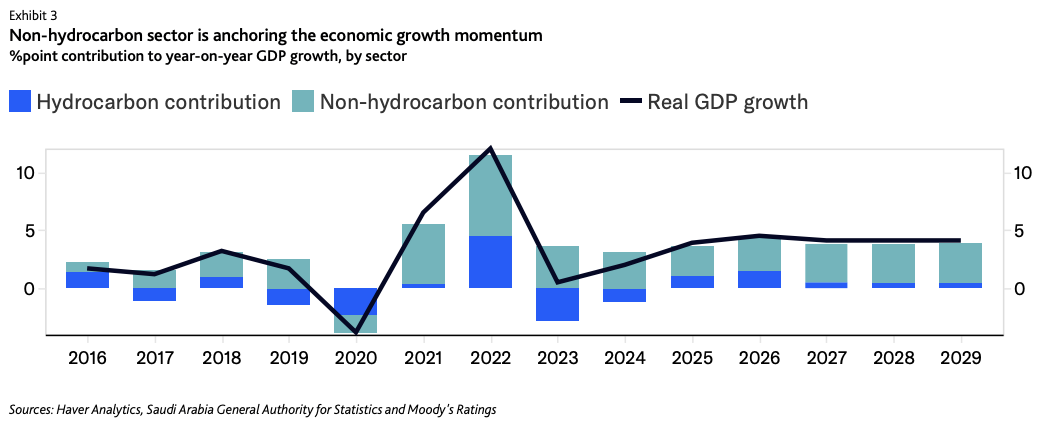
Non-oil growth remains the backbone of Saudi Arabia’s transformation.
Moody’s highlights that “non-oil economic growth, particularly in the services sector, will remain robust as the large-scale projects are implemented and gradually commercialise.”
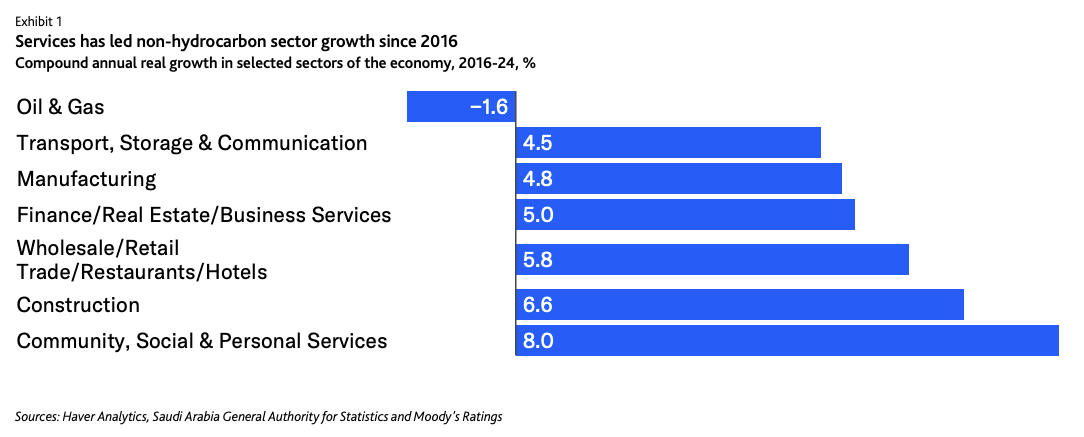
Since 2016, services have been the fastest-growing non-hydrocarbon segment, expanding at 8 per cent annually, ahead of construction (6.6 per cent) and manufacturing (4.8 per cent).
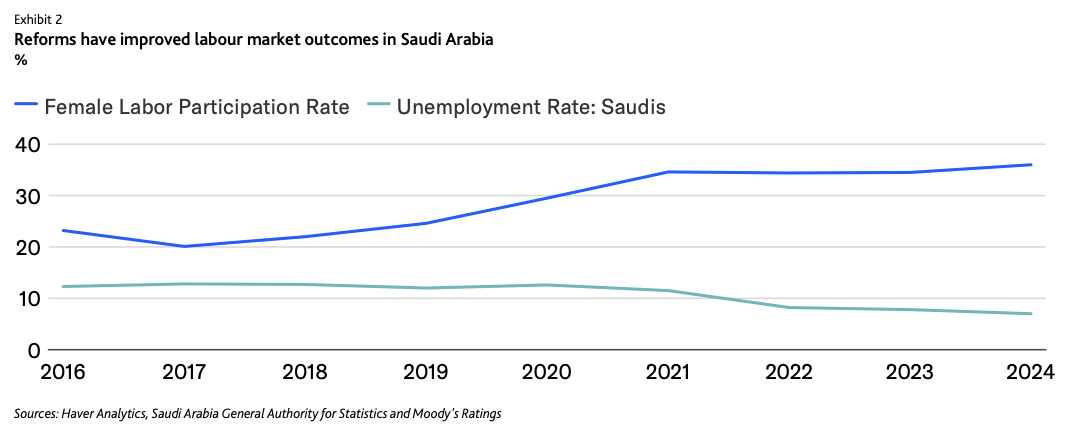
Reforms have also paid off: the female labour participation rate has more than doubled since 2016, while unemployment among Saudis has dropped to record lows, falling under 10 per cent.
However, Moody’s cautions that “progress is uneven on some major projects, partly reflecting supply-side and funding constraints.”
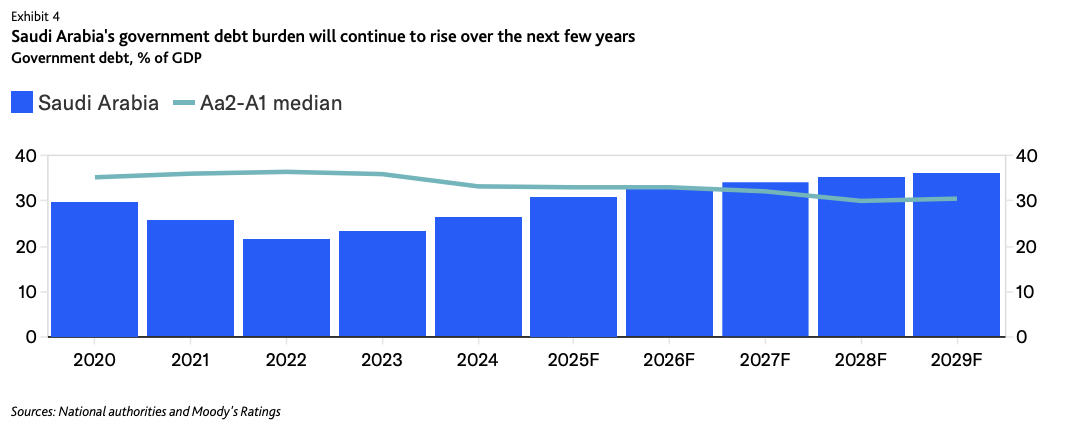
Fiscal trade-offs will persist, with government debt likely to rise from 26 per cent of GDP in 2024 to more than 36 per cent by 2030, but Moody’s says Saudi Arabia will “continue to support economic diversification while preserving robust government finances.”
Who is funding Vision 2030 investments and what is the impact on Saudi company balance sheets?
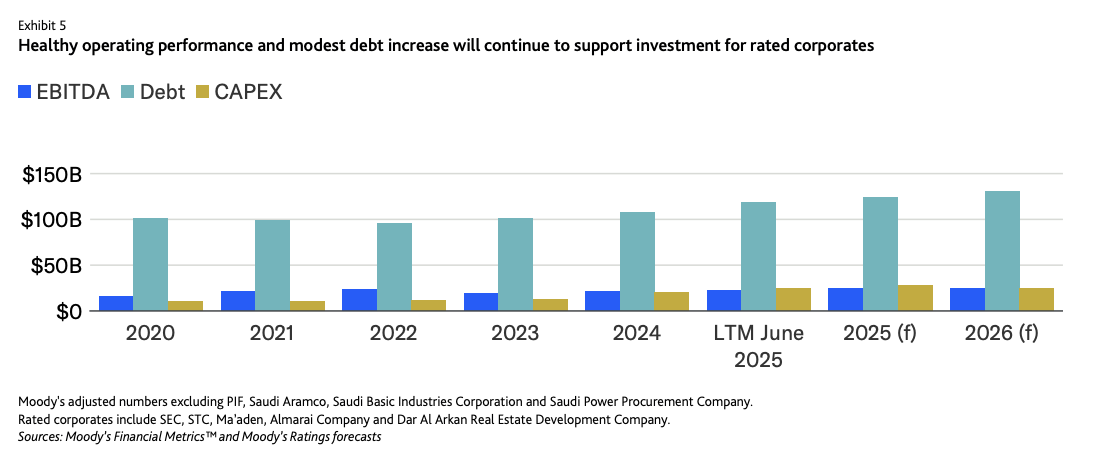
The Public Investment Fund (PIF) remains at the centre of Vision 2030 financing. With assets exceeding SAR 3.4 trn ($913 bn), PIF has invested more than SAR 642 bn over the past five years to build sectors from retail and telecoms to mining, aviation and technology.
Moody’s estimates that “investment from PIF alone will reach SAR 1 trillion during the 2025–30 period.” Despite higher capital expenditure and borrowing, most rated corporates are expected to “maintain their credit quality,” supported by “strong starting balance sheets and access to diversified funding channels.”
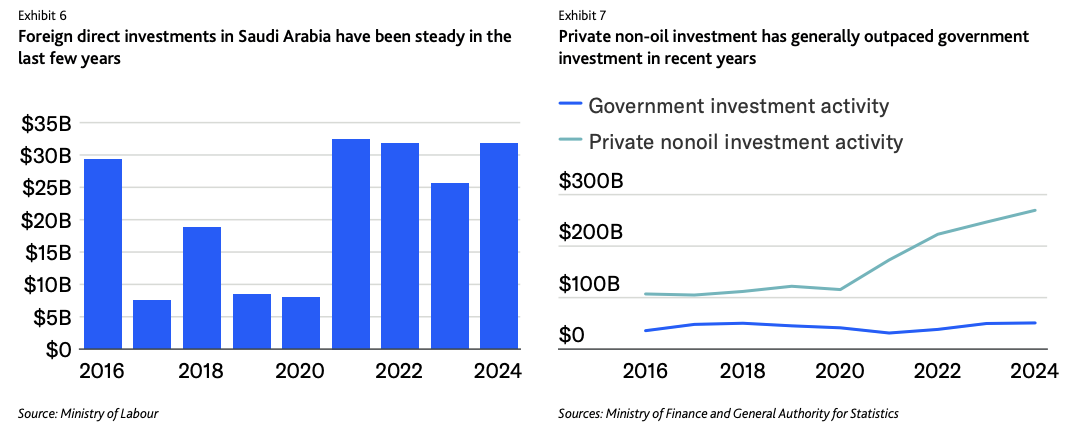
Private capital is gradually gaining ground. Domestic non-oil investment has grown around 25 per cent a year over the past four years, outpacing government investment. Moody’s notes that the “gradual shift toward private co-investment and public-private partnerships is helping sustain credit quality.”
How are banks dealing with funding challenges amid sustained credit growth?
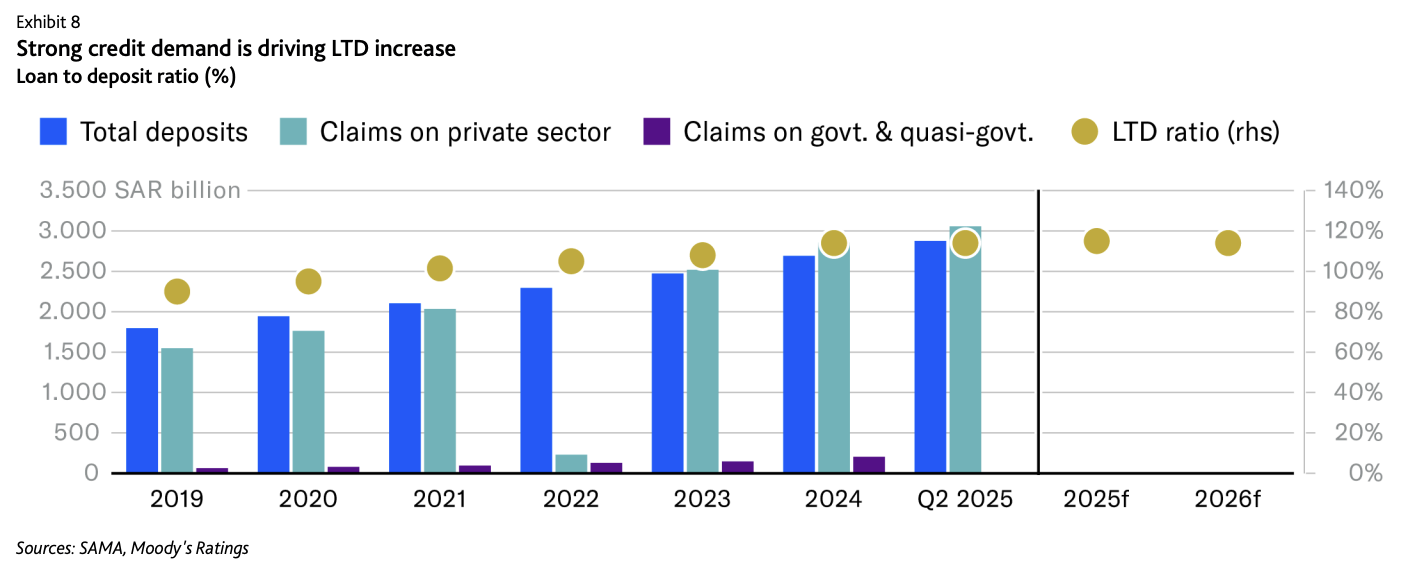
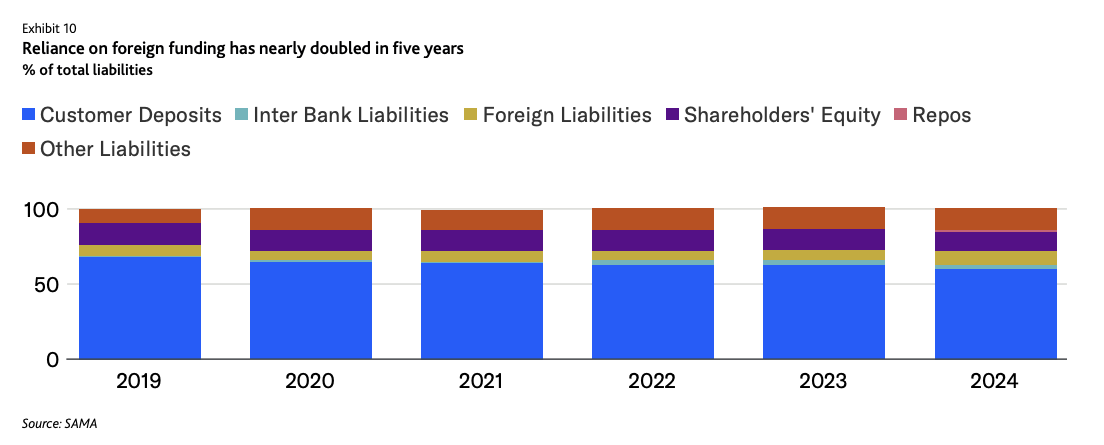
Credit expansion remains one of the fastest in the region. Moody’s reports that Saudi credit growth has averaged 12–14 per cent annually over the past five years, driven by giga-projects and mortgages, while deposit growth trails at 6–9 per cent.
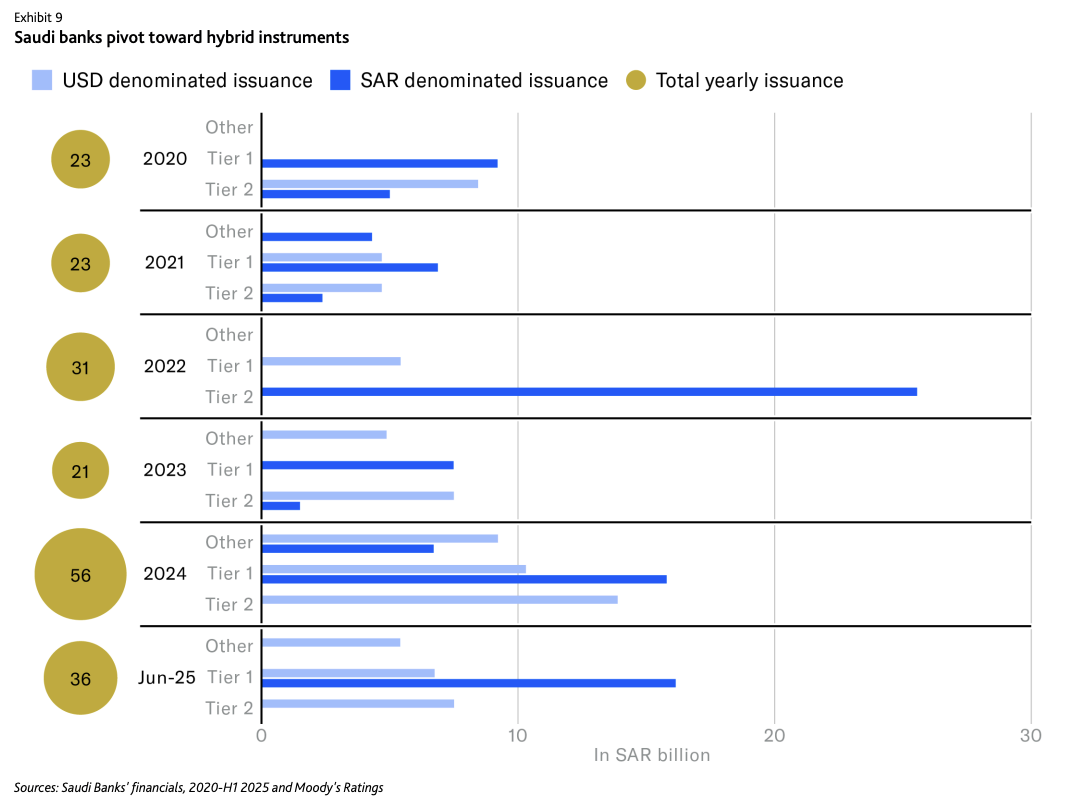
As a result, the loan-to-deposit ratio has exceeded 100 per cent since 2021, prompting lenders to diversify funding. “Saudi banks are diversifying their funding sources beyond traditional deposits to include capital market issuance and syndicated loans,” the report says.
In 2024, Saudi bank issuance hit SAR 56 bn, more than doubling the previous year’s total. However, Moody’s warns that “a rapid acceleration of market-based funding could heighten refinancing risks.”
The Saudi Real Estate Refinance Company is helping by developing the kingdom’s first residential mortgage-backed securities market, while the Saudi Central Bank has introduced new macroprudential measures, including a 100 basis-point countercyclical capital buffer to curb overheating.
What is the insurance sector’s role in Vision 2030 and what challenges does it face?
The insurance industry is expanding rapidly as Vision-related projects demand complex coverage and as regulatory reform boosts participation. “The insurance sector is undergoing rapid expansion with an increasingly diverse range of products and growing demand,” Moody’s notes.
New rules have made multiple covers compulsory — from motor and domestic worker to pilgrimage and travel protection — while the regulator now requires local insurers to offer at least 30 per cent of reinsurance to domestic firms.
Competition will keep premiums low, and smaller insurers face pressure as claims and reinsurance costs rise. Yet Moody’s says the long-term outlook remains positive: “As more of the population becomes insured, premium income will stabilise,” while consolidation through M&A “supports the market and enhances financial resilience.”
