

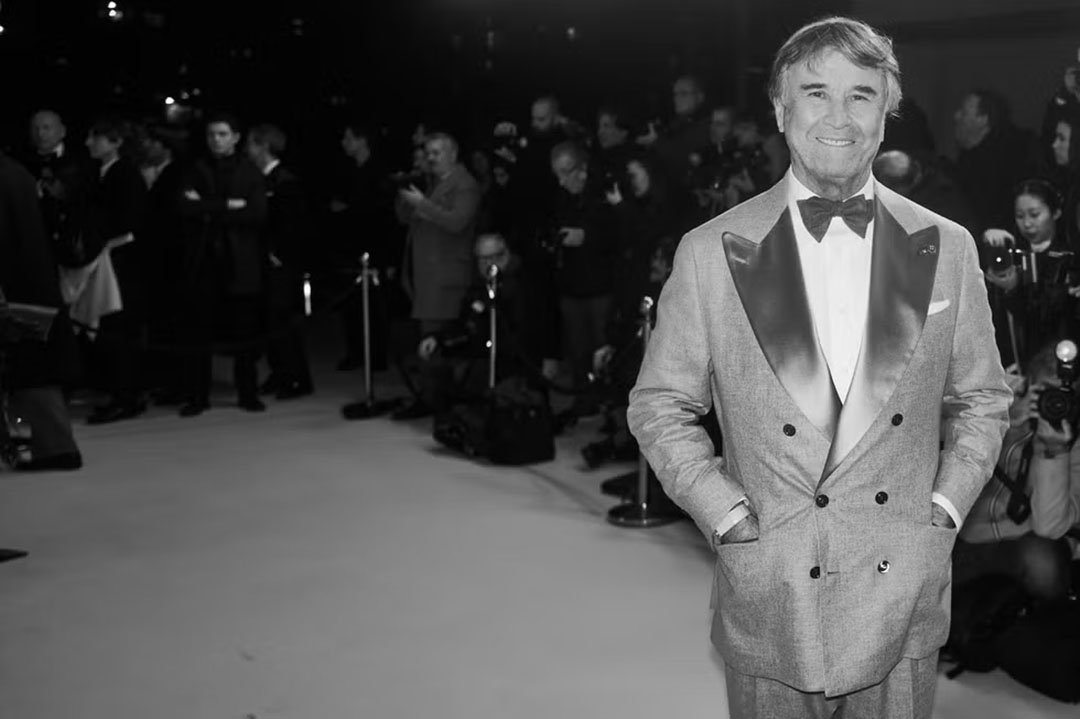
“I wanted my life translated into a movie while I was still alive, that way people can hear my voice and my take on it,” Brunello Cucinelli says from the stage inside Rome’s hallowed Teatro dell’Opera the day after the premiere of the film Brunello: the Gracious Visionary.
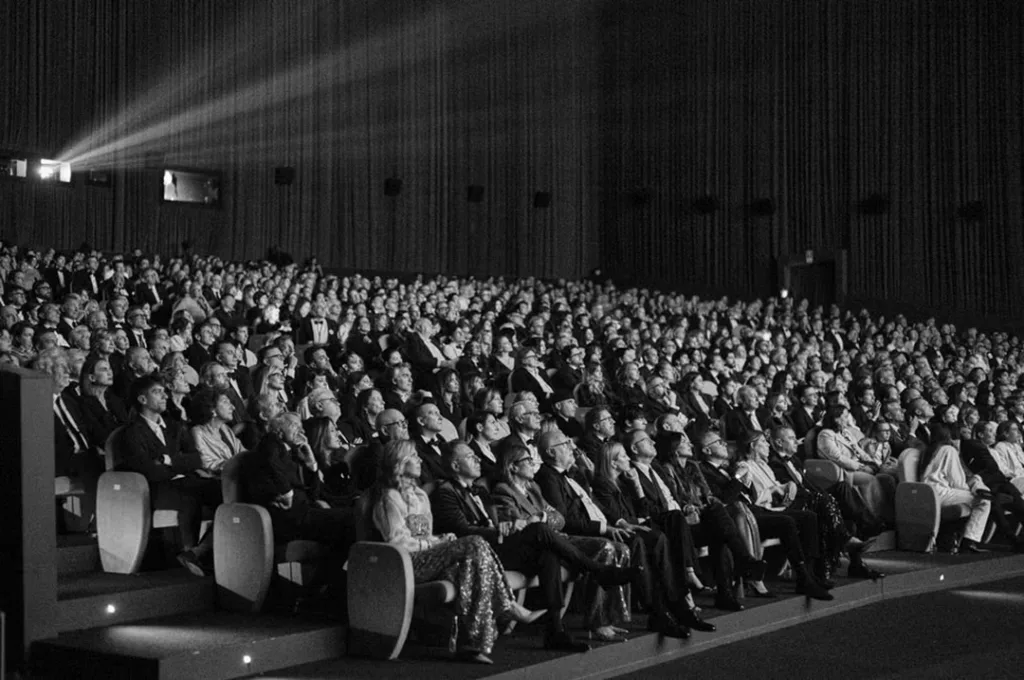
A thousand of the great and the good of the luxury world were invited to the legendary Cinecittà studios in the Eternal City on December 5, as the “King of Cashmere,” Brunello Cucinelli, premiered his rags-to-riches story documentary, directed by the Oscar-winning Giuseppe Tornatore of Cinema Paradiso fame.
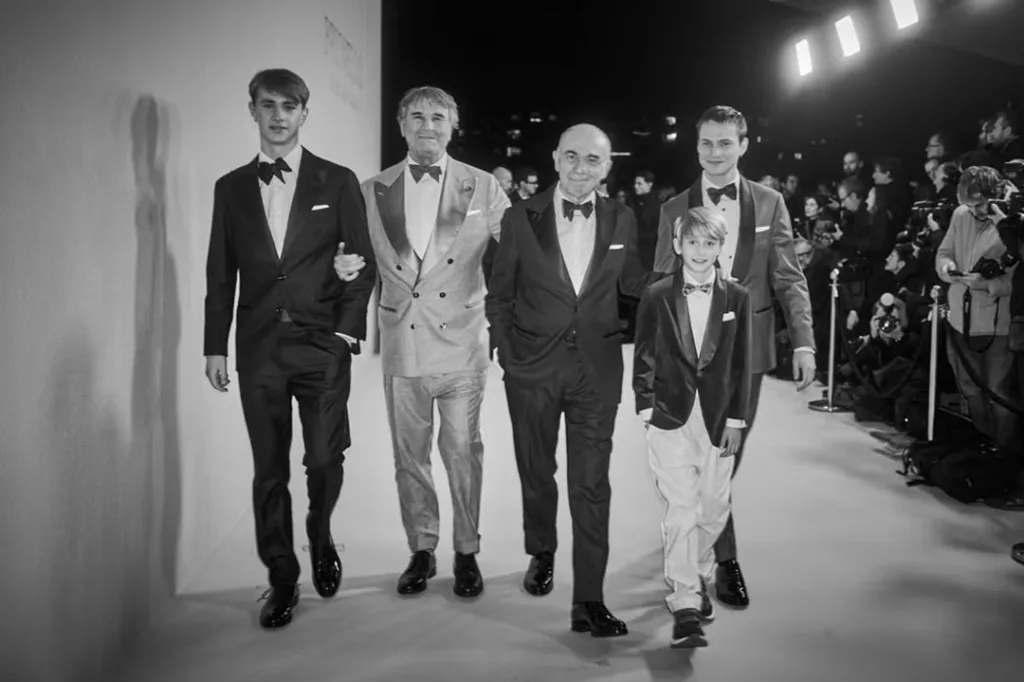
Part dramatisation and part documentary, the film tells the story of Cucinelli’s life—from his humble beginnings on a farm to founding his fashion empire and taking on humanitarian causes around the world.
It takes a certain kind of confidence to premiere a biopic about oneself in the very studios that birthed La Dolce Vita and Cleopatra. Yet, confidence has never been in short supply for Cucinelli. The premiere marked the inauguration of Cinecittà’s new Teatro 22, one of the largest film studios in Europe, transforming the space into a celebration of Italian craftsmanship and cinema.
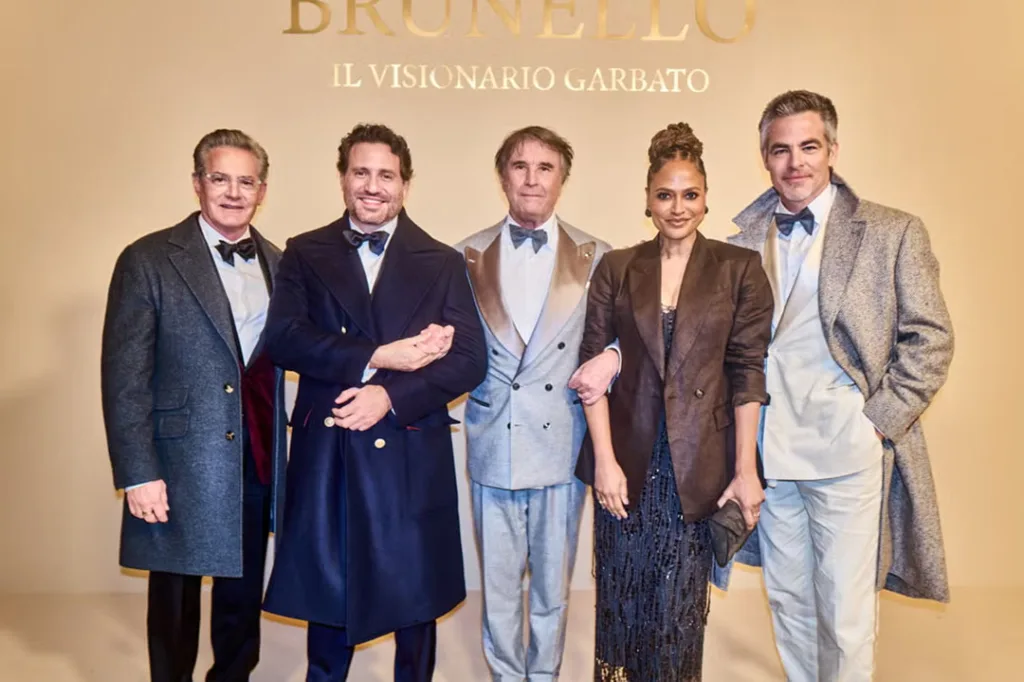

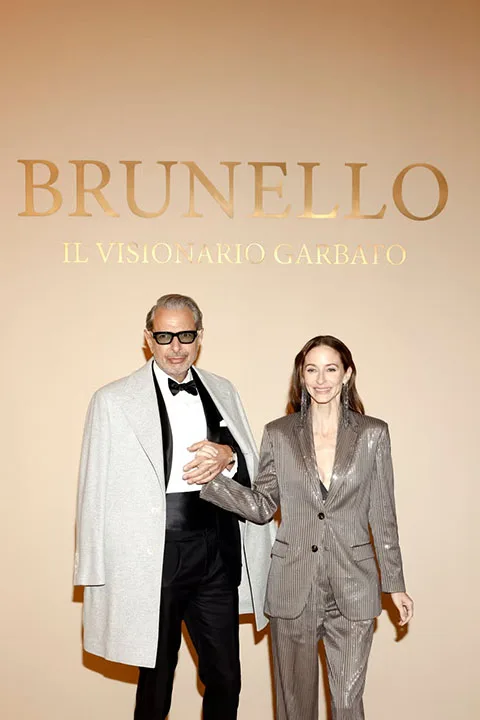
The guest list was a testament to the brand’s quiet but powerful grip on Hollywood. Jessica Chastain, a longtime friend of the house, stunned on the red carpet, joined by Jonathan Bailey (fresh off his Wicked success) and the ever-suave Jeff Goldblum. Chris Pine, Ava DuVernay, Edgar Ramirez, and senior members of the Italian government also joined the designer, who wore his own impeccable tailoring, beaming alongside his family.
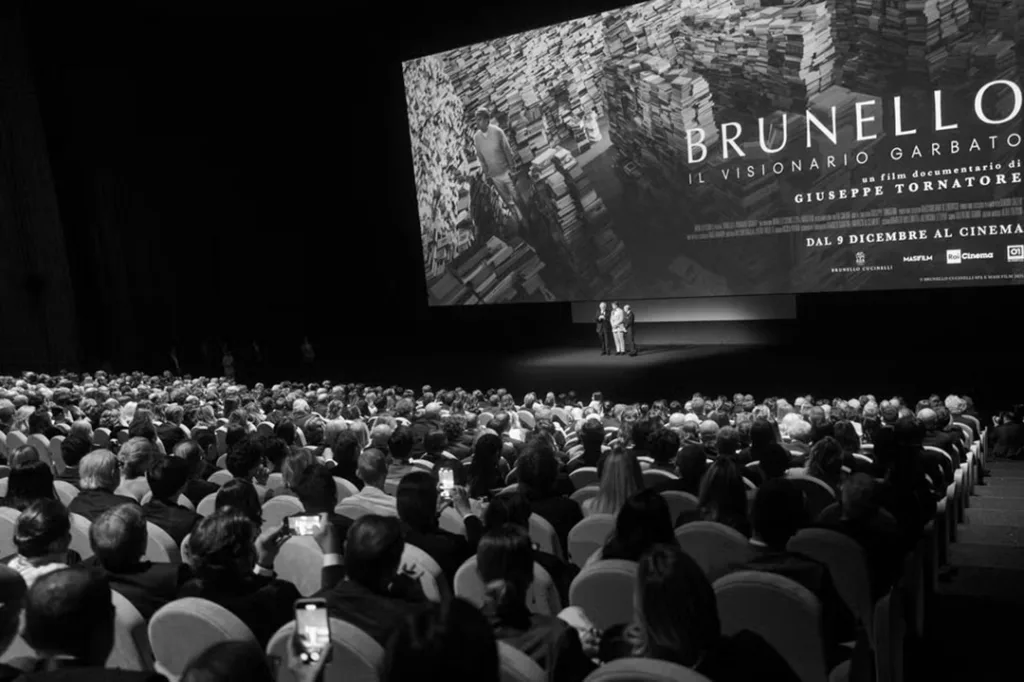

Slated for release on December 9, 2025, Brunello: The Gracious Visionary is a visual feast that blends archival footage, dramatic re-enactments, and intimate interviews. Cucinelli personally cast three actors to play himself at different stages of life: the “little fox” of his childhood, the “young lord” of his adolescence, and the carefree, card-playing young man who hadn’t yet found his calling.
Unlike many fashion documentaries produced posthumously, Cucinelli insisted on making this film now to ensure his “true voice” was heard. “I want my children and grandchildren to hear my true voice in the movie. This is the kind of legacy I can leave to future generations—my testimony.”
