

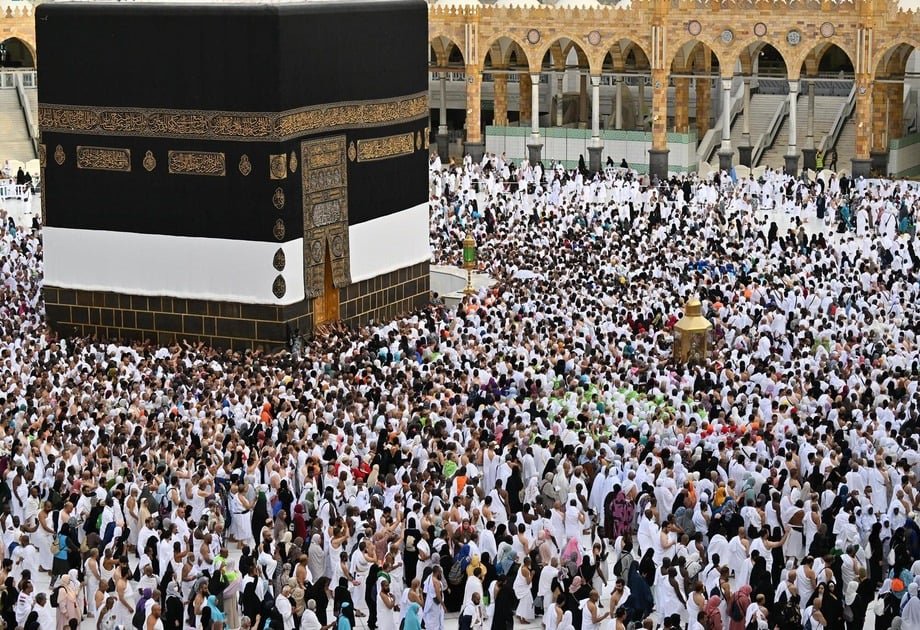

Image credit: Saudi Press Agency /Website
In a major step toward modernising the visitor experience and ensuring the safety of millions of pilgrims, the Grand Mosque in Makkah has unveiled a series of integrated services designed to enhance security, accessibility, and convenience. From child safety initiatives to real-time crowd management systems, these measures aim to provide a seamless, well-organised environment for worshippers performing Umrah and Hajj rituals.
A key highlight of the new initiatives is the launch of identification bracelets for children, introduced by the General Authority for the Care of the Affairs of the Grand Mosque and the Prophet’s Mosque. These bracelets contain vital information, including guardians’ contact details, enabling staff to quickly identify and reunite children who may become separated from their families, a Saudi Press Agency report said.
Read more-Saudi’s new rule: All types of visas allow holders to perform Umrah
“This service is part of an integrated system designed to improve child safety within the Grand Mosque and its courtyards, assist parents, and enable staff to manage emergencies efficiently,” the authority stated. Bracelets are available at King Abdulaziz Gate and King Fahd Gate (Gate No. 79), with dedicated staff on hand to assist guardians in registering their contact information. Parents are especially encouraged to use the service during peak periods, such as the Umrah and Hajj seasons, to ensure the highest level of care and reassurance for all.
Smart infrastructure and real-time guidance
Spanning over 1.8 million square metres and accommodating more than 2.5 million worshippers, the Grand Mosque has implemented extensive services to facilitate movement and support pilgrims in performing rituals safely. The Ministry of Hajj and Umrah, in coordination with the Two Holy Mosques Authority, oversees these operations, which include clear guidance pathways, digital screens displaying real-time crowd levels, and fully accessible infrastructure such as gates, ramps, escalators, and elevators.
To further enhance mobility, pilgrims can book wheelchairs and electric carts for Tawaf and Sa’i via the authority’s website. Additional conveniences include a free shaving service at the Sa’i exit, restrooms, luggage storage facilities, and a range of nearby restaurants and shops. A 24/7 hotline (1966) and educational guides in 16 languages are also available to provide information and support to visitors.
Integrated services system showcases high-level readiness
The Ministry of Hajj and Umrah and the General Authority for the Care of the Affairs of the Grand Mosque have also highlighted the comprehensive scale of services through a recently released video. The footage captures live scenes inside the mosque, demonstrating the logistical coordination required to manage the flow of more than 2.5 million worshippers daily across its vast 1.8 million-square-metre area.
From accessible gates and ramps to digital crowd monitoring and elevators, these measures ensure smooth movement, comfort, and safety for all pilgrims, including persons with disabilities. The integrated system emphasises a commitment to providing a stress-free, enriching experience that allows visitors to focus on their spiritual rituals while benefiting from state-of-the-art support and safety infrastructure.
These advancements underline the Grand Mosque’s dedication to creating a secure, accessible, and technologically advanced environment.
By combining child safety initiatives, digital guidance, and accessibility-focused infrastructure, Saudi authorities aim to redefine the standard of care for millions of pilgrims visiting Makkah each year, ensuring that every visitor can perform their religious duties in peace, comfort, and confidence.
