

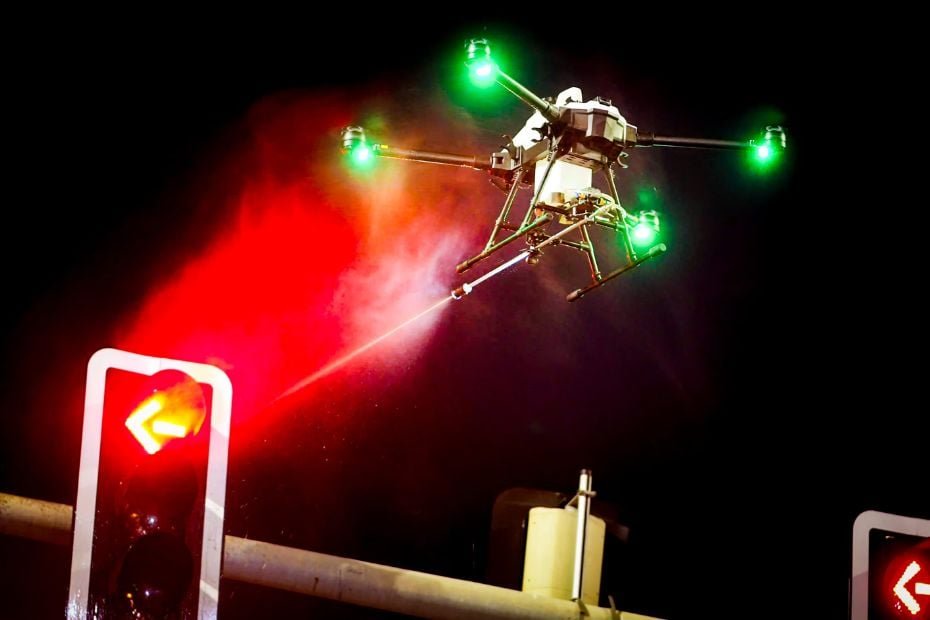
Image credit: Dubai Media Office/Website
Dubai’s Roads and Transport Authority (RTA) has launched a pilot operation to clean traffic signals across the emirate using drone technology, marking another step in the authority’s drive to integrate advanced technologies into its operational processes.
The initiative reflects RTA’s commitment to adopting smart, future-focused solutions aimed at enhancing service quality, optimising resource efficiency, and achieving the highest levels of traffic safety for all road users. By leveraging drone technology, RTA is reshaping traditional maintenance practices while aligning its operations with broader sustainability and innovation objectives.
According to a Dubai Media Office report, the use of drones significantly enhances safety standards by eliminating the need for manlifts during cleaning operations. This shift reduces potential risks to workers and road users alike, while also minimising disruptions typically associated with heavy maintenance equipment.
Read more-From 15-minute drops to urban air mobility: Drone deliveries go mainstream in the UAE
The pilot operation also delivers measurable operational and environmental benefits. By limiting reliance on fuel-intensive machinery, the initiative helps reduce operational costs, lower fuel and water consumption, and cut emissions generated by conventional equipment. These efficiencies support RTA’s sustainability goals while reinforcing its focus on responsible infrastructure management.
Measurable operational gains
Abdulla Ali Lootah, director of Roads and Facilities Maintenance at the Traffic and Roads Agency, RTA, said the authority continues to adopt innovative technologies to enhance maintenance activities, sustain operational efficiency, and ensure consistent performance across Dubai’s road network and related facilities.
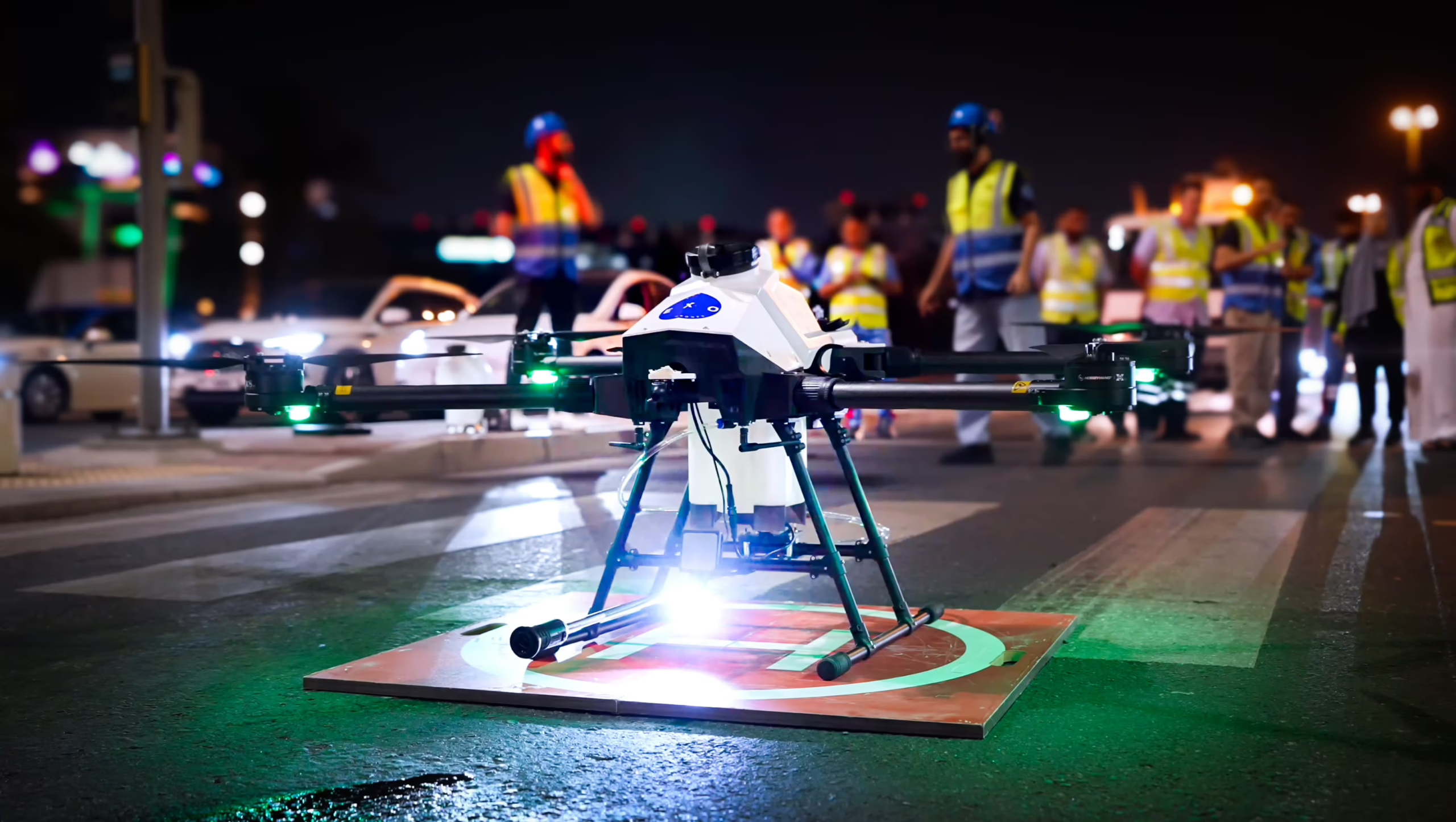
Lootah noted that the pilot included a comparative assessment between drone-based cleaning and traditional methods. The evaluation focused on time efficiency, cost effectiveness, quality of execution, and compliance with safety requirements, providing a comprehensive benchmark for future deployment.
The first phase of the pilot involved a series of trials at the Marrakech Street–Rebat Street junction, where a limited traffic closure was implemented to ensure the highest safety standards during testing. Preliminary results showed a reduction in operational time ranging from 25 per cent to 50 per cent, with a drone able to clean a single side of a traffic signal in just three to four minutes.
The trials also indicated an estimated reduction in operational costs of up to 15 per cent compared with traditional methods. Projections suggest this figure could increase to 25 per cent as more advanced drone technologies are introduced.
Lootah emphasised that the pilot will continue, with upcoming phases assessing cleaning methodologies to ensure maximum safety and zero impact on traffic flow, further strengthening Dubai’s road infrastructure performance.
