

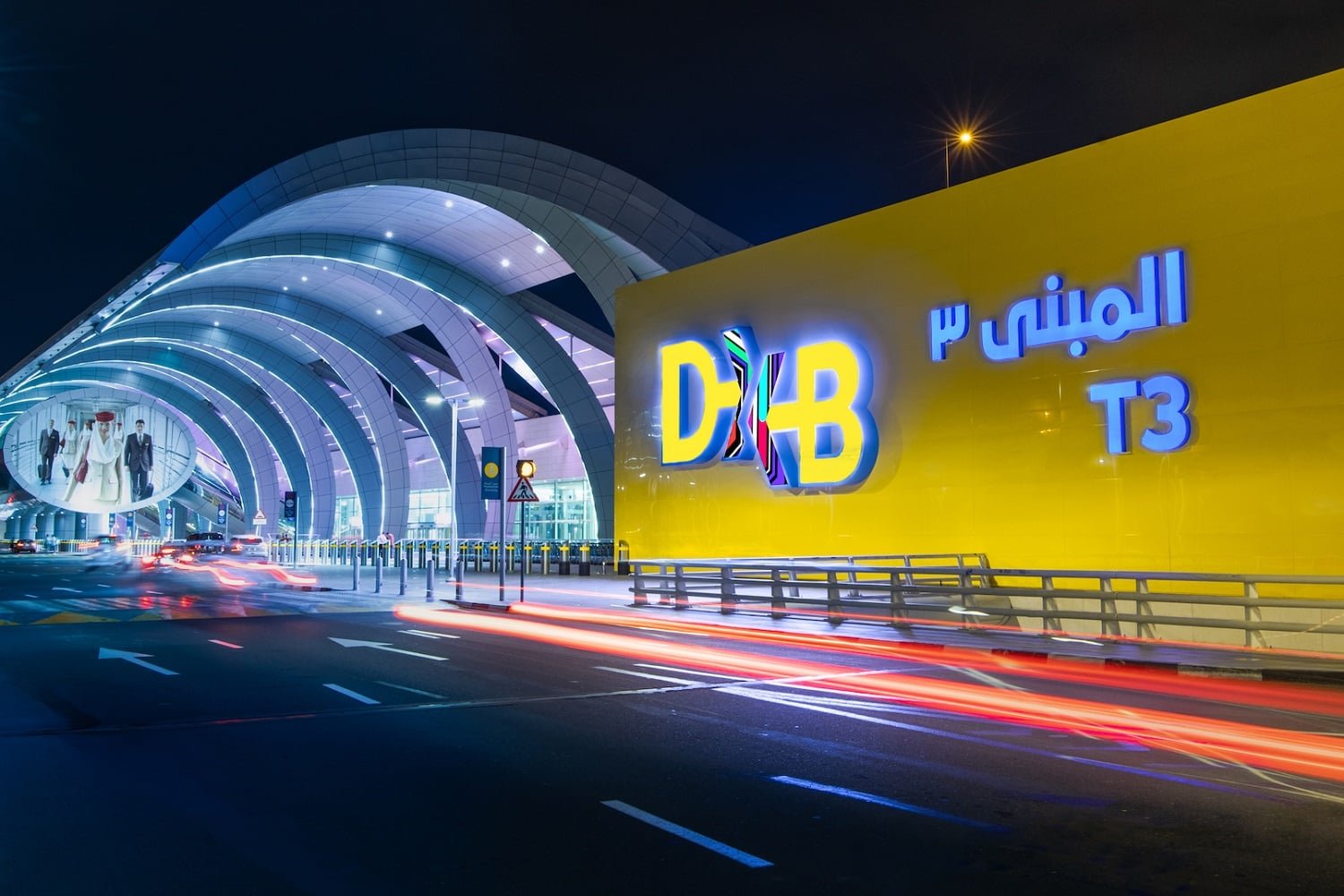

Image credit: Dubai Airports
Dubai Airports has entered the winter travel season with one of the most expansive and resilient networks in its history, as Dubai International (DXB) and Dubai World Central–Al Maktoum International (DWC) welcome new airlines, expanded routes and rising capacity to meet seasonal demand.
Direct traffic has emerged as a defining feature of DXB’s winter performance, accounting for 55 per cent of total passenger demand. The increase follows a familiar seasonal pattern driven by Dubai’s cooler climate, a full calendar of international business, sports and entertainment events, and heightened travel by residents heading abroad for holidays or family visits. The trend is further supported by the steady inflow of people choosing Dubai as a long- or medium-term home, according to a WAM report.
Read more-DXB to welcome over 10m passengers between Nov 27 to Dec 31
Europe and Central Asia are delivering notable growth this winter, with several airlines expanding services or returning to the market. FlyArystan joined DXB’s network on November 29, with twice-weekly flights from Aktau in Kazakhstan, while Austrian Airlines resumed operations on 2nd December with five weekly services from Vienna. Capacity from European carriers continues to rise as airlines respond to sustained travel demand.
Virgin Atlantic has upgraded its Dubai route with the A350-1000 aircraft, increasing seat capacity by 52 per cent, while British Airways has restored its A380 services from London Heathrow. Together, these developments point to strong confidence from European markets heading into the festive season.
Regional routes reinforce point-to-point demand
Seasonal demand from South Asia and the wider Middle East is also strengthening DXB’s connectivity. Varesh Airline launched twice-weekly flights from Sari in Iran on 30th October, while Fly Jinnah added twice-weekly services from Lahore on November 2. These routes reinforce point-to-point travel from regional markets where winter demand to and from Dubai traditionally intensifies.
Saudi Arabia remains one of the strongest contributors to traffic growth. Already DXB’s second-largest country market, Saudi Arabia accounts for 7.8 per cent of total passengers year-to-date as of October. Combined passenger traffic from the kingdom reached 6.3 million across DXB and DWC, marking a 1.3 per cent year-on-year increase.
DWC is playing an increasingly visible role in Dubai’s aviation ecosystem as airlines leverage its available capacity to complement DXB services. The airport welcomed 1.1 million passengers in the first 10 months of the year, representing a 36.6 per cent increase supported by demand from CIS, GCC and Western European markets. Cargo volumes and aircraft movements have also continued to grow, reinforcing DWC’s strategic momentum.
One of the key contributors to this expansion is Eurowings, which has launched a new daily DXB service from Stuttgart, introduced three weekly flights from Düsseldorf to DWC, and increased frequencies to Berlin, Cologne and Hannover. The airline has also deployed its Premium Bizclass product on the Berlin route.
Confidence in Dubai’s long-term aviation growth
Robert Whitehouse, vice president of Research at Dubai Airports, said winter remains a pivotal period for the sector, with this season’s breadth of connectivity highlighting how demand continues to evolve. He noted that the growth in direct traffic reflects a balanced mix of inbound visitors, outbound resident travel and people choosing Dubai as their home, underscoring the resilience and diversity of the city’s aviation network.
Overall, this winter’s schedule enhancements signal strong confidence from airline partners in Dubai’s travel demand. They reinforce the city’s appeal to visitors, business travellers and residents alike, supporting sustained growth in direct traffic and cementing Dubai’s position as one of the world’s most dynamic aviation markets.
