

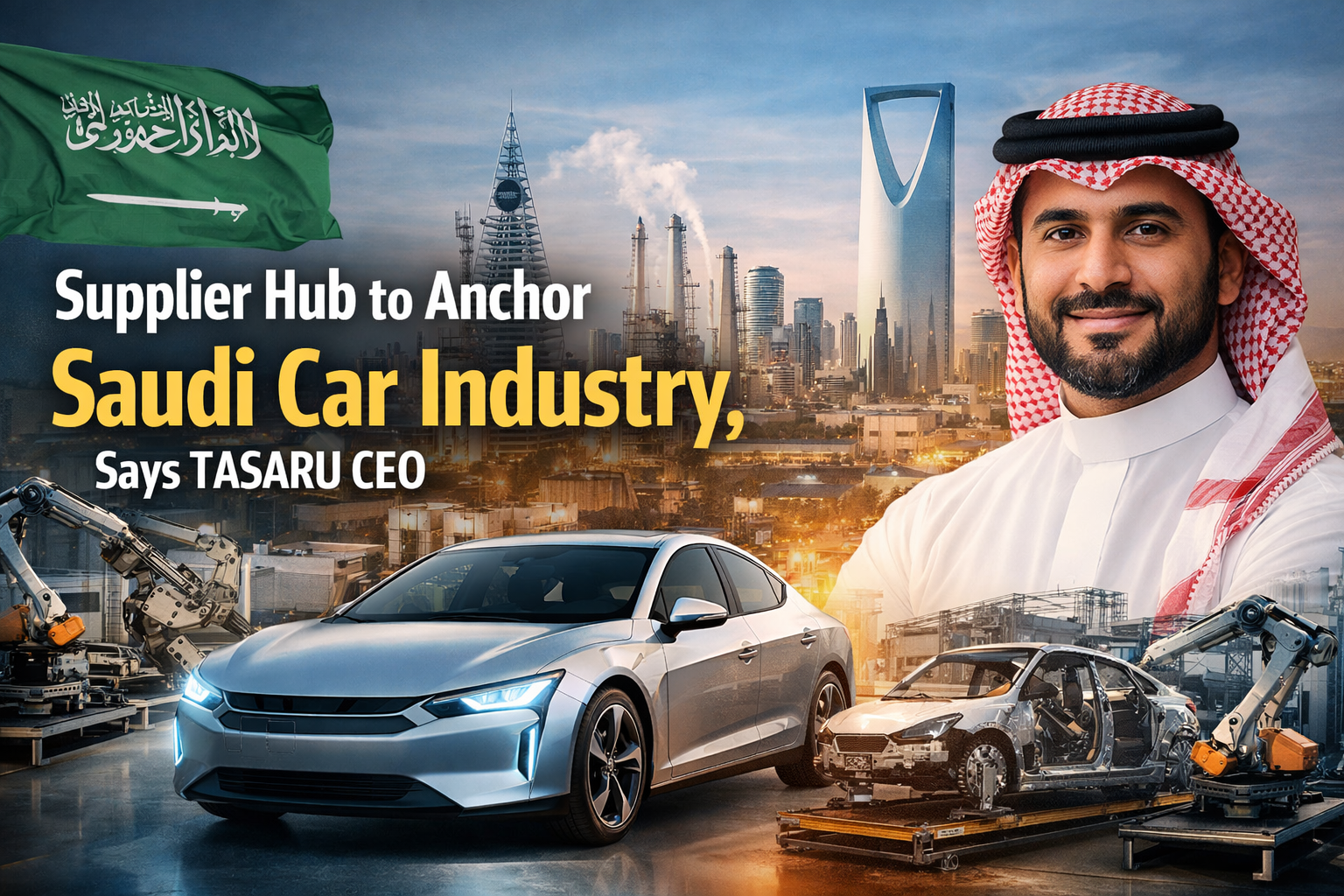
Saudi Arabia is taking a major step toward building a strong and sustainable automotive ecosystem. According to the CEO of TASARU, the creation of a supplier hub will play a key role in anchoring and accelerating the country’s car industry. This move supports long-term industrial growth, local manufacturing, and economic diversification in Saudi Arabia.
This blog explains what a supplier hub is, why it matters for the Saudi car industry, and how it aligns with the Kingdom’s broader economic goals—all in simple, easy-to-understand language.
What Is a Supplier Hub?
A supplier hub is a centralized industrial area where companies that make car parts and components operate close to vehicle manufacturers. These suppliers produce items such as engines, batteries, electronics, interiors, tires, and metal parts.
Instead of importing parts from many countries, carmakers can source components locally from nearby suppliers. This reduces costs, saves time, and improves quality control.
Why the Supplier Hub Matters for Saudi Arabia
The TASARU CEO emphasized that a supplier hub is not just an industrial zone—it is the foundation of a strong automotive industry. Here’s why it matters so much:
1. Strong Local Manufacturing Base
A supplier hub helps Saudi Arabia build cars locally instead of relying on imports. Local suppliers mean more control over production and faster manufacturing.
2. Lower Costs and Faster Production
When suppliers are close to factories, transportation costs drop and delivery times improve. This makes car production more efficient and competitive.
3. Job Creation for Saudis
Supplier hubs create thousands of direct and indirect jobs. These include engineers, technicians, factory workers, logistics staff, and management roles.
4. Skills and Technology Transfer
Global suppliers bring advanced technology and skills. Over time, Saudi professionals learn these skills, helping build local expertise.
TASARU’s Role in the Automotive Ecosystem
TASARU is working to attract global automotive suppliers and manufacturers to Saudi Arabia. The company’s vision is to create a complete ecosystem—from parts manufacturing to final vehicle assembly.
According to the TASARU CEO, the supplier hub will:
- Support both electric vehicles (EVs) and traditional cars
- Encourage international partnerships
- Help local companies become part of global supply chains
This approach ensures that Saudi Arabia is not just assembling cars but becoming a key player in the global automotive industry.
Focus on Electric Vehicles (EVs)
The supplier hub is especially important for electric vehicle production. EVs require specialized components such as batteries, power electronics, and software systems.
By developing EV-focused suppliers, Saudi Arabia can:
- Reduce dependence on fossil fuels
- Support clean and sustainable transport
- Position itself as a future-ready automotive hub
This aligns strongly with the Kingdom’s environmental and innovation goals.
Supporting Vision 2030 Goals
The supplier hub directly supports Vision 2030, Saudi Arabia’s national strategy to diversify the economy.
Key Vision 2030 goals supported by the supplier hub include:
- Reducing reliance on oil revenues
- Growing the industrial and manufacturing sector
- Increasing private sector participation
- Creating high-quality jobs for Saudi citizens
The automotive industry is seen as a high-potential sector that can deliver long-term economic value.
Opportunities for Local and Global Businesses
The supplier hub opens doors for many types of businesses:
For Local Companies
- Become certified suppliers for major car brands
- Access modern infrastructure and technology
- Grow alongside international partners
For Global Companies
- Enter the fast-growing Middle East market
- Benefit from government support and incentives
- Build factories close to emerging EV manufacturers
This win-win model makes Saudi Arabia an attractive destination for automotive investment.
Challenges and the Way Forward
While the plan is ambitious, some challenges remain:
- Building skilled manpower at scale
- Ensuring high-quality standards across suppliers
- Competing with established global automotive hubs
However, with strong government backing, clear policies, and leadership from organizations like TASARU, these challenges are manageable.
The supplier hub is a long-term project, but its impact will be felt for decades.
Conclusion
The statement from the TASARU CEO makes one thing clear: a supplier hub is the backbone of Saudi Arabia’s future car industry. By developing local suppliers, attracting global partners, and focusing on electric vehicles, the Kingdom is laying the foundation for a competitive and sustainable automotive sector.
As Saudi Arabia moves forward with Vision 2030, the supplier hub will not only anchor the car industry but also drive innovation, jobs, and economic growth. This strategic move positions the country as a rising automotive powerhouse in the Middle East and beyond.
Frequently Asked Questions (FAQs)
1. What is a supplier hub in the automotive industry?
A supplier hub is a dedicated industrial area where automotive parts manufacturers operate close to car assembly plants. It helps reduce costs, improve efficiency, and support local vehicle production.
2. Why is the supplier hub important for Saudi Arabia’s car industry?
The supplier hub helps Saudi Arabia build cars locally, create jobs, reduce dependence on imports, and strengthen its automotive supply chain. It also supports long-term industrial growth.
3. How is TASARU contributing to Saudi Arabia’s automotive sector?
TASARU is attracting global suppliers, supporting local manufacturers, and building a complete automotive ecosystem aligned with Saudi Arabia’s economic goals.
4. Will the supplier hub support electric vehicle production?
Yes, the supplier hub is designed to support electric vehicle manufacturing by encouraging the production of batteries, electronics, and other EV-specific components within Saudi Arabia.
5. How does the supplier hub align with Vision 2030?
The supplier hub supports Vision 2030 by diversifying the economy, boosting local manufacturing, creating skilled jobs, and reducing reliance on oil revenue.
