

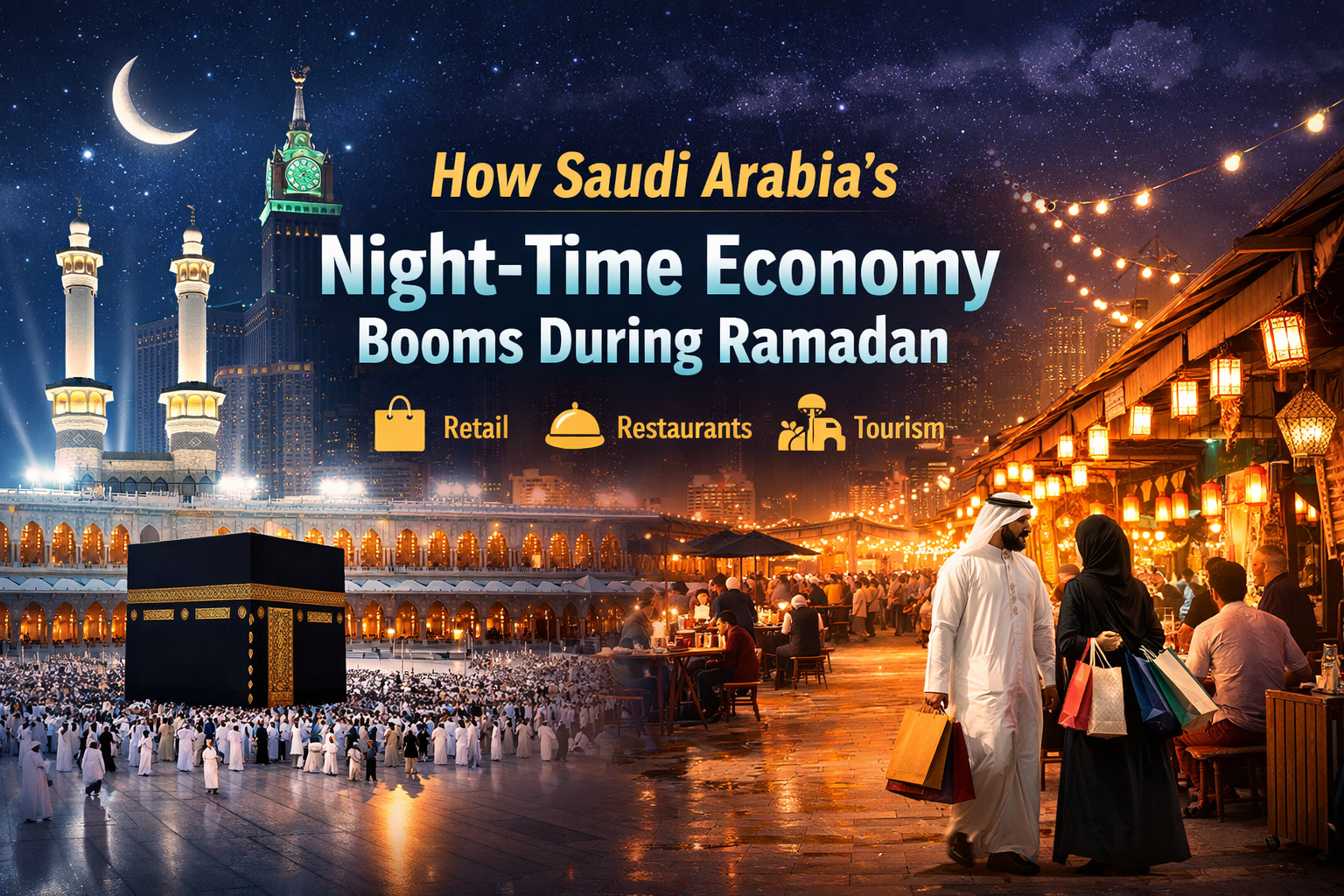
During the holy month of Ramadan, life in Saudi Arabia changes completely. Days become calm and peaceful, while nights turn lively, bright, and full of energy. From shopping malls to traditional markets, from restaurants to entertainment zones, the night-time economy becomes the heart of activity.
In this article, we will explore how Saudi Arabia’s night-time economy grows during Ramadan, why it is important, and how it impacts businesses, families, tourism, and the overall economy.
Understanding Ramadan in Saudi Arabia
Ramadan is the most sacred month in Islam. Muslims fast from dawn to sunset. During fasting hours, people avoid eating and drinking. Because of this, daily routines shift.
In Saudi Arabia, Ramadan is not just about fasting. It is also about:
- Family gatherings
- Charity and giving
- Spiritual reflection
- Community bonding
But once the sun sets and the call for Maghrib prayer is heard, cities come alive.
The Shift from Day to Night
During Ramadan:
- Offices and schools have shorter working hours.
- Many restaurants remain closed during the day.
- Streets are quieter in the afternoon.
However, after Iftar (the meal to break the fast), everything changes.
Shopping centers open late into the night. Cafes stay busy until early morning. Traditional markets attract families. This shift creates a powerful night-time economy.
What is the Night-Time Economy?
The night-time economy includes all business activities that happen after sunset. During Ramadan in Saudi Arabia, it includes:
- Restaurants and food delivery services
- Shopping malls and retail stores
- Street vendors and traditional souqs
- Entertainment events
- Hotels and tourism services
The holy month increases spending during evening and night hours, making this period very profitable for many businesses.
Shopping Malls and Retail Boom
One of the biggest changes during Ramadan is in retail shopping.
Major malls in cities like Riyadh and Jeddah extend their working hours until 2 AM or even 3 AM. Families prefer shopping at night because:
- The weather is cooler.
- They are not fasting anymore.
- It becomes a family outing after Iftar or Taraweeh prayers.
Retail stores offer Ramadan discounts and special collections, especially for:
- Eid clothing
- Perfumes and gifts
- Home decorations
- Dates and sweets
The last 10 days of Ramadan are especially busy because people prepare for Eid al-Fitr.
Restaurants and Food Industry Growth
Food plays a central role during Ramadan.
After sunset, restaurants are packed with families and friends. Many places offer:
- Special Iftar buffets
- Suhoor menus (late-night pre-dawn meals)
- Traditional Saudi dishes
- International cuisine
Food delivery apps also see a huge increase in orders. Many people prefer ordering from home to enjoy Iftar with family.
Hotels also organize luxury Ramadan tents where people can enjoy meals in a festive environment.
This massive demand boosts profits for:
- Restaurants
- Catering companies
- Delivery services
- Grocery stores
Traditional Souqs and Local Markets
Ramadan nights bring life to traditional markets (souqs). These markets sell:
- Dates
- Arabic sweets
- Spices
- Lanterns
- Prayer mats
Families enjoy walking in open-air markets after prayers. These souqs reflect Saudi culture and create opportunities for small business owners and local vendors.
This supports small and medium enterprises (SMEs), which are important for Saudi Arabia’s economic diversification goals.
Entertainment and Cultural Events
In recent years, Saudi Arabia has expanded its entertainment sector. During Ramadan, special events are organized such as:
- Cultural exhibitions
- Islamic lectures
- Ramadan festivals
- Family entertainment shows
Under Saudi Vision 2030, the country aims to grow tourism and entertainment. Ramadan nights support this goal by encouraging domestic tourism.
Many public spaces remain active late into the night, making cities feel safe and welcoming.
Tourism and Hospitality Sector
Ramadan attracts both religious and leisure visitors.
Cities like Makkah and Madinah receive millions of pilgrims performing Umrah. This increases demand for:
- Hotels
- Transportation services
- Restaurants
- Retail stores
Even in other cities, local tourism increases. Families travel within the country to enjoy Ramadan events.
Hotels offer Ramadan packages that include Iftar and Suhoor, creating strong seasonal revenue.
Impact on Employment
The night-time economy creates temporary and part-time jobs. Businesses hire extra staff for:
- Customer service
- Food preparation
- Delivery services
- Event management
Students and young workers benefit from flexible night shifts.
This seasonal employment supports household income and boosts consumer spending.
Economic Benefits of Ramadan Nights
The night-time economy during Ramadan provides several economic advantages:
- Increased retail sales
- Higher restaurant revenue
- Growth in tourism income
- Support for small businesses
- Job creation
Although daytime productivity may reduce slightly, night-time spending balances the economy.
For many businesses, Ramadan is one of the most profitable months of the year.
Digital Growth During Ramadan
Online shopping and digital payments also increase during Ramadan.
E-commerce websites see higher traffic for:
- Clothing
- Electronics
- Food items
- Gifts
Social media marketing becomes very important. Brands create Ramadan-themed campaigns to attract customers.
This digital growth strengthens Saudi Arabia’s modern retail sector.
Social and Cultural Importance
Ramadan nights are not just about money. They are about connection.
Families gather for:
- Iftar meals
- Taraweeh prayers
- Late-night coffee
- Eid shopping
The night-time economy supports these traditions by providing safe and welcoming spaces.
The atmosphere is unique. Streets are decorated. Mosques are full. Markets are bright and colorful.
It is a blend of spirituality and celebration.
Challenges of the Night-Time Economy
While the night-time economy brings benefits, there are also challenges:
- Traffic congestion at night
- Higher electricity use
- Worker fatigue
- Limited daytime productivity
Businesses must manage staff carefully to maintain balance.
However, overall, the benefits during Ramadan outweigh the challenges.
Future of Saudi Arabia’s Night-Time Economy
With Vision 2030 reforms, Saudi Arabia is investing in tourism, entertainment, and small businesses.
Ramadan continues to be a key seasonal driver of economic growth.
In the future, we may see:
- More organized night markets
- Smart city lighting solutions
- Better transport services
- Expanded digital shopping platforms
The holy month will continue shaping the country’s unique economic rhythm.
Conclusion
Ramadan transforms Saudi Arabia into a night-time powerhouse. While days remain peaceful and spiritual, nights become vibrant and full of economic activity.
From shopping malls and restaurants to traditional souqs and tourism services, businesses thrive after sunset.
The night-time economy during the holy month is not just about profit. It reflects culture, faith, community, and modern growth working together.
Saudi Arabia’s Ramadan nights truly show how tradition and economy can grow side by side.
FAQs
1. Why does Saudi Arabia’s economy become more active at night during Ramadan?
Because people fast during the day and prefer shopping, dining, and socializing after sunset, which increases night-time business activity.
2. Which sectors benefit the most during Ramadan?
Retail, restaurants, food delivery, tourism, hospitality, and small local markets benefit the most.
3. Do businesses change their working hours during Ramadan?
Yes, many businesses reduce daytime hours and extend night hours, sometimes operating until early morning.
4. How does Ramadan support small businesses in Saudi Arabia?
Traditional markets and night events allow small vendors and SMEs to earn more income through increased customer traffic.
5. Is Ramadan profitable for Saudi businesses?
Yes, for many businesses it is one of the most profitable months due to higher consumer spending at night.
