

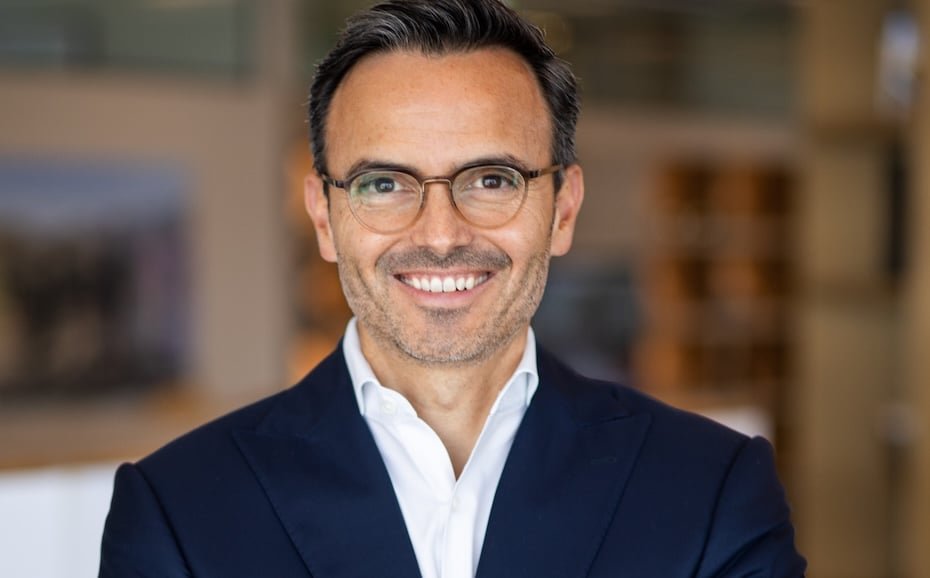

Image: Supplied
In an exclusive interview, Mauricio Zuazua, region chair at global consulting firm Kearney, discusses how AI is reshaping executive leadership, enabling smarter decision-making, and what it takes to build an AI-ready culture in the Middle East and beyond.
As AI becomes more agentic, how do you see it reshaping executive roles – will it augment CxOs or redefine leadership entirely?
The primary impact will be in augmenting CXOs rather than entirely redefining leadership. AI and agentic tools provide executives powerful new capabilities for decision-making and relieve them and their teams from time-consuming activities. This spells faster and deeper insights into their business at their fingertips, which in turn means quicker, better choices. It also means more time for them to focus on strategic thinking, innovation, and fostering a culture of agility and resilience within their organisations.
However, the demands on leadership are growing. Executives need to develop a deeper understanding of AI technologies and their implications – not only let their teams get educated. They also need to lead with empathy and adaptability, guiding their teams through the complexities of AI integration.
The role of CXOs is shifting from being a sole decision-maker to a facilitator of AI-driven insights, actions, and collaborative problem-solving.In essence, AI will enhance the capabilities of CxOs, making them more effective leaders, while requiring adaptation to new ways of thinking and leading.
Which areas within the C-suite are seeing the fastest AI adoption, and how is automation transforming decision-making in those functions?
Adoption at scale is indeed the largest hurdle right now. However, we see highest levels of adoption in transactional or creative areas of the business. This includes HR, Finance, Supply Chain, Marketing, and IT. In HR AI is being used for CV screening, policy and contract development.
In finance, AI is automating financial processes, improving accuracy and efficiency in planning and forecasting. In supply chain, AI is helping build more resilient and adaptable supply chains. In marketing, it is accelerating creative and copy development, optimising sales strategies, and tailoring customer engagement to increase effectiveness. In IT, AI is improving system performance and cybersecurity.
What are the critical enablers for building an AI-ready organisation from the ground up, especially in terms of structure, skills, and leadership mindset?
Building true AI capability means conditioning a new organisational muscle, and that muscle needs to grow to resolve problems in three areas: Business, People, and Technology.
The business problems are around aligning the organisation’s reason for being and what it wants to achieve with AI. Without these two connected, you have no hope of ROI. The people challenge is perhaps the toughest one, because it is not only about skills, it is about a different culture, one that allows multi-disciplinary teams that used to never work together, to have to work completely blended together.
New trust needs to be built, and that is not automatic, nor does it follow a top-down directive. Lack of trust and a viable culture will kill the best models out there. The final problem area is around technology: unified, trustworthy data across your business and legacy infrastructure. Without addressing this, your pilots will go great, but scaling will not succeed. Further, there are three things I’ve witnessed that are game-changing for organisations trying to build this muscle:
- CXO Education. The CXO level has to get educated on possibilities and pitfalls, on top of the rest of the organisation getting educated.
- Experimentation. The organisation must become comfortable dealing with experimentation: Go back to the scientific method of testing what works. Change the chip from why it doesn’t work ‘here’ to what does it take for it to work.
- Incentives. Organisations have to be intentional on incentives and space for people to work with these new capabilities. This cannot be an afterthought in any AI transformation.
How should businesses approach human-AI collaboration to maximise productivity without losing human judgment and oversight?
Awareness, education, and keeping a human-in-command loop. Codify the red lines where people must sign off — strategy pivots, brand voice, ethical calls.
Pair employees with AI assistance so human and machine critique each other’s output in real time; in our client pilots, those that empowered their teams with AI assistance delivered 25 per cent more throughput than either the humans alone, or attempting full automation, precisely because accountability is shared and rewarded.
What barriers to AI adoption are most common in the Middle East, and how are regional dynamics–like national visions and digital infrastructure – shaping the pace of transformation?
The Gulf isn’t catching up; it’s leaping forward. National visions pledge big numbers – UAE wants AI at 20 per cent of GDP by 2031, and Saudi Arabia has earmarked $20bn for AI by 2030, for example., cloud zones, regulatory sandboxes, and Arabic LLMs are real advantages. Yet four frictions persist:
- Talent is still scarce
- Data is fragmented, often across sovereign clouds
- Not enough entities scale solutions post-proof-of-concept
- Venture liquidity for post-Series B AI firms remains thin
Solve talent, data, scaling, and capital, and the region could become the world’s applied-AI testbed.
Can you share a recent example where Kearney helped drive AI-led business transformation, and what lessons other organisations can draw from it?
A global insurer’s source-to-contract process was eating legal budgets and time. In 18 weeks, we united business, legal, data, and IT, deployed an AI contract-engine, and rolled it out to thousands of users — saving hundreds of hours of manual work and a quarter of legal fees, while hitting full ESG-compliance.
The lesson? Start with the hairy problem, weld cross-functional teams early, and scale once value is proven — not before.
From a leadership lens, what does it take to create a culture that embraces AI while balancing ethical considerations, particularly in high-stakes industries?
Bake ethics into code — then keep the humans honest. Every model needs a red team for bias and safety, every release ships with a public model card. Regulators come in early, not after the fact, and bonuses hinge on responsible AI scorecards, not just ROI. But stewardship isn’t a one-way street.
Users who pocket the productivity gains must also carry the duty of care.We mandate a human-in-the-loop pledge that says:
• Own the decision. The system proposes, the user disposes — no rubber-stamping.
• Flag the drift. If outputs look off, hit pause and trigger a review; your vigilance trains the next model.
• Close the loop. Feedback outcomes so the algorithm learns — and so we measure real impact, not vanity metrics.Culture shifts fastest when accountability is shared and rewarded—financially, reputationally, personally.
What future leadership traits do you believe will define the next generation of C-suite executives in an AI-enabled world?
Successful leaders will blend algorithmic literacy with radical empathy. They will run 10 scenarios in parallel, pivot without ego when needed, and still read the room better than any sentiment model.
They will be relentless experimenters, because it will be table stakes to try new, untried things. They will break more glass earlier, taking more measured risks with a willingness to break things that work today, looking to make them work even better.
Most of all, they will be incredible storytellers — turning data into a narrative that moves boards, regulators, and frontline teams alike.
