

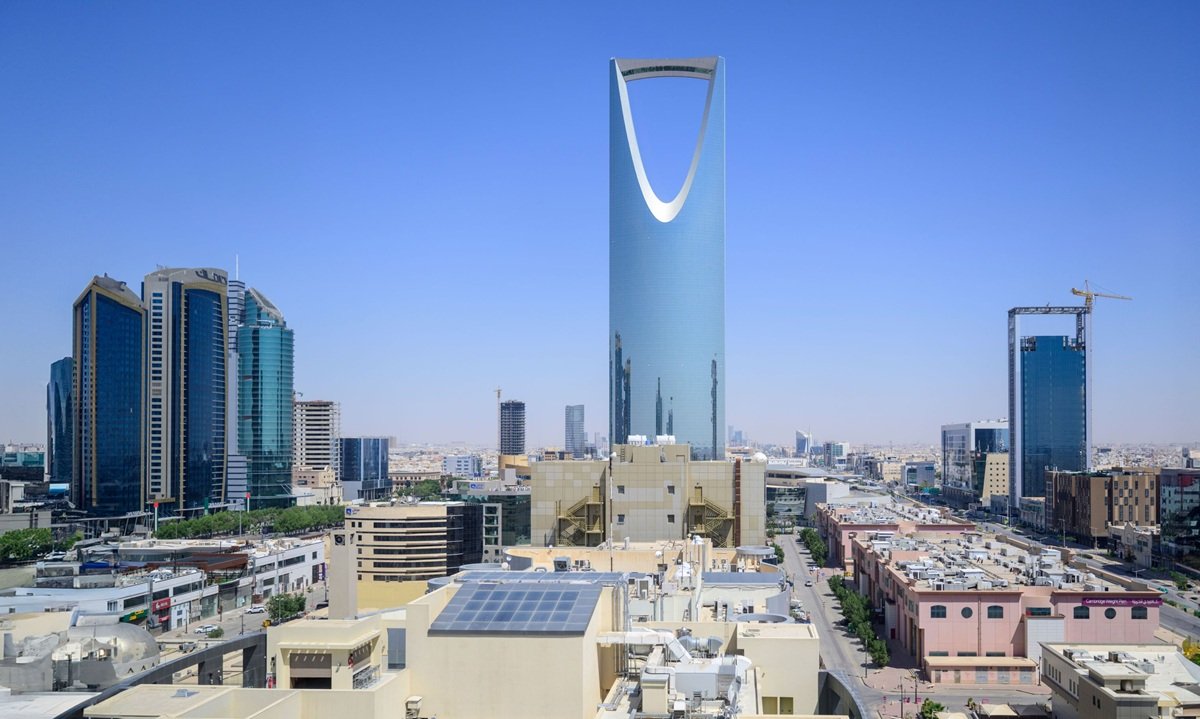
Saudi Arabia is leading a region-wide construction surge, fuelled by mega projects and long-term diversification plans.
But a sharp rise in demand is stretching resources, pushing Riyadh’s average construction cost to $3,112 per m²—the highest in the Middle East—according to Turner & Townsend’s 2025 Global Construction Market Intelligence report.
With inflation forecast to remain high and the skilled labour pool under strain, developers across the Gulf face mounting delivery challenges.
Saudi construction boom
The report identifies Saudi Arabia as one of the world’s most dynamic construction markets, fuelled record levels of investment in infrastructure, real estate, and tech.
The Kingdom is forecast to achieve GDP growth of 3.5 per cent in 2025 and 3.9 per cent in 2026, according to the International Monetary Fund (IMF).
But surging demand is stretching available labour and resources, pushing Riyadh to the top of regional cost rankings.
With an average construction cost of $3,112 per m², it is the most expensive city to build in the Middle East—almost $400 higher than Doha ($2,613) and well above Dubai ($1,926) and Abu Dhabi ($1,872).
Middle East construction cost rankings 2025 forecast
| City | Cost per m² | Construction cost inflation (2025) | Average wages per hour |
| Riyadh | $3,112 | 5.0% | $14.10 |
| Doha | $2,613 | 1.0% | $5.40 |
| Dubai | $1,926 | 5.0% | $6.50 |
| Abu Dhabi | $1,872 | 5.0% | $5.90 |
Nation-building initiatives are playing a key role in driving demand in the region. Major mixed-use developments like Diriyah Gate and King Salman Park make Saudi Arabia the top-performing construction sector in the Middle East according to the report.
The data centre boom is also accelerating, especially in KSA, where Vision 2030 has catalysed the rise of HUMAIN, a PIF-backed company poised to play a leading role in positioning the Kingdom as a regional hub for AI innovation.
With $2.5tn of untapped mineral reserves, KSA is also attracting public and private investment in mining.
With Riyadh at 98 percent warehouse occupancy, the report points to growth in the local industrial, manufacturing and logistics space to meet the rising demand, and to help procurement teams source locally so they comply with Vision 2030.
In neighbouring Qatar, global headwinds and a downturn in real estate construction in has helped to keep construction cost inflation below the rest of the region, forecast to be 1 per cent in 2025. However, sports and tourism still offer developers opportunities.
In the UAE, economic diversification, as well as a booming population, have laid the groundwork for residential development to grow as well as wider social infrastructure.
Labour shortages are now a region-wide constraint, with all Middle Eastern markets in the report citing a lack of specialist skills as a key bottleneck.
This is contributing to inflationary pressure, with construction cost escalation forecast at 5 per cent in Riyadh, Dubai, and Abu Dhabi for 2025.
Dean Furey, head of real estate for Townsend and Townsend KSA, said: “Construction is at the heart of the Middle East’s efforts to diversify local economies. We’re seeing the resulting boom in mixed-use, hospitality and residential schemes quickly putting the region on the map as a destination of choice for both local and international leisure.
“Demand is up in high-tech sectors like data centres too, which have been given a bigger role in national strategies and are attracting more private investment.
“In KSA, given the scale and complexity of its national giga-project pipeline, completing all planned construction by 2030 will not be without its challenges.
“As a result, resources are being strategically concentrated in priority sectors such as hospitality, sports, leisure, entertainment and residential to align with Vision 2030 objectives and to prepare for major upcoming events like Expo 2030 and the FIFA World Cup 2034.
Middle East cheaper than global alternatives
Despite regional inflation, Middle Eastern cities remain cheaper to build in than global heavyweights like:
- New York: $5,744/m² (highest globally)
- London: $5,385/m²
- San Francisco: $5,504/m²
- Los Angeles: $4,786/m²
- Chicago: $4,695/m²
Government subsidies, lower labour costs, and strategic infrastructure support help Middle East markets retain a competitive edge despite increasing pressure.
With Expo 2030, FIFA World Cup 2034, and broader diversification plans in motion, the region’s construction boom shows no signs of slowing. Turner & Townsend advises investors and developers to widen local skilled labour pools and strengthen domestic procurement.
