

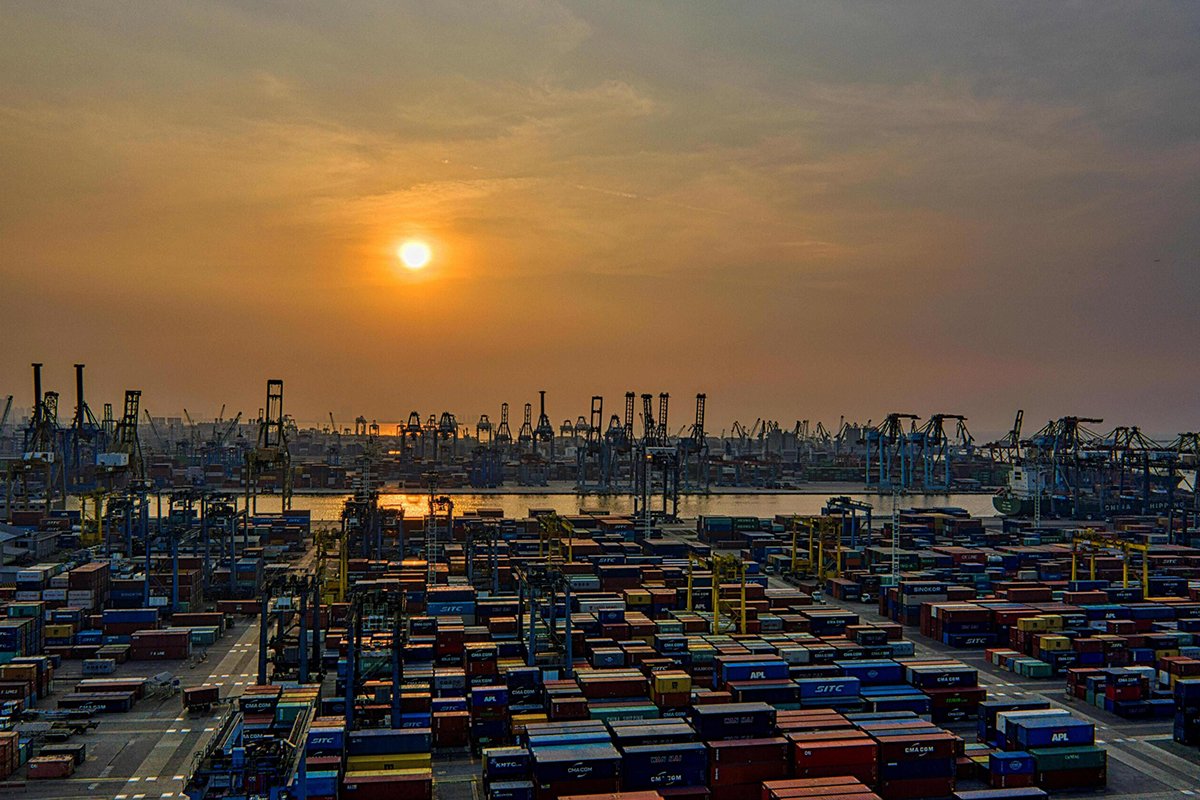
There’s no shortage of ambition when it comes to clean energy. Net-zero targets are everywhere. Capital is flowing into renewables. Technologies are evolving fast. But those ambitions are now coming up against a tough reality: the global trade system that once quietly enabled the clean energy shift is splintering. The old assumption that global supply chains would always deliver what was needed, when it was required, is looking shakier by the day. As the world is more committed than ever to decarbonisation, basic materials needed to get there are suddenly harder to secure.
That mismatch is prompting a rethink at every level about how countries and companies go about getting hold of the resources they need. From copper and lithium to natural gas, the playbook is being rewritten. In general, three strategies are emerging. One is the revival of government-to-government deals to lock in supply. Another tries to localise supply chains entirely, which is ambitious, but often impractical. The third, and increasingly the most crucial, leans on the agility of commodity traders to find workarounds in a fractured market.
Spotlight on traders
Not everything can or should be solved at the state level. That’s where commodity traders have become increasingly vital. Long seen as background players, these firms are now operating closer to the centre of the action. What makes them so effective is precisely what they’re not: they’re not governments, they’re not bogged down in bureaucracy, and they’re not tied to national agendas. When supply routes seize up or politics interferes, traders often keep the system running.
They’re evolving fast. Companies like Mercuria and Trafigura are moving beyond deal-making. They’re beginning to buy stakes in infrastructure, acquiring refining assets, and in some cases even owning upstream production. That’s a big shift: from middlemen to fully integrated players.
One firm illustrating that shift is BGN International, the Geneva-based trading arm of Bayegan Group. As a major private commodity trader and one of the largest buyer of LPG from the US, BGN has traditionally played a crucial behind-the-scenes role, moving over 50 million tonnes of commodities a year. Today, they are stepping closer to the physical assets that underpin trade. Its recent acquisition of two mid-sized LPG tankers gives it a stronger foothold in gas shipping. In a world where flexibility and access are everything, it’s a strategic move: part logistics play, part supply chain insurance. It shows how today’s traders have evolved to be more than intermediaries; they’re becoming builders of the very systems that keep energy moving.
Africa, too, is a space to watch. With the African Export-Import Bank backing a US$3 billion facility to encourage intra-African fuel trade, there’s real momentum behind localising energy flows. The idea is to connect African refineries with African buyers, cutting reliance on imports from faraway markets. Traders like BGN are positioned to help make that happen by handling credit, navigating logistics, and stitching together deals where others might struggle.
In a world where supply chains are more brittle, that kind of nimbleness is essential. Traders operate with speed and flexibility, offering financial instruments to manage volatility. Their role now extends beyond simple logistics as they help contribute to the stability of the system. By absorbing shocks and facilitating continuity, they serve an important part in market flows even amid geopolitical disruptions.
Resources are big business
Some economies have decided the best way forward is to leverage the free market and cut large deals. What’s often dubbed “friend-shoring” has been gathering steam. In May, for example, the US began evaluating a commercial lease sale off American Samoa for seabed mining of critical minerals such as nickel and cobalt offered by California-based firm Impossible Metals. This move opens the door to private sector participation while encouraging investment in deep‑sea mining technology and permitting frameworks. This type of partnership may reflect a broader shift in which mining companies play a growing role in supporting both regional development and global supply chains.
In the Middle East, the approach has taken a slightly different form. Armed with capital from fossil fuel exports, Gulf energy companies are now placing upstream bets, investing directly in foreign mines. Considerable capital has already been deployed, for example, billions have been committed to ventures in copper, nickel, and lithium. It’s a clear move by regional energy companies to future-proof: if electricity is the new oil, then metals are the new crude.
As the Gulf continues to sketch out plans for an integrated gas grid, which would allow for natural gas to move more freely in the region, it’s not only emissions targets that are being met. For companies still dependent on oil revenues, gas offers a path toward diversification without ignoring hydrocarbons altogether. In all these cases, properly thought-out resource agreements provide long-term strategic protection for both energy companies and the economies they serve.
The cost of self-reliance
Meanwhile, a third approach, full-scale localisation, is getting political traction, especially in developed economies. The concept is simple enough: extract your resources, refine them domestically, and manufacture your clean energy technologies. It promises control and security, but the practical hurdles are steep.
Start with geology. The US may have lithium, but not in the volumes seen in Chile or Australia. Europe has almost no rare earths to speak of. Yet even when deposits exist, permitting, building, and launching a mine can take more than a decade. That’s far too slow to align with 2030 emissions targets.
Then there’s the cost. Labour, regulation, and environmental standards in richer countries mean domestic refining and manufacturing can be significantly more expensive. A battery metal processed in the US, for instance, might cost 30 to 50 per cent more than one from China. That kind of margin quickly eats into competitiveness—unless companies (whether processing or assembly plants, or OEM’s) are willing to backstop the difference.
Other problems arise, too. Betting heavily on one material or process risks obsolescence if technologies evolve. Local opposition can block projects. And building entire parallel supply chains introduces the danger of wasteful duplication.
That’s why some analysts now advocate for something more flexible: what’s sometimes called “regional anchoring.” Rather than trying to do everything in-house, the idea is to focus on specific strengths, processing or assembly, while still importing other inputs. Done right, this middle path offers more resilience than total reliance on imports, but without the massive price tag of full autonomy.
A system under pressure – but still moving
What’s clear is that the road to a greener energy system won’t be smooth, and trade, or the lack of it, is becoming a major obstacle. The supply chains that support decarbonisation are increasingly shaped by politics as much as by market forces. Countries are responding in different ways: through diplomacy, through investment at home, and perhaps most effectively through partnerships with traders.
All of these responses will remain in play. Bilateral deals will continue. Some will reshape whole sectors. Others will fizzle. But it’s the traders who are increasingly critical in keeping the system coherent. They hedge against volatility, re-route cargoes under pressure, and knit together fractured supply chains in ways no government can.
While full-on localisation isn’t likely to become the norm, strategic investments in key parts of the chain can still help reduce vulnerability. The real trick is finding the right balance. Lean too hard on bilateral deals and risk fragmenting the global system. Rely too much on traders, and questions arise about oversight. Go all-in on local production, and you might sacrifice speed for sovereignty. But for now, the system hasn’t broken, that’s largely thanks to the quiet consistency of commodity traders playing their own trade game across borders, through crises, and despite the noise.
Brand View allows our business partners to share content with Arabian Business readers.
The content is supplied by Arabian Business Brand View Partners.
