

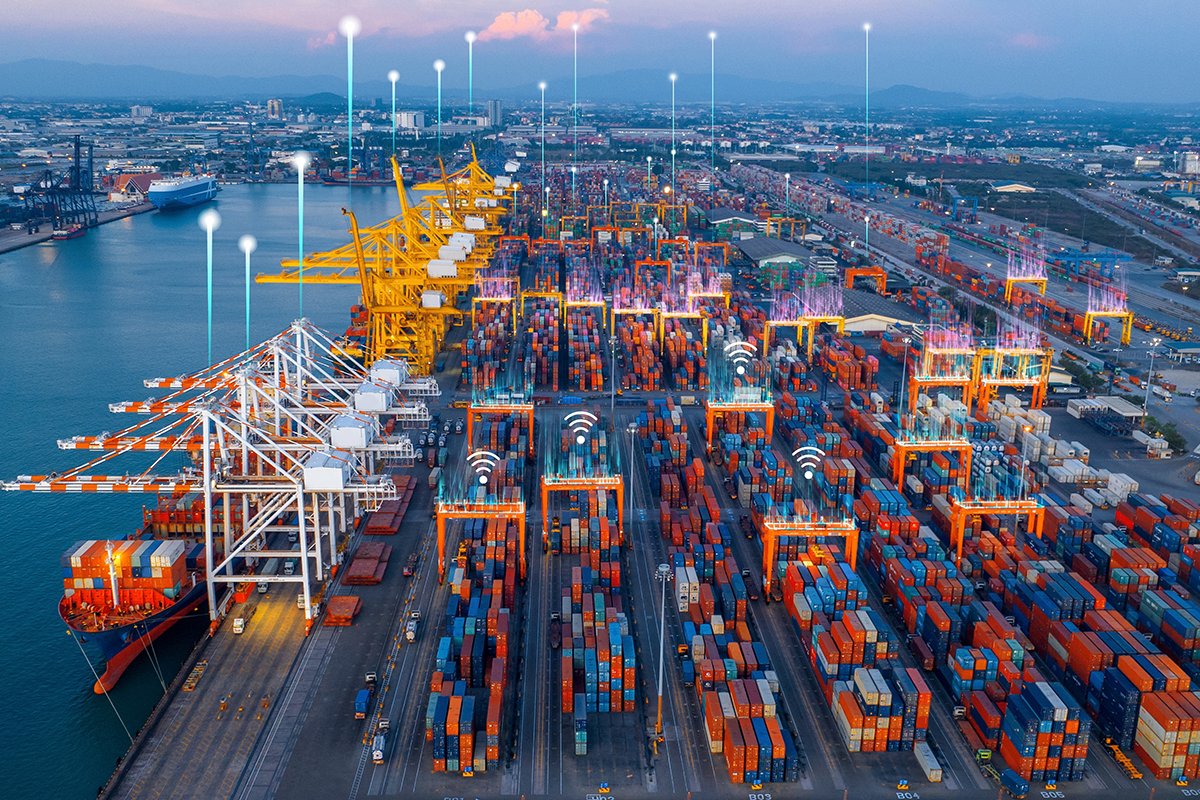
In today’s fast-changing world of maritime logistics, port security is no longer just about protecting access. It has become a critical driver of operational speed, national resilience and economic performance. As global trade volumes rise and criminal threats evolve, Gulf ports must rethink how they manage risk without obstructing flow.
The ports that will lead in 2026 and beyond will be defined by three principles. They will be smart, they will be secure, and they will be green. These are not just trends rather strategic imperatives for the next generation of global logistics.
Smart security is targeted security
Smart ports are not just high-tech ports. They are intelligent systems built around rapid risk identification.
The real advantage of artificial intelligence is not in automating everything, but in knowing what to flag and when. If used properly, AI will help security teams focus on what matters most and reduce unnecessary checks.
Crucially, AI does not replace people. It supports them. In an era where criminal networks are increasingly targeting port workers for intimidation or recruitment, the human layer alone is not enough.
AI-enabled systems provide an invisible layer of protection. They detect what might be missed and make it much harder for criminals to game the system.
However, smart does not mean invincible. Without solid business continuity plans and well-tested contingency measures, ports risk over-reliance on digital infrastructure. The outage at Heathrow earlier this year made it clear. Technology without viable contingencies can bring operations to a halt.
Security convergence builds resilience
Security cannot live in silos. It must converge. That means blending physical security, technical systems and digital monitoring into a single command structure. This approach enables faster responses, greater cohesion, and reduces confusion during incidents or crises.
But convergence should not stop at security. The next frontier is organisational convergence. Every department in the port environment, from health and safety to HR to finance, must understand its role in protecting the operation. Integration is what makes a port agile. Without it, even the best tools will not deliver results.
Too many organisations fail because their departments work in isolation. Ports cannot afford that kind of fragmentation. Security should be a shared responsibility across the entire enterprise.
Compliance is not the finish line
The ISPS (International Ship and Port Facility Security) Code offers an essential framework for international port security. But it was never meant to be the endpoint. Some ports treat it as a ceiling. In reality, it should be the starting line.
Security audits that meet the minimum standard are not enough in today’s risk environment. Ports need experienced and credible partners who can assess vulnerabilities, provide meaningful risk mitigation recommendations and help build resilience. A security partnership is key to blending international best practice with local environmental, cultural, and resource realities. The cost of getting it wrong can be significant, not just in money, but in reputation.
Hidden threats are rising fast
The most visible flashpoints in maritime security are well known. War in the Red Sea. Tensions in the Arabian and Black Seas. Yet some of the fastest-growing risks are not always on the latest geopolitical map.
Drug smuggling, for example, has become a serious disruptor. The discovery of narcotics on board can lead to a vessel’s detention, delay operations and trigger lengthy legal proceedings. Criminal groups have also grown more sophisticated. Insider threats, where crew or port workers are recruited or coerced, are now a real risk.
Another overlooked issue is irregular migration. Many shipping companies are unaware of their legal obligations when they come across vessels in distress. They often lack protocols to handle such situations while ensuring the safety of their crew and assets. This is not an occasional problem. It is becoming more frequent and complex.
The future is public-private collaboration
There is a clear distinction between the responsibilities of state and private actors. Any role that resembles warfighting should always rest with the state. But the protection of trade, merchant shipping and critical infrastructure is a space where the private sector can offer value.
Private security providers are often more flexible and cost-effective. They also have the industry expertise to tailor security to commercial realities. In the coming years, collaboration between private and public actors will become essential to achieving lasting resilience.
The next must-have capability is AI maritime domain awareness
By 2026, the most advanced ports and shipping companies will adopt integrated AI systems for maritime domain awareness. These platforms will link port operations, ship movements and threat indicators into one view. This will allow decision-makers to act quickly and with full information.
More importantly, this will bring security convergence to life. It will connect physical infrastructure, digital monitoring and risk intelligence in real time. Technology exists however the only question is who will act first.
Security is a foundation for growth
To keep trade flowing, ports must treat security not as a regulatory requirement but as a competitive asset. In a world where criminal tactics are changing faster than ever, agility is not optional. Neither is integration. The winners will be those who plan for both.
Smart. Secure. Green. These are the defining values of modern port strategy. Those who build around them will shape the next decade of maritime security leadership.
