


Images: Supplied
As Middle Eastern nations race to diversify their economies and meet ambitious renewable energy targets, ABB has positioned itself at the centre of the region’s energy transformation with the launch of a new Training & Customer Experience Center in Dubai.
The Swiss technology giant’s facility aims to address a critical bottleneck in the region’s electrification agenda: the shortage of skilled professionals who can deploy and maintain advanced power systems. With plans to train around 2,000 engineers and technicians annually, the centre represents a strategic bet that localised expertise, not just imported technology, will determine how quickly the Middle East can modernise its grids and integrate renewables at scale.
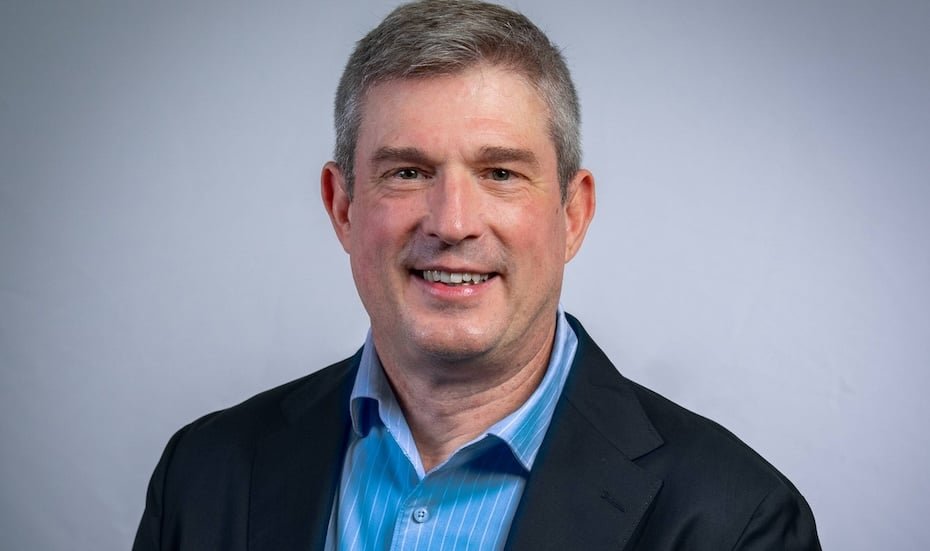
In an interview with Gulf Business, Marco Tellarini, SVP for ABB‘s Electrification Service division in Europe, the Middle East and Africa, outlined how the company plans to support the region’s net-zero commitments while building the technical capabilities needed to sustain them.
From digital substations supporting Saudi Arabia’s 50 per cent renewable energy target by 2030 to AI-driven predictive maintenance across industrial hubs like NEOM, ABB is embedding itself in projects that will define the region’s economic and environmental trajectory for decades.
The timing is deliberate. As the Middle East confronts rising power demand from rapid urbanisation, data centre expansion, and electric vehicle adoption, ageing electrical infrastructure, some over 50 years old, requires careful modernisation.
Here, Tellarini discusses how ABB’s approach balances cutting-edge digital solutions with pragmatic retrofit strategies, ensuring countries can upgrade legacy systems without costly disruptions or technology lock-in.

What are ABB’s top strategic priorities for the Middle East, and how will you measure success for this regional strategy and the new centre in the next three to five years?
ABB’s Middle East strategy centres on accelerating electrification and grid modernisation, driving industrial efficiency through digitalisation, and building regional capability via our new Training & Customer Experience Center, which we have just opened in Dubai.
The region is a fast-growing market for sustainable electrification, and as countries diversify away from hydrocarbons and scale renewables, Saudi Arabia’s 50 per cent target by 2030 being a prime example, ABB will leverage our technology and decades of partnerships in the region to meet demand for electrification solutions from regional projects, including infrastructure, utilities, smart cities and more.
We will expand deployment of digital substations, flexible grid solutions, and integrated electrification to boost capacity, resilience, and emissions reduction. Across mega-projects and industrial hubs such as NEOM, ABB will deliver automation, electrification, and lifecycle services to lift productivity and energy efficiency, while embedding predictive maintenance and real-time optimisation to keep critical assets running efficiently and sustainably.
Our key strategic goals for the region in the next five years will be to support that growth with advanced digital solutions that have an impact where our customers need it most – grid reliability, reduced technical losses, improved renewable hosting capacity, lower CO2 intensity, and benefits including energy efficiency, uptime, and OPEX reductions enabled by digital asset management and predictive maintenance.
The new ABB regional centre is a central part of being able to deliver on this by training the region’s electrification professionals, to support local deployments, and ensure that ABB is not only deploying cutting-edge technologies but also transferring know-how and building a self-sustaining ecosystem for resilient, low-carbon growth.
How will ABB’s new digital centre empower Middle East industries to achieve their economic diversification and smart city goals?
The new Electrification Service Customer Experience Center will be a practical catalyst for the deployment of smart power systems that are an essential part of smarter, more efficient cities. For example, intelligent power systems enable the shift from reactive to predictive operations through enabling real-time monitoring, data analytics, and remote diagnostics.
Our customers can deploy intelligent, responsive electrical systems that detect, predict, and prevent issues before failures occur. Asset owners can optimise performance, improve energy efficiency, and extend equipment life at lower cost. The centre’s emphasis on cloud-enabled services and digital asset management helps operators manage complex portfolios remotely and securely, reducing downtime and maintenance overheads while raising safety standards across buildings, industrial facilities, utilities, and data centres.
Crucially, the centre closes the skills gap that often slows the adoption of advanced technologies. With a plan to train around 2,000 engineers and technicians annually from across the Middle East, the facility focuses on medium- and low-voltage technologies, digital asset management, AI-driven analytics, and predictive maintenance. It also prioritises practical upgrade and retrofit pathways for older installations, helping customers modernise without disruptive “rip and replace”.
By embedding local expertise in algorithm application, smart asset management, and AI-powered control optimisation, the centre ensures advanced ABB solutions are adapted to regional operating realities.
The result is faster, more reliable deployment; improved energy resilience; and a workforce equipped to sustain smart city systems, turning digital ambition into measurable, on-the-ground performance.
With the Middle East’s push for renewable energy and net-zero goals, how will ABB’s electrification solutions help in building a sustainable and digital energy grid?
ABB’s approach combines modernisation, digitalisation, and lifecycle stewardship to create grids and industrial systems that are cleaner, smarter, and more reliable. Digital monitoring and predictive maintenance minimise energy waste and unplanned downtime by continuously assessing asset health and optimising performance.
A circular model, prioritising repair, refurbish, and retrofit, extends asset life and reduces emissions associated with premature replacements, while enabling legacy equipment to integrate renewables more effectively. Lifecycle responsibility is central: by enabling upgrades and retrofits, ABB avoids lock-in to outdated technologies and ensures continuous improvement.
AI-enhanced capabilities, from early anomaly detection to remote assistance using AR, shorten repair times and improve service quality. Within buildings, combining system data with user behaviour analytics can trim energy use and costs by over 20 per cent, while AI-driven safety monitoring reduces risks in real time.
These capabilities align with national initiatives like the UAE’s Net Zero 2050 and broader smart city programs, where digital power and energy management provide real-time control over consumption and productivity.
ABB’s portfolio supports optimised system design to reduce both energy intensity and physical footprint, and advances in battery energy storage and fuel cells provide clean, reliable backup that complements variable renewables.
Beyond net-zero pledges, what are the key economic and tech drivers behind the global electrification trend, and how do they create new growth opportunities for industries and infrastructure in markets like the Middle East?
Electrification is an economic and technological imperative delivering energy security, predictable costs, and competitive advantage. As renewables become more cost-competitive, electrification reduces exposure to fossil fuel volatility and stabilises operating expenses —especially for energy-intensive operations.
Digital innovations, predictive analytics, AI-driven asset management, and smart grid make electrification scalable and reliable, while the rapid rise of EVs and electrified heat drives demand for robust electrical infrastructure. These dynamics create significant opportunities for utilities, OEMs, and service providers to deliver integrated solutions across transport, industry, and buildings.
In the Middle East, this translates into accelerated grid modernisation and renewable integration programs, expansion of electrified industrial hubs and smart cities, and growing demand for lifecycle services. Mega-projects like NEOM are built around electrified, digital ecosystems.
At the same time, a wave of retrofit and modernisation is emerging for electrical systems to replace legacy equipment in the region, some of which is over 50 years old. Updating these systems requires careful, phased upgrades that maintain operations and maximise existing capital.
ABB’s phased approach minimises disruption through scheduled installations and planned maintenance, helping customers de-risk transitions and extract more value from legacy assets. The combined pull of economics, technology, and policy creates a durable growth runway for electrification solutions that deliver reliability, efficiency, and sustainability in tandem.
What are the biggest non-technological challenges, like regulations, investment, grid issues, hindering widespread electrification globally?
In some regions, we find that the non-technical hurdles often determine the pace of electrification more than technology itself. Regulatory issues can complicate rollout, and the large upfront capital cost of electrification is challenging.
Utility companies and governments also need to carefully plan their grids so as not to overwhelm networks that were not designed for high penetration of electrified end uses.
In the Middle East, we don’t rarely face these issues – progressive regulations and sustainability initiatives are increasingly shaping electrification, and the region can continue to scale up electrification through innovative funding partnerships and coordinated grid investments to build capacity and resilience.
With these enablers in place, the region can more rapidly operationalise electrification and convert strategic goals into measurable decarbonisation and reliability gains.

As digital and electrification merge, what key tech innovations will reshape energy systems? What investments are crucial to use for sustainable development, especially in the Middle East?
There are many digital innovations, including real-time visibility, advanced analytics, digital asset management, remote diagnostics and monitoring, all of which are contributing to more efficient operations. To realise these gains at scale, organisations need targeted investments in the technologies and capabilities and the ability to integrate them all into intelligent systems.
Prioritising upskilling is equally critical so operators can deploy and manage the solutions. Together, technology deployment and capability building create a resilient, efficient operating model that supports sustainability goals and keeps critical infrastructure performing under growing demand.
Given the Middle East’s renewable energy goals, what policies, collaborations, and infrastructure upgrades are essential to quickly scale electrification, ensuring energy security and a leading role in the global energy transition?
Scaling electrification quickly requires a combination of robust partnerships, policy clarity, and focused infrastructure upgrades. ABB’s approach, co-creating with roughly 15 partners on AI-driven solutions for smart buildings, power, and distribution, demonstrates how collaboration unlocks new value, spreads risk, and accelerates decarbonisation.
With more than 500 ABB group-wide live AI projects (over 200 in electrification) spanning predictive maintenance, digital twins, natural language interfaces, engineering, safety, and AI-powered customer support, ABB is applying advanced capabilities to real-world bottlenecks such as labour shortages and operational uncertainty. These tools standardise best practices, speed decision-making, and improve safety while compressing time-to-value for complex electrification programs.
Policy needs to keep pace by harmonising standards, streamlining permitting, and incentivising adoption across sectors. Infrastructure upgrades should prioritise grid flexibility, digital substations, and asset monitoring to integrate large-scale renewables while preserving reliability. As digital transformation and sustainability converge, the imperative is to embed predictive maintenance and smart systems that deliver measurable gains in efficiency and uptime.
The construction and MEP sectors can lead by operationalising advanced practices at scale, setting templates that honour the region’s mastery of complex infrastructure while meeting new environmental benchmarks.
Success will come from balancing innovation with pragmatic implementation, ensuring that AI-enabled electrification not only meets ambitious goals on paper but also elevates day-to-day performance across the energy value chain.
How will the new digital centre specifically boost local talent and drive regional innovation in the Middle East, rather than just showcasing existing global tech?
The Customer Experience Center is designed as a capability engine, not a showroom. It combines demonstrations with hands-on training and collaborative solution development to address a central adoption barrier: the need for localised expertise that adapts advanced technology to regional operating conditions.
By focusing on practical skill pathways, digital asset monitoring, data interpretation, predictive maintenance algorithm application, smart asset management operations, and AI-optimised control, the centre accelerates proficiency where it matters most: in day-to-day operations.
Training throughput and depth will cultivate a durable talent pipeline, building a workforce capable of deploying, tuning, and maintaining ABB solutions regionally. This knowledge transfer translates into faster implementations, better system optimisation, and fewer integration risks. By co-developing solutions with customers and incorporating feedback loops, the centre ensures offerings are tailored to local environments, climate, grid characteristics, and regulatory frameworks, rather than transplanted unchanged.
The result is a virtuous cycle: as more assets are instrumented and optimised by local teams, performance data enriches models, and innovations compound.
In this way, the centre becomes a hub of regional innovation that raises the baseline of operational excellence and makes advanced electrification self-sustaining across the Middle East.
What projects is ABB leading in the Middle East to support the region’s climate goals and energy transition through electrification and other technologies?
ABB’s portfolio in the UAE and wider region demonstrates how digitalisation and electrification translate into concrete sustainability and resilience outcomes. At the Burj Khalifa, for example, technologies, including medium-voltage and low-voltage switchgear, dry-type transformers, variable frequency drives and more, help automate and operate the world’s tallest building in an efficient way.
At the 2 GW Al Dhafra PV2 Solar Plant, one of the world’s largest, ABB automation and digital solutions maximise efficiency and reliability, supporting an annual CO2 reduction exceeding 2.4 million metric tonnes, equivalent to removing roughly 470,000 combustion cars from the road. In transmission, ABB’s substation-to-substation digital solution with TRANSCO in Abu Dhabi delivers end-to-end protection and performance guarantees for reliable grid management across critical infrastructure.
In oil and gas, ABB’s integration of automation, electrification, and telecoms at the Bab Onshore Field improves operational efficiency and reduces downtime, targeting a 10–15 per cent reduction in operating expenditures through remote monitoring and analytics. Collectively, these projects illustrate a consistent logic: embed intelligence in assets, leverage digital oversight to prevent failures, and integrate low-carbon technologies to decouple growth from emissions.
They also show how cross-sector solutions, buildings, renewables, transmission, and industry work together to strengthen energy security while advancing climate goals.
As these deployments scale, they provide replicable blueprints for the region’s broader transition, proving that advanced electrification can simultaneously enhance reliability, efficiency, and sustainability
