

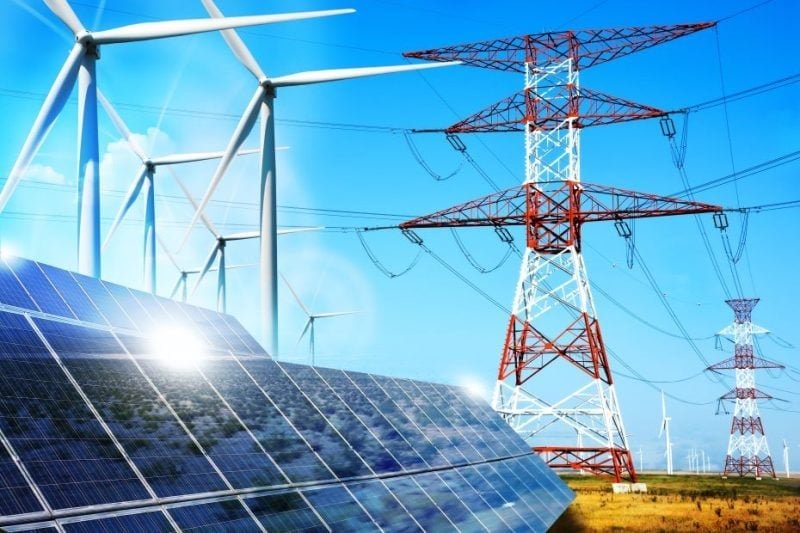
Image: WAM/ For illustrative purposes
Across the Middle East, rapid population growth, economic diversification and the rise of data-intensive technologies are combining to drive electricity demand higher than ever before.
Meeting this demand can no longer rely on simply building more power plants. Instead, the region must develop integrated energy ecosystems – an essential step toward ensuring energy security and realising regional ambitions and the net-zero transition.
Success will hinge on governments, developers and financiers working in sync – aligning infrastructure, policy and capital to deliver scalable, resilient and commercially viable power systems.
The demand shift
With hyperscale data centres, AI hubs and large industrial clusters becoming major drivers of energy demand in the region, there is now more of a requirement for uninterrupted, high-capacity power than ever before.
By 2030, data centre capacity is projected to triple, adding significant pressure to already stretched grids and shifting the challenge from managing seasonal peaks to maintaining year-round supply stability.
Supply chain squeeze
Delivering this new power system is complex. Global shortages of critical power equipment – such as transformers, cables, and turbines – pose the biggest threat to delivering new energy systems and the Middle East is feeling this pressure acutely. With long lead times – often more than two years – mounting backlogs and worldwide competition for limited manufacturing capacity, early procurement alone is no guarantee of timely project delivery.
These constraints are structural, not temporary and require strategic responses to secure supply.
Beyond equipment, access to raw materials is becoming a major bottleneck for energy delivery, with soaring demand for copper, rare earths, lithium and polysilicon outpacing production.
Managing interface risk
Today’s power systems are so interconnected that a delay in one component can stall an entire project. A completed data centre is useless without a live transmission line and a ready-to-run solar farm delivers no value if grid integration falls behind. Even a seemingly small setback – like a late transformer delivery – can disrupt the whole system, raising financial risks for all stakeholders.
This “interface risk”, where misaligned construction schedules prevent different project components from coming online together, has become one of the biggest threats to energy delivery.
Traditional coordination models are now a leading cause of delays and cost overruns. The winners will create system orchestrators – players that are able to look across the entire ecosystem and step in, financially or with decision making authority to manage timelines, create shared commissioning schedules, and to ensure every part of the value chain moves in sync.
Financing the whole chain
Funding integrated energy systems is a balancing act. Each element – from solar farms to end energy user needs its own financing and offtake. A missing piece along the chain means the entire ecosystem of projects can collapse. Innovative approaches like cross-asset guarantees, revenue pooling, and portfolio financing are emerging to align investors and spread the risk.
Lenders and equity partners are also calling for stronger governance and clearer coordination across all special purpose vehicles (SPVs) involved.
Strategic enablers in action
The Middle East has unique levers to pull. Sovereign wealth funds (SWFs) can invest across the value chain, align timelines and absorb early-stage risks, making them powerful “system orchestrator.” Export credit agencies (ECAs) can unlock supplier commitments and help secure scarce manufacturing capacity.
Governments can implement “system-wide” strategies – building or procuring the long lead time items, including grid infrastructure to open the bottleneck – which reduces risk for investors and accelerates growth in industrial zones, AI corridors, energy export projects and hydrogen valleys.
From projects to ecosystems
The future of the Middle East’s power sector will be judged not just by how many megawatts it can produce, but by how well it integrates generation, transmission, and consumption. Moving from isolated projects to fully connected ecosystems is essential for meeting national visions, powering AI and advanced industries, and achieving net-zero goals.
Those who lead this shift will define the region’s energy future – showing the world that with coordination, capital, and commitment, the Middle East can turn its ambitions into a resilient, competitive, and sustainable reality.
Energy stakeholders should focus on:
- Grid-ready reliability to serve round-the-clock high-capacity loads from AI hubs, data centres, and industrial clusters
- Securing supply chains for critical equipment and minerals through local manufacturing, strategic partnerships and sovereign-backed procurement
- Managing interface risk to prevent project delays through system integration, shared commissioning schedules, and coordinated delivery
- Innovative financing models that align multiple assets and stakeholders, from cross-asset guarantees to portfolio funding
- Leveraging strategic enablers like SWFs, ECAs and critical path procurement policies to accelerate delivery and de-risk investment
The writer is a partner – Energy Transition at PwC Middle East.
Read: GCC power grid plans $3.5bn investment to expand regional links, renewables
