

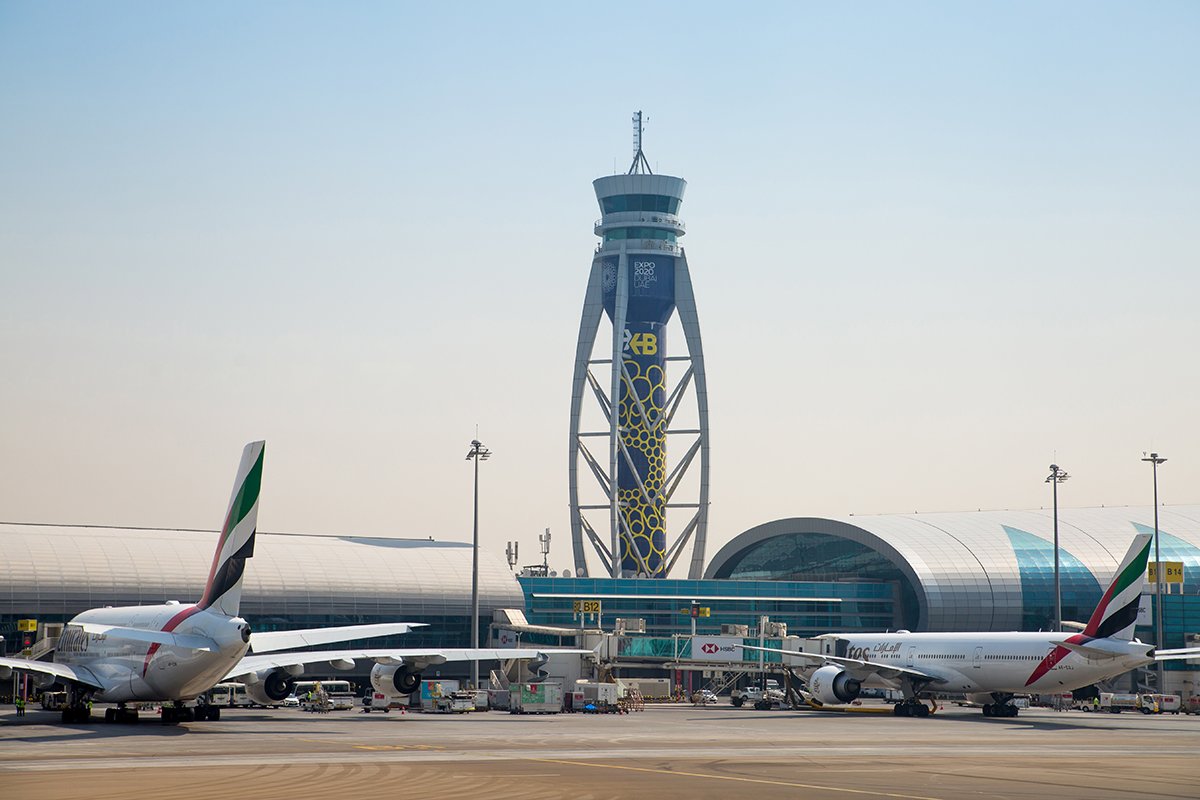
Dubai International (DXB) has maintained its position as the leading airport in ACI’s 2024 Air Connectivity Ranking for the Asia-Pacific & Middle East.
DXB topped the list of the top 10 hub airports for connectivity last year, followed by Shanghai Pudong International Airport, Qatar’s Hamad International Airport, and Incheon International Airport in Seoul, South Korea.
The ACI Asia-Pacific & Middle East Air Connectivity Ranking, a comprehensive, passenger-centric analytical tool developed in collaboration with PwC in 2023, is refined for its third edition in 2025.
It assesses performance through three fundamental building blocks – network scale and frequency, economic weight of destinations, and connection quality and efficiency.
Commenting on the achievement, Paul Griffiths, CEO of Dubai Airports, said connectivity is the cornerstone of relevance in global aviation, and the operator was pleased to see Dubai International (DXB) recognised once again as the region’s leading hub in ACI’s 2024 Air Connectivity Ranking.
“What sets DXB apart is not only the scale of our network, but the consistency and quality of the connections the airport provides,” he said.
ACI said on average, connectivity across all airports rose in both Asia-Pacific and the Middle East by more than 14 per cent last year.
“The Middle East, however, isn’t just recovering – it’s setting a new pace. Both intra-regional and inter-continental connectivity have not only bounced back but have exceeded pre-pandemic levels by a significant margin of 18 per cent and 16 per cent, respectively,” it said.
Griffiths said DXB currently serves more than 265 destinations across six continents, reinforcing its contribution to global trade, tourism, and the creation of sustainable economic opportunities.
“But connectivity at this level only matters if it is delivered with precision. Our strength lies in combining reach with efficiency, ensuring fast, seamless and secure journeys for tens of millions of guests each year,” he added.
