

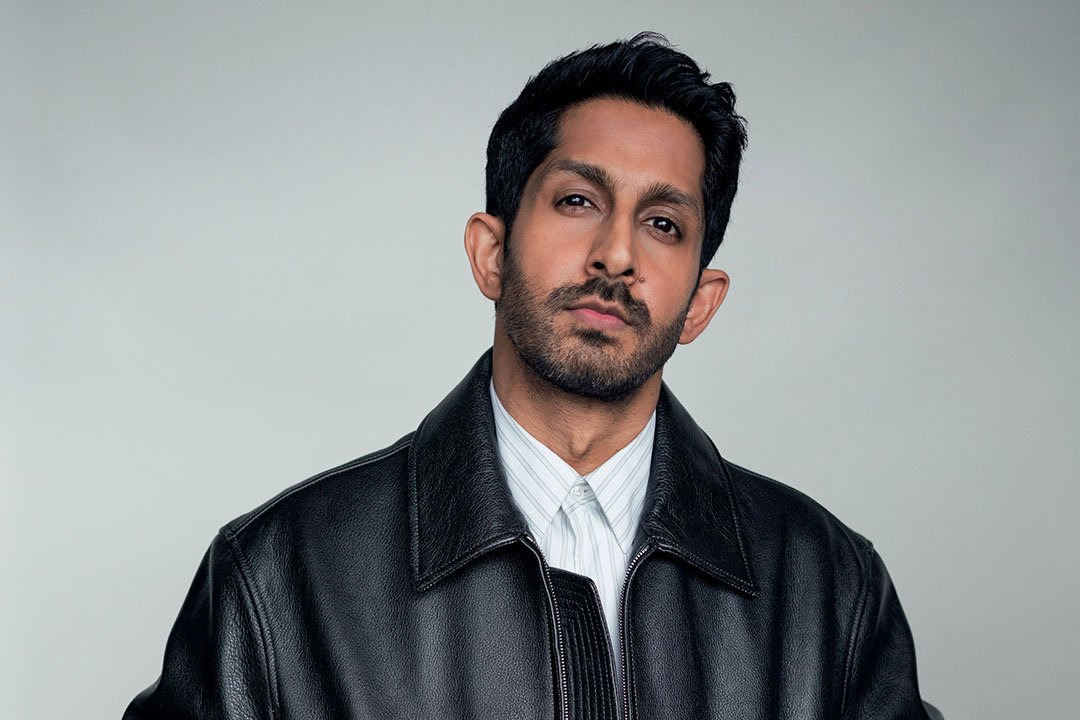
By the time Industry closed out its bruising third season, nearly every character walked away with a neatly sketched next step. A promotion, a downfall, a door closing or crack opening. Everyone except Rishi Ramdani. His ending was less a door and more a freefall; the kind of narrative cliff where a character either claws his way out or disappears into the dark.
What’s left is fragile, dangerous, and cuttingly compelling. It’s fitting then that as Season 4 returns to our screens this month, Sagar Radia—the actor who’s spent three seasons turning Rishi from comic relief into one of the show’s most psychologically rich portraits—returns to the role at a moment when both the series and his own career feel mid-transformation. Sagar Radia speaks about Rishi with a mix of distance and ownership, as if he’s dissecting a person he once knew well but no longer fully recognises. With this, also comes a steadiness of an actor who finally knows exactly what he wants to say now that the world is listening.
ESQUIRE: Hey there Sagar, congratulations on the upcoming release of Season 4 of Industry…
SAGAR RADIA: Thank you. We’re all excited that everyone will get to see the next chapter of the story.
ESQ: The biggest question mark at the end of Season 3 was what happens to your character Rishi. It was left on a bit of a make-or-break moment in his life…
SR: You’re right, initially I felt like it could be one of two extremes: either it’s a redemption arc, or he spirals further down and things get even worse. The second option would probably make for more entertaining TV!
ESQ: The new season feels it could be quite a transitional one for the show, with lots of new cast, and new stories. How does Rishi’s story fit into that?
SR: Rishi is one of those characters that’s defined so much by who he is at work. His personality is his work. So now that it’s all been stripped away, who is this guy? Once I’d sat down with [writer-creators] Mickey Down and Konrad Kay to see where they saw it going, I focused on a few key things, like survival, grief and, to an extent, identity.
ESQ: Were these the key personality points you lent in to?
SR: I’m an actor who doesn’t like to try and overcomplicate things too much. I kind of just need a few little things to steer me in the right direction. And those kind of beats help me.
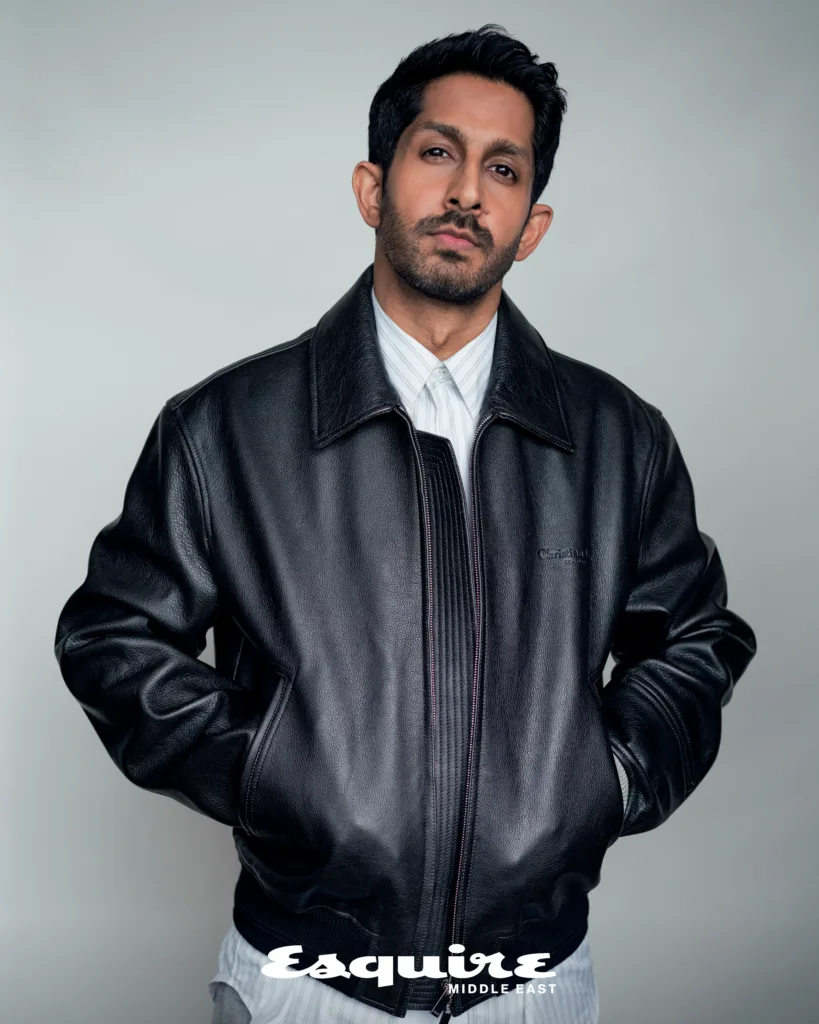
ESQ: The show heavily interacts with culture. Your character alone deals with masculinity, addiction, mental health, and identity. In playing Rishi, were you able to explore your own relationship with these notions?
SR: Yeah, of course. ‘Toxic masculinity’ has become such a buzz term at the moment with what masculinity looks like. There is such an overload of online information right now of people trying to define what masculinity is. Someone like Rishi was probably on an extreme version of what that scale looked like. It was very Alpha, boisterous and front footed, he worked hard and played hard.
ESQ: But we’re poised now to see a different side of him?
SR: It is an interesting one because it feels like a peeling back of a character who’s been hiding in plain sight for so many years. He was the initial embodiment of “survivor energy”, you know? Fast talking, cocky, outwardly bulletproof—a walking ‘red flag’.
ESQ: Is it interesting to perform as a character who often seems to be performing for different people?
SR: Yeah. Rishi survived on his bravado. Touching on that mask analogy, this year we’ll finally see what happens when that mask shatters. There’s a point when that charm he strides through life with stops being a shield. I’ve never played Rishi this quietly before, without that humor, without that swagger, and in a way that came with its own challenges.
ESQ: What kind of challenges…
SR: Well, Rishi always filled his room with so much noise, and playing him in silence was almost scarier and more revealing than anything I’ve done with the character. Grief changes the architecture of a person, right? So I tried to play that. I tried to play with those spaces that Rishi doesn’t know how to fill anymore. He used to fill them with so much laughter and bravado. So now what does that space look like when that doesn’t exist?
ESQ: How did you tap into that?
SR: For men who grew up like Rishi, survival is success and vulnerability feels dangerous. So, in a way, with that grief I got to explore, what that danger and vulnerability looks like for someone like him. I think hopefully audiences will take to it.
ESQ: Following the stand alone episode that focuses on Rishi, there’s was a boost to your career—new opportunities, new projects, new scale. Are you someone who feels the momentum as it happens?
SR: It’s a really interesting question. There was a moment of almost being unaware of the momentum—being part of a show that’s doing really well. Critics love it, it’s got its own cult following, and Season 3 hit the zeitgeist in a way that I don’t think any of us expected. But then you layer on top of that this standalone episode for Rishi—it blew up and I genuinely never imagined it would have the impact that it did. People said such wonderful things, and I was humbled. I got a message the other day telling me that it made a list of one of the best 100 episodes of the century. Insane. It still blows my mind.
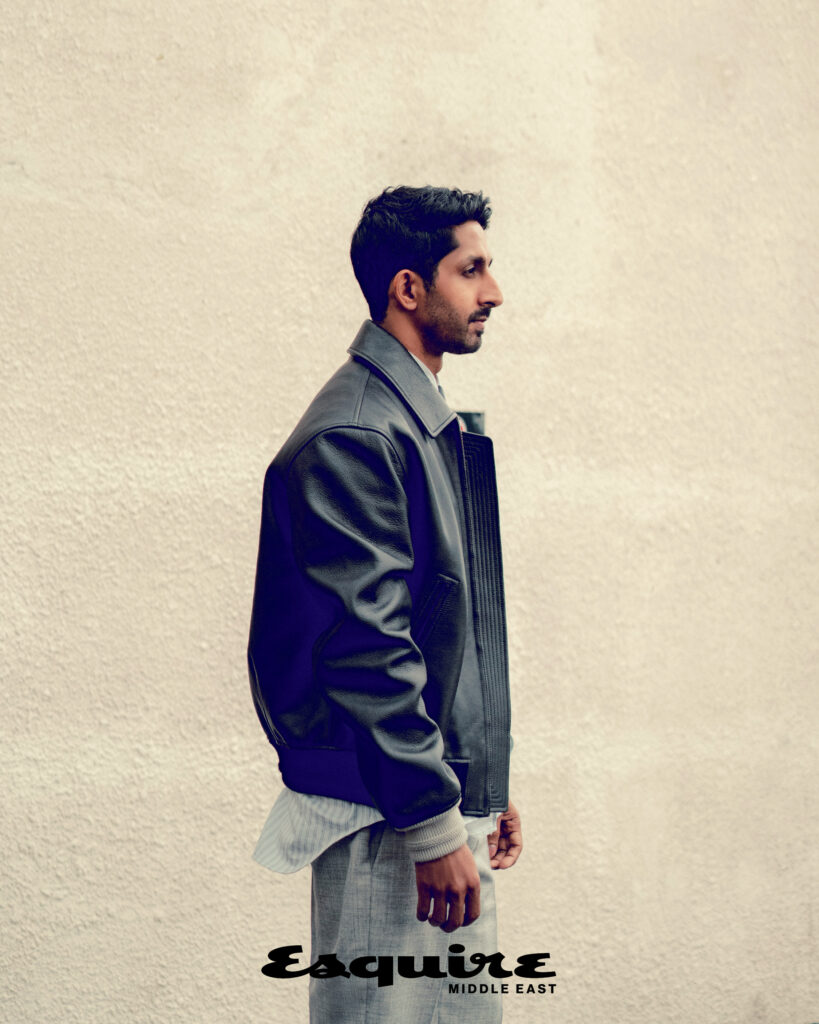
ESQ: Much of Rishi’s worldview is rooted in diaspora perspectives of immigrant ambition, scarcity mindset, and the hustle as an identity. Did playing him alter how you think about these things?
SR: Absolutely. Rishi is the most confident, outwardly forward-facing character I’ve ever played. I’ve loved every second of it because it allows me to ask, “How do I, as Sagar, relate to that?” He’s a second-generation immigrant who doesn’t know where he fits in the world. So what do those people do? They double down and work harder. It’s why you see so many immigrant success stories. Some are driven by othering, or not feeling enough, or prejudice, and sometimes that drives you.
Rishi used his personality to assimilate at work. He had to be the funny one. He had to be the best trader. I relate to that as a South Asian actor because there’s not many of us on screen. I can probably name only four or five people doing it at the highest level. That’s not enough.
ESQ: Speaking of which, you were in a series with Riz Ahmed, fifteen years ago, playing brothers in a post 9/11 world. Now you’re working together again on his Prime Video comedy. How has the industry changed in that time?
SR: It’s changed in a way. When I first started acting, I remember speaking to a couple of brown actors that I really looked up to in the UK. I said: “I really want to be an actor, I just don’t know if there’s going to be any space for me”. They said, “There isn’t a lot of roles, but there’s also less competition.” I kind of ran with that and decided to look at the glass half full then.
Fifteen years later, if I ask are people who look like me still considered a risk? I think the industry would say ‘yes’. But I would argue Rishi is a perfect example of a good character whose race and ethnicity are incidental and can resonate with anyone, because he’s just a good character.
ESQ: Do people still view you as a ‘risk’ as you put it?
SR: I look at the industry and still feel disappointed that it’s not where we need it to be. I don’t know what the answer is, but there are a bunch of us trying our best to try break those boundaries. I guess time will tell.
Season Four of Industry is available to stream on HBO Max and OSN+ in the Middle East from January 11.
