

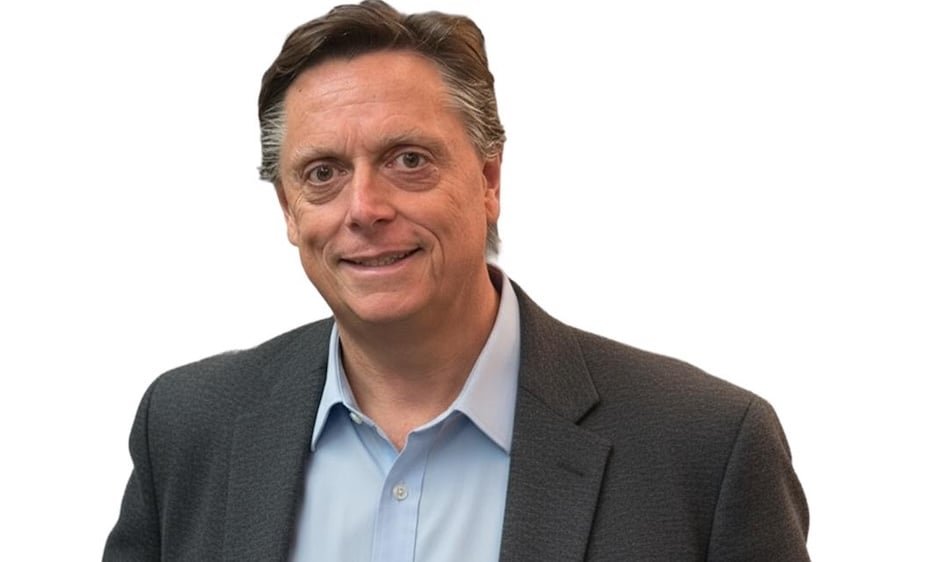
Image: Supplied
For too long, tokenisation has been misunderstood. Many still connect it with volatile crypto coins or dismiss it as hype. In my view, this confusion is one of the greatest barriers to adoption. Tokenisation is not a meme coin or a digital lottery ticket; it is the next generation of financial products, rooted in the same principles as shares, bonds, and funds- but enhanced by the efficiency and transparency of blockchain.
Tokenisation ≠ crypto
The first distinction I make is simple: crypto and tokenisation use similar technology but serve very different purposes. Cryptocurrencies are often driven by sentiment and speculation, while tokenised real-world assets (RWAs) represent ownership in tangible investments with measurable yields. A house in Dubai is not going to lose 90 per cent of its value in an hour, yet that kind of volatility has been common in crypto markets. Tokenisation supercharges real world economics with blockchain efficiency and liquidity.
Order, not the Wild West
Some still label this industry the Wild West. But, in my experience, the UAE has brought order to the frontier. Having worked in Hong Kong and London, I find VARA’s framework the most comprehensive I’ve seen globally, and it gives both issuers and investors certainty. Regulation is not the enemy of innovation; it is the enabler. It sets the rules, enforces rigour, and protects investors. For me, that certainty is what separates tokenisation in Dubai from the hype-driven and unregulated projects we’ve seen elsewhere.
To investors who are cautious about entering this space, I’d say this: the real question isn’t whether there’s risk, it’s whether you’re willing to miss the opportunity to invest in assets you actually believe in. Tokenisation gives you access to quality investments that were previously out of reach, with complete transparency about exactly what you own — down to a specific unit in a property. This isn’t about taking blind risks; it’s about accessing the investments you’ve always wanted, with more clarity than most traditional investment vehicles provide.
Not just for techies
Another misconception is that tokenisation is only for “techies.” It shouldn’t be. On our own platform, we tested usability against a simple benchmark: could my mum use it? The answer was yes. She could log in, see a product, read about it, click to invest, and become an owner- without even realising blockchain was running in the background. Just as you don’t need to understand TCP/IP to browse the internet, you shouldn’t need to understand blockchain to invest in real assets.
Fractional ownership, reimagined
Fractionalisation itself is not new; shares and funds have been doing it for decades. What’s new is allowing retail investors to participate directly in high-quality assets once restricted to the wealthy. I’ve seen the light-bulb moment when someone realises they can own a fraction of a premium property- or even a racehorse. Suddenly, investing isn’t about exclusion; it’s about participation.
More than traditional investment vehicles
Some investors are more comfortable with what they know – traditional funds, managed portfolios, opaque structures. But here’s what tokenisation actually delivers: transparency and auditability that traditional wrappers simply cannot match. A tokenised property is still a property; the blockchain provides an immutable, verifiable record of ownership and value that you can see in real-time.
Tokenisation doesn’t create value out of thin air; it takes good assets and makes them more accessible, transparent, and liquid than ever before.
Hype or real growth?
Is this just hype? The data says otherwise. McKinsey projects tokenised markets could reach $2–4tn by 2030, up from about $24bn in 2025. The Dubai Land Department expects tokenised property could represent 7 per cent of all real-estate transactions by 2033- around $16bn. And institutions from BlackRock to Franklin Templeton are already issuing tokenised funds. These are not passing fads; they are the financial system evolving.
Control is not lost
Some asset owners fear “losing control” once their assets are tokenised. In reality, tokenisation gives them more tools: programmable ownership structures, precise visibility of who holds what, and streamlined compliance. Issuers gain flexibility, not chaos.
The liquidity question
Liquidity is the holy grail. Secondary markets for tokenised assets aren’t a distant promise, they exist today. With regulatory frameworks now in place, institutional participation growing, and retail adoption accelerating, compliant secondary trading infrastructure is operational. We’re already seeing platforms facilitate peer-to-peer token transfers, and as the ecosystem matures, liquidity will only deepen. The future of asset liquidity isn’t coming; it’s already being built.
Beyond real estate
While real estate is the most talked-about category, it’s not the only one. Sports, art, commodities- even decentralised infrastructure- are all ripe for tokenisation. In my view, infrastructure projects where communities can co-own and benefit from shared assets may surprise people the most in the years ahead.
Not every deal makes sense
Having worked with regulators across Asia, Europe, and the Middle East, I can say the UAE is still ahead of the curve. Others are catching up, but VARA’s purpose-built framework remains a global benchmark. Regulation is not about tokenising everything for the sake of it- 90 per cent of proposals I see don’t make sense. Tokenisation does not turn a bad deal into a good one; it can, however, make a good deal great.
The big myth
If I could erase one misconception, it would be that tokenisation is “just another crypto play.” It is not. Tokenisation gives investors the chance to own pieces of genuinely appreciating assets — real estate, racehorses, income-generating infrastructure — with complete transparency and at accessible entry points. This isn’t speculation; it’s strategic investment in assets with proven track records.
And if I had 30 seconds with a sceptic? I’d simply ask: if your money is sitting in the bank, losing 5 per cent of its value to inflation this year, why not put it into a regulated product tied to a real, appreciating asset? That’s the opportunity tokenisation provides.
The writer is the CEO and co-founder, Tokinvest.
Read: From bricks to blockchain: Perspectives on Dubai’s real estate revolution
