

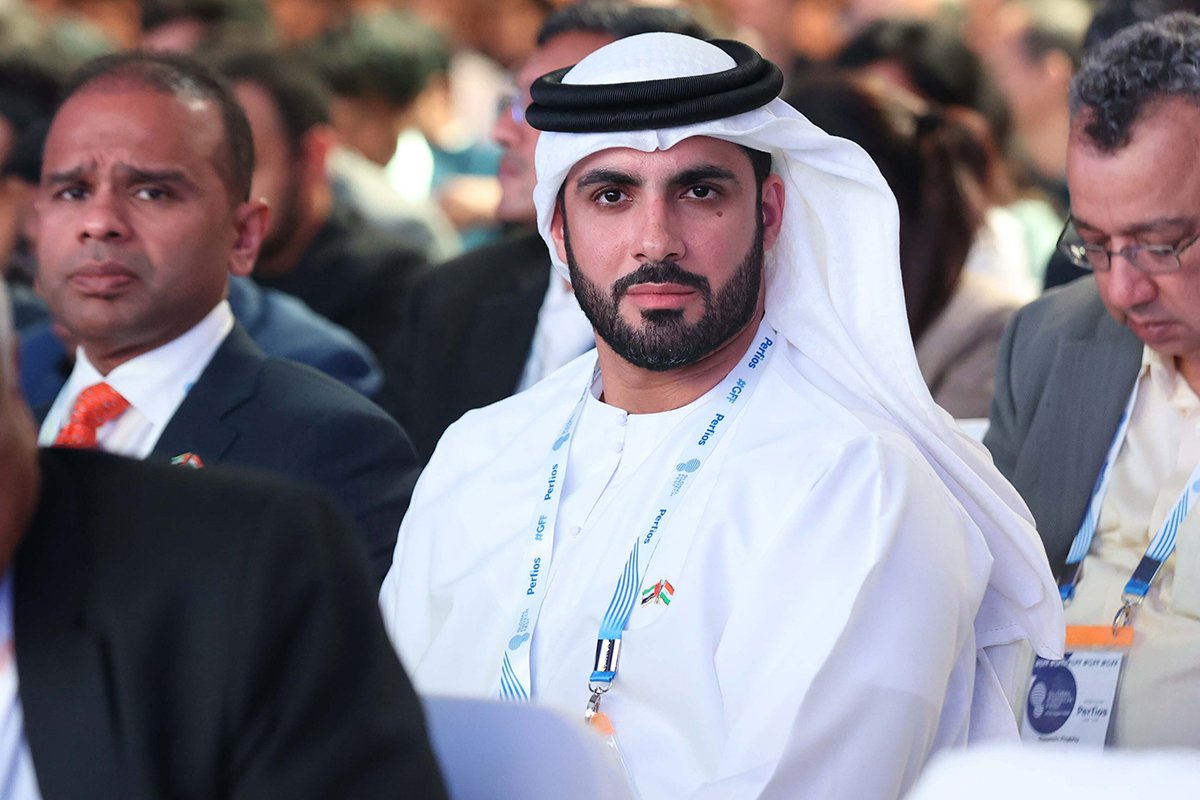
Mahmoud Abuebeid didn’t come from fintech. He wasn’t coding in his teens, or raising seed rounds in his twenties. He was in construction – until 2020, when the world stopped, and he started again.
“I had a lot of time to explore another opportunities in terms of improving my knowledge. I had a Harvard course… Harvard Business School was one of the key factors to change my mindset.” That mindset shift – shaped by case studies from Citibank and JPMorgan – planted the seed for a new path: financial technology built to serve, not just scale.
Today, Abuebeid is CEO and co-founder of GSS Group, an Emirati software company building payment systems and open banking solutions for financial institutions across the UAE. His company is now a critical partner in the country’s National Payment Systems Strategy (NPSS), with technology embedded across the real-time payments infrastructure.
A future built on interoperability
When the Central Bank of the UAE launched its Financial Infrastructure Transformation (FIT) programme in 2021, GSS was ready. “We basically had a robust solution, and it was very good for the banks,” says Abuebeid. “But the challenges were that some of the systems were legacy systems, and our solution were up to date. We had to integrate… in a kind of challenging way.”
That friction – between legacy institutions and next-gen systems – is where GSS thrives. And it’s where Abuebeid sees the greatest opportunity. “Some people were really looking forward to digitalise and improve their system,” he adds. “As of such, there is nothing more that would be a challenge.”
Financial inclusion as a right, not a feature
Abuebeid speaks with conviction about the potential for fintech to serve underserved communities. “To serve the blue collar workers, I believe it’s their right as a human, to have an access to different ways of finance,” he says. “Where they can have a loan as low as probably $2,000… where they can send their money to their back home in a faster way with almost zero fees… where they can probably buy something on an instalment.”
He’s equally focused on SMEs. “They don’t have enough access to the financial products in the bank… whether it’s facilities, supply chain, finance and others.”
This belief system feeds directly into his view of open finance and cross-border payments: “Cross-border payments is very important for the people. We are in the UAE, we have more than 200 nationalities… it’s not rocket science.”
Leadership is impact
For Abuebeid, leadership is about outcomes. “Strategic leadership is basically when you do a difference for the others, and you make life easier for the others.” But it’s also about continuity. “When you teach and you have different seminars… two might start their own company… This is, by itself, the true success.”
This principle – of building something that outlives the individual – underpins his commitment to knowledge-sharing and mentorship across the fintech sector.
What comes next
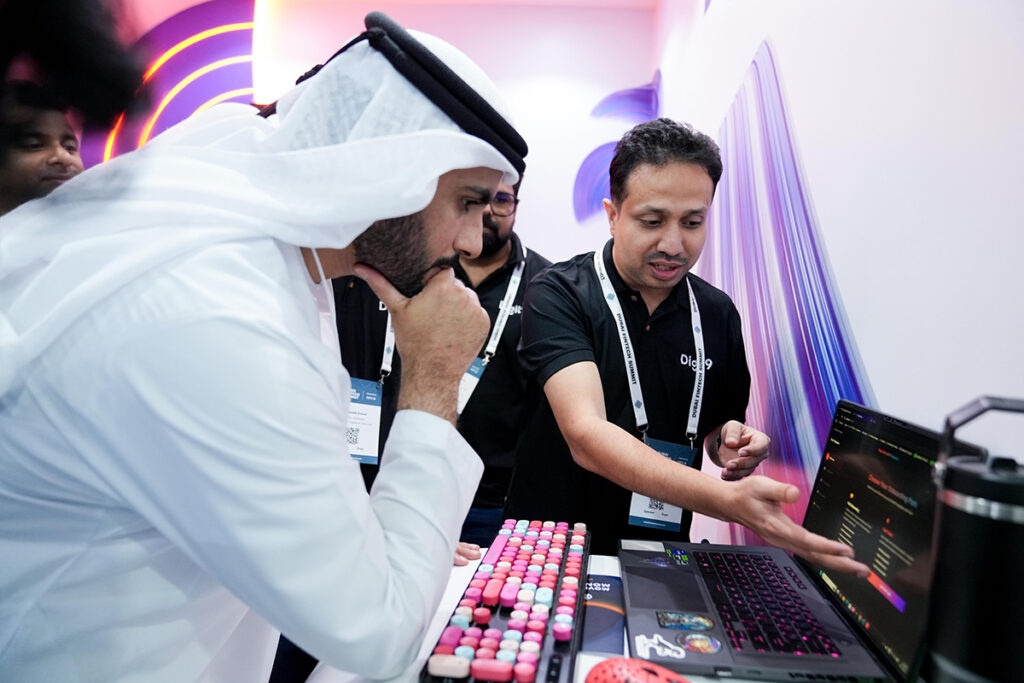
Looking ahead, Abuebeid sees consent-driven data access – particularly through AI-powered KYC – as the next frontier. “It is very important where everyone will have an access, or the entities can have an access to your data with your consent.”
He credits the UAE Central Bank for creating the space for innovation. “The Central Bank of the UAE has transformed a lot in the last five years… They invited different fintechs to the country where they can have their own financial license.”
His prediction is bold – but measured. “I believe a lot of fintechs will come to the UAE… it will lower the interest rate eventually, because you have different products, you have different options… I believe the UAE will be one of the top countries in terms of financial hubs in the next three or four years. Now we are the leaders in AI. Abu Dhabi is investing heavily in AI, and it’s going to be called the capital of AI.”
The human infrastructure of fintech
Abuebeid’s story is not a narrative of disruption. It’s one of reconstruction. He isn’t just inserting software into legacy systems – he’s inserting purpose into financial technology.
In a region redefining what modern finance should look like, Mahmoud Abuebeid is proving that progress doesn’t start with code. It starts with conviction – and a willingness to build something that works better for everyone.
