

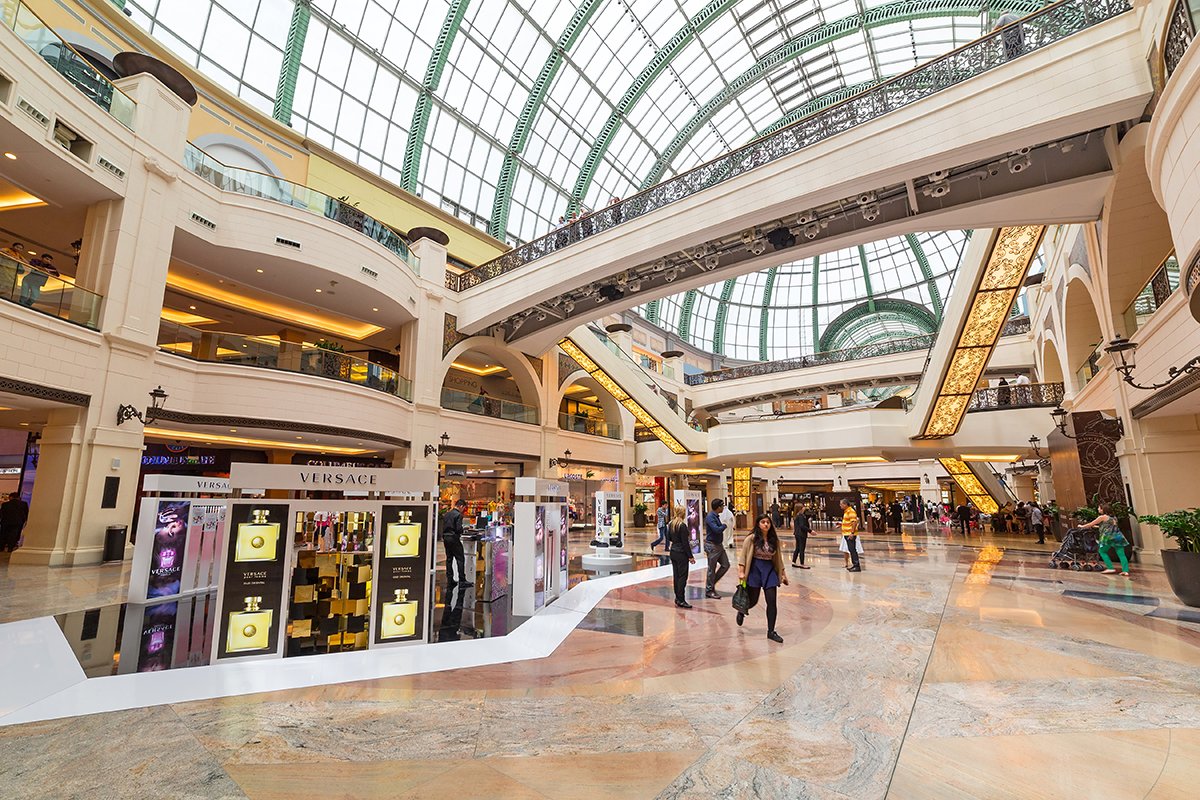
The Middle East is rapidly emerging as a key expansion market for international luxury brands, driven by record wealth inflows, rising consumer demand, and strategic positioning between East and West markets, according to Savills’ recently released Global Luxury Retail Outlook 2025.
The UAE has remained the global number one, with a record net inflow of high-net-worth people in 2024 having an estimated 6,700 high-net-worth individuals to relocate to the emirates. The influx is profoundly reshaping the luxury retail landscape in the region and confirming its sustainable growth trend.
Dubai and Abu Dhabi top the Savills Dynamic Wealth Index, while both the UAE and Saudi Arabia are also expected to experience net growth in consumer expenditure throughout 2025. The convergence of affluent residents and robust foreign tourist traffic equates to what Savills describes as a “unique opportunity for luxury retail expansion.”
Strategic geographic advantage
“Located between East and West, the Middle East is rapidly emerging as an attractive place for brands from across the globe,” said Thea Rowe, Cross-Border Retail Lead – Middle East at Savills Middle East. “With a significant draw of upscale residents and good international visitor penetration, it offers an attractive platform for luxury retail development.”
The region’s strategic position allows luxury brands to reach traditional Western markets and rapidly growing Asian consumer markets, making it a natural location for international retail business.
Beneath the boom in luxury retail is exponential expansion in the food and beverage sector in the region, which Savills predicts will nearly double in size over four years. This supporting sectoral growth is redoubled to drive wider luxury ecosystem expansion and enhance the appeal of mixed-use destinations with retail, dining, and experiential elements.
The F&B growth curve indicates steady consumer purchasing power and lifestyle segment confidence, providing luxury brands with diverse touchpoints to reach affluent customers.
The Savills report revealed that that developers in prime markets like the UAE and Saudi Arabia increasingly work to accelerated timetables, with complete financial and conceptual proposals sometimes being required in the matter of weeks of first discussion.
Such compressed space for decision necessitates that global brands make a heavy investment in aggressive due diligence and develop healthy local partners to enter markets successfully. Prolonged planning horizons of the old luxury retail mentality may be unsuited to local market conditions.
“Where supply is tight and demand is strong, flexibility is the key,” Rowe said. “While protecting brand integrity remains of paramount importance, those willing to make operational changes will be best positioned to secure top locations.”
Store format transformations
The transforming market is pushing the boundaries of luxury retail formats across the region. Luxury store concepts are becoming larger and more immersive in ambition, as brands attempt to deepen customer connection through meticulously curated, multi-sensory shopping journeys that go beyond transactional concepts.
This shift to lifestyle and experiential retail formats speaks both to customer demand and to the need for brands to differentiate within an extremely competitive marketplace. The emphasis on experiential experience aligns with the entire region’s entertainment and lifestyle destination focus.
Growth trajectory
Looking ahead, Savills foresees sustained pace for luxury retail expansion in the Middle East over the coming 12 months. The combination of robust consumer demand, high demand for the presence of brands in the region, and constant inward migration of high-net-worth individuals places the region in line to attract more flagship and high-end boutique developments.
Dubai has been singled out together with Bangkok and Kuala Lumpur as being among the markets best suited to offer the most vibrant opportunities for growth in the near term. This is on account of rapid wealth creation, strong visitor appeal, and ongoing refinement of high-quality luxury real estate infrastructure.
As global retailers expand and establish regional presence, the Middle East will assume a more strategic role in luxury brand portfolios between 2025 and onward. The emergence of the Middle East as a luxury retail center is a geographical shake-up in global retail with far-reaching implications spanning far greater than available market opportunity.
The sustained wealth migration, coupled with demographic changes based on younger, wealthier consumers, suggests that the growth trend is structural, as opposed to cyclical, for the world of high-end retail.
