

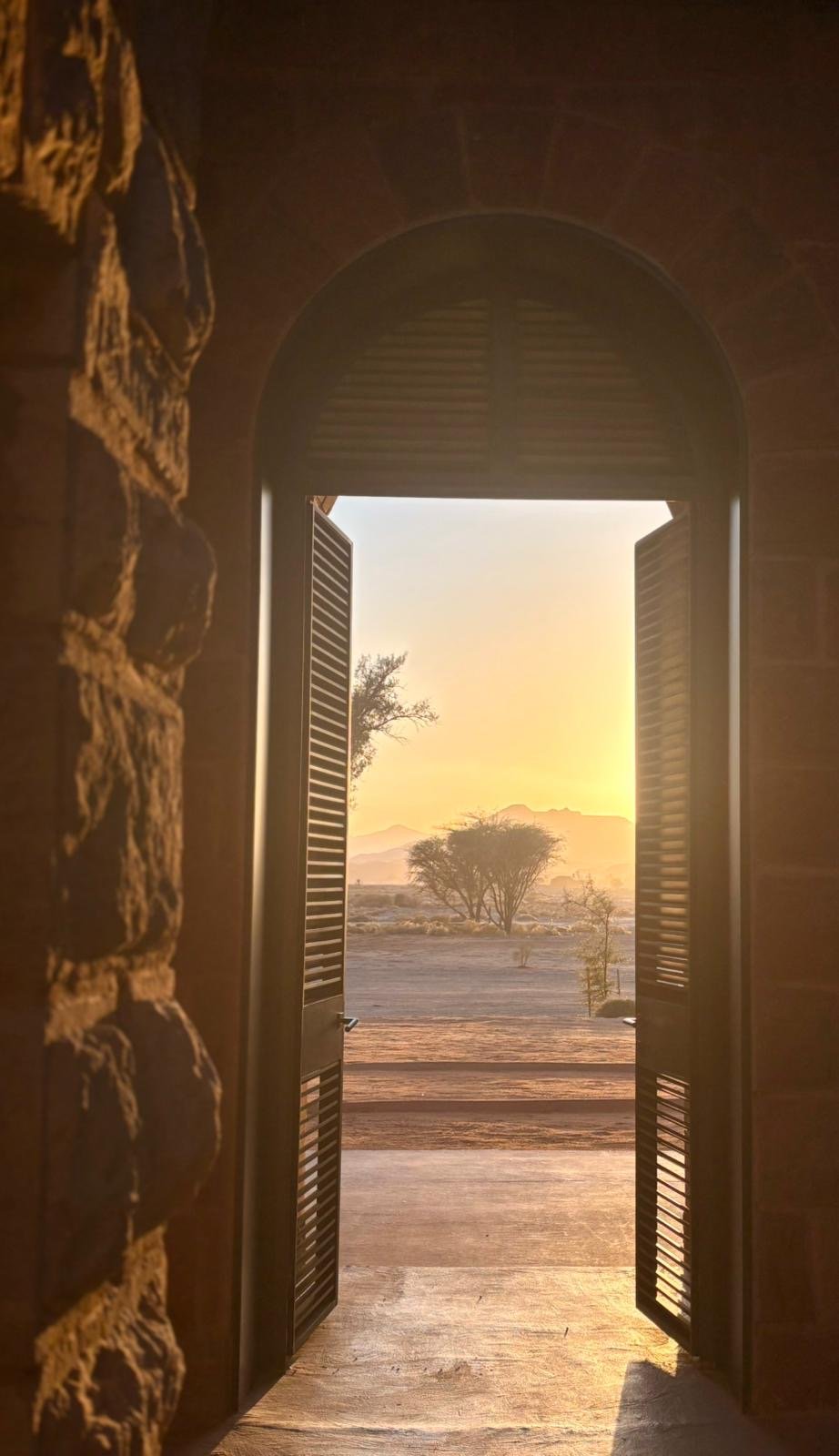
Through desert dreams and oasis memories, Saudi writer AHMAD ALMAJID goes on a journey in search of the new Saudi traveller.
A Night Under Endless Stars in AlUla
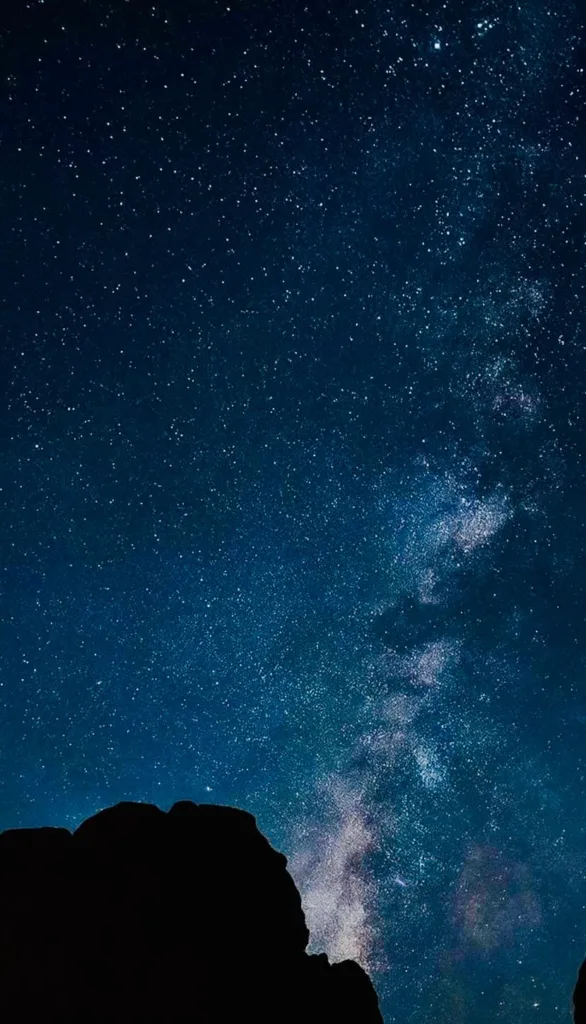
It is midnight in the desert near AlUla, and the Milky Way spills across the sky like a glittering river of light. I lie back on still-warm sand, wrapped in the silence of a landscape that feels eternal. The only sounds are the crackle of our campfire and the soft voice of Naif, a local guide, pointing out constellations with the tip of his finger. “That’s Altair, part of the Eagle,” he says, as we gaze upward. In this moment, under Saudi Arabia’s first-ever Dark Sky Park, time stretches as infinite as the stars above. It strikes me that this scene – stargazing freely in one of the world’s oldest landscapes – would have been unthinkable a few years ago. But today, the kingdom is opening itself to experiences as vast as its skies.
The sense of transformation sharpens when my childhood friend and travel companion Mohammed reminds me of our first visit to AlUla’s Mada’in Saleh on a school trip in 2002. Back then, the entire site was fenced off, there was no visitor center, no guides, no clear road. We had to drive off-road, following patchy satellite GPS maps to reach the tombs. The contrast is staggering: from a hidden, near-inaccessible site visited only by school buses and the occasional archaeologist, to today’s carefully curated heritage experience where local guides recount Nabataean history beneath a canopy of stars.
AlUla’s Royal Commission has even mandated strict measures to reduce light pollution and preserve these dark nights for generations. Here, the absence of artificial glare makes the heavens startlingly vivid. Millions of stars wink down, uninterrupted, as if welcoming travelers to reconnect with a more ancient pace of life. Around me in the dark, I hear subdued gasps of wonder from both Saudi and international visitors. A family from Riyadh shares Arabic coffee with two French tourists; an expatriate photographer adjusts his tripod for a long exposure shot. Under the same sky, we are all simply humans, humbled and enchanted. As I take a slow sip of cardamom-spiced gahwa, I realize Saudi Arabia’s most radical shift isn’t just in policy – it’s in the simple act of sitting together beneath the cosmos, experiencing the kingdom’s beauty side by side.
A Land of Vast Horizons and Varied Climates
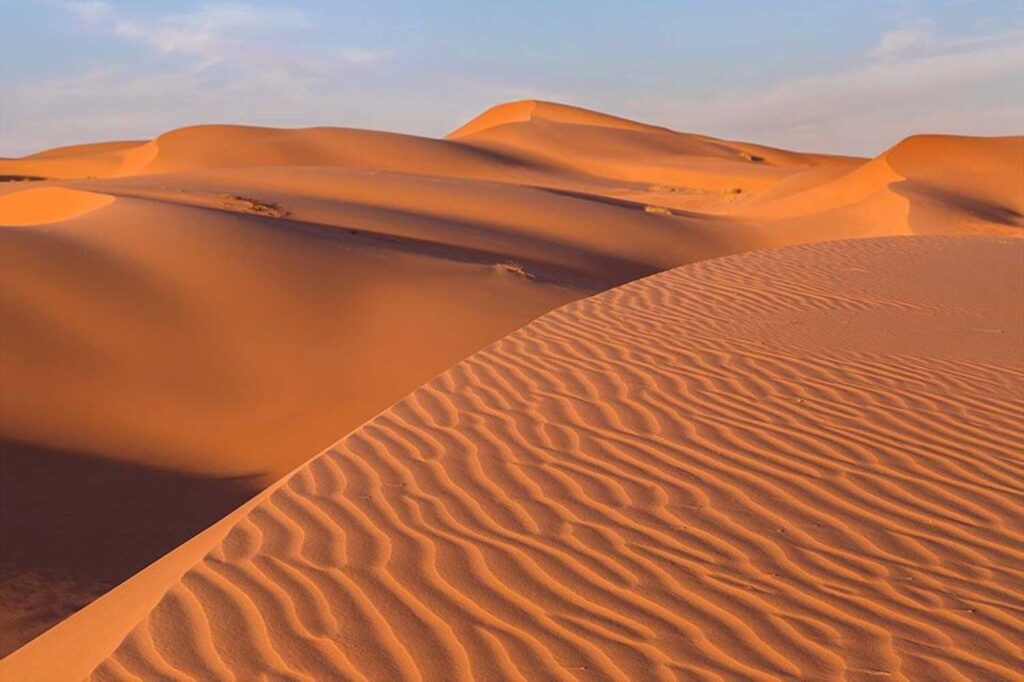
The next morning, I wake to dawn light painting the desert cliffs golden and reflect on just how immense this country truly is. Saudi Arabia spans about 2.15 million square kilometers (830,000 sq miles) – roughly one-third the size of the continental United States and comparable to the entirety of Western Europe. With this vastness comes a staggering variety of landscapes and climates. In the far south lies the Rub’ al Khali, the Empty Quarter, the largest sand desert on Earth – an undulating ocean of dunes where summer temperatures soar and mirages dance on the horizon. Yet, travel a few hundred kilometers to the southwest highlands and you’ll find yourself shrouded in cool fog on a mountainside. In Asir province, peaks over 3,000 meters high catch monsoon rains and grow juniper forests; summer days here hover a mild 20–30 °C, a striking contrast to the 45 °C heat of Riyadh or Dubai. The Sarawat Mountains of Al Baha and Asir are laced with misty terraces, waterfalls, and even cloud forests – a green refuge when much of the Gulf swelters.
This breadth of terrain gives Saudi Arabia a unique advantage among Gulf countries: year-round destinations. When lowland cities sizzle in July, Saudis and savvy visitors escape to the mountain town of Abha for its cool breezes, or to Taif where rose farms bloom each spring in temperate valleys. In Taif’s highlands (about 1,880m elevation), some 300 million pink Damask roses are harvested every April, their fragrance filling the air– an experience of natural beauty and cultural tradition rolled into one. Along the coasts, the Red Sea offers a different respite. The Kingdom’s 2,300 km of largely untouched shorelinehide world-class coral reefs and breezy beaches. In the morning you can scuba dive among technicolor fish off Unesco-listed Farasan Islands, and by evening you could be sand-boarding on the wind-sculpted dunes outside Jeddah. Few places on earth offer such contrasts within one country.
- Desert Dunes: The Empty Quarter’s towering dunes and star-strewn nights.
- Mountain Retreats: Foggy Al Baha forests and Abha’s mountain trails where summer feels like spring.
- Coastal Escapes: Red Sea reefs teeming with marine life and Persian Gulf mangroves alive with birds.
- Lush Oases: The emerald palm groves of Al-Ahsa Oasis, fed by natural springs in the middle of the desert.
Each region beckons with a different adventure. And because Saudi Arabia occupies the crossroads of Asia, Africa, and Europe, it sits within a six-hour flight of billions of people – an accessible mosaic of experiences now coming into focus for global travelers. As one tourism analyst put it, “Look at the size of the country and what you can do… you’d be shocked at the untouched areas. It’s not all glitz; they have culture”. In other words, Saudi Arabia isn’t building its tourism identity from scratch – it’s uncovering the riches that were always here, from nature to heritage, often in places few outsiders have seen.
Thirteen Cultural Worlds in One
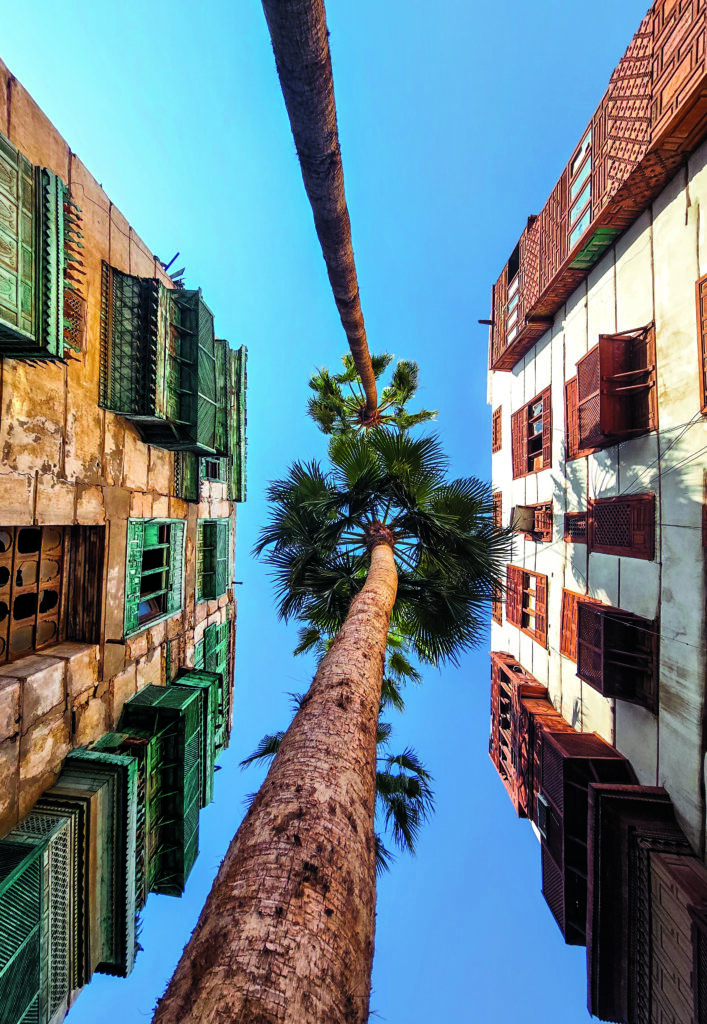
On my fourth day, I trade sand for greenery and fly east to Al-Ahsa, my ancestral homeland, and home to the Gulf’s largest oasis. As the plane descends, a vast patchwork of date palm plantations appears, an improbable island of life amid barren plains. Here I’m reminded that Saudi Arabia’s richness isn’t just geographic – it’s cultural. This nation of 35 million is not a monolith but a tapestry of 13 distinct regions, each with its own dialect, dress, cuisine, and customs. To travel across Saudi is to traverse centuries and cultures: from the austere Najdi heartland around Riyadh, where men wear crisp white thobes and women favor classic black abayas, to the Hijazi cities of Jeddah and Medina, historically cosmopolitan ports where spices and accents from across the Muslim world flavor the air. In the southern highlands of Asir, I meet villagers who wear floral garlands on their heads – a tradition symbolizing masculinity and pride among the “flower men” of that region. Up north in Tabuk and Al-Jouf, I’m greeted by Bedouin generosity and plates of mansaf (rice with lamb and yogurt) akin to Jordanian fare. In the Eastern Province, I stroll a seaside souq hearing a mix of Arabic, Farsi, and Urdu – a nod to generations of traders and oil workers who made this area a cultural melting pot.
This diversity has always existed, but only recently are Saudis and visitors alike able to fully celebrate it in the open. “To understand [Saudi] deeply is to see it as 13 cultural worlds… each region brings something distinct to the national identity,” as one observer noted. In Al-Ahsa’s case, that distinct identity is rooted in its oasis bounty. The local dialect is soft and singsong, peppered with words unique to palm cultivation. Women here traditionally wear vibrant thobes embroidered with gold thread, reflecting a prosperous agricultural heritage. And the food – oh, the food! My first stop is a humble eatery where I try hasawi red rice (a nutritionally rich, reddish rice unique to this area) topped with tender lamb and washed down with a cold date juice. It tastes of soil and sun – the terroir of this oasis on a plate.
What unites all these subcultures is a shared thread of hospitality and tradition. From north to south, Saudi people extend an almost ceremonial welcome to guests: the coffee pot is always brewing, the dates piled high on platters. Music and poetry vary by province (be it the passionate samri drum circles of the Gulf coast or the Al-khatwa dance of Asir’s foggy villages), yet all are expressions of a heritage now being proudly showcased rather than hidden. As domestic tourism blossoms, young Saudis from Jeddah are visiting the rock-hewn tombs of Hegra in the northwest; families from Dammam are venturing to Tabuk’s snow-dusted Jebel Al-Lawz in winter (yes, it snows in Saudi Arabia’s far north). This internal exploration is forging a new sense of unity – a recognition that one can “travel the world” without leaving home, given the Kingdom’s diverse tapestry. And international visitors, too, are finding that a trip through Saudi Arabia can feel like a journey through several countries in one.
An Oasis Homecoming in Al-Ahsa
For me, Al-Ahsa is personal. It’s my father’s hometown, and I’ve returned this weekend to his family farm – a plot of land nourished by the same springs that have watered these palms for millennia. We sit on a palm-frond mat under the dense canopy of date trees, their feathered leaves filtering the late afternoon sun into a gentle, green light. My father pours two cups of steaming herbal tea from a dented kettle. “When I was young,” he tells me, eyes distant with memory, “all this was just for us. No one came to sightsee in an oasis. We grew dates, we swam in the spring for fun, but ‘tourism’? That was something we imagined existed only in other countries.” He chuckles, recalling how in his youth the idea of foreigners or even city-dwelling Saudis vacationing here in Al-Ahsa would have sounded absurd. But times change. Today, Al-Ahsa is on the tourist map – recognized as the largest oasis in the world and a UNESCO World Heritage Site– and my father now sees tour buses winding down roads once trod only by local farmers.
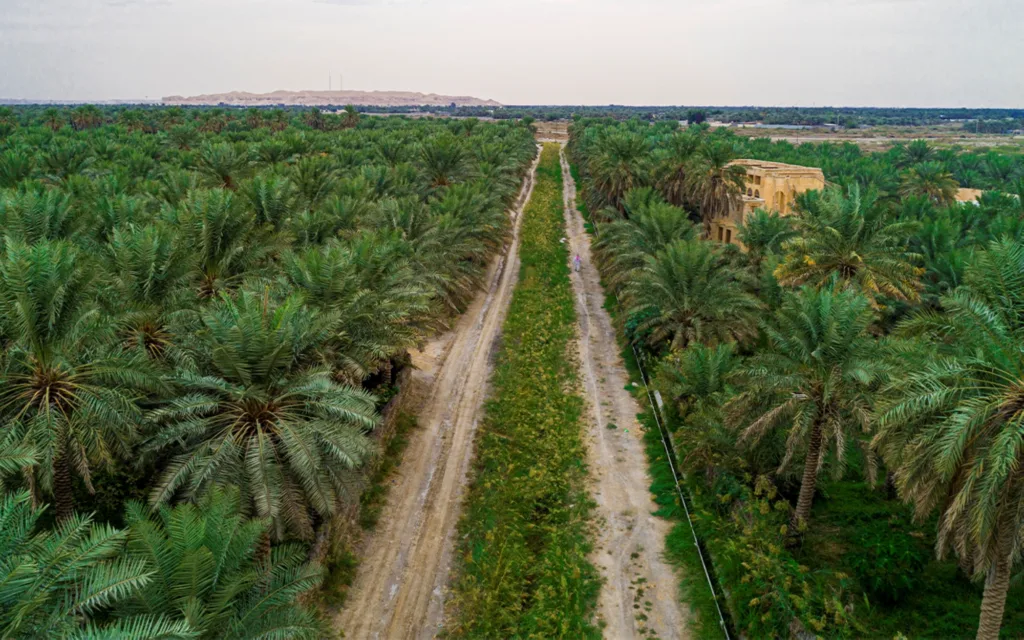
We take a walk to one of the nearby oyoon (natural springs) that dot the area. Crystal-clear water gushes from the earth, forming a turquoise pool ringed by reeds. Children are splashing and laughing – some local, some visiting from Riyadh on a weekend trip. The scene is idyllic, but beneath it lies a wonder of nature: vast underground aquifers deliver an immense volume of groundwater here, enabling this oasis to thrive in the middle of the desert. “It’s our lifeblood,” my father says, gesturing to the spring. Generations of Al-Ahsa farmers mastered a complex irrigation system of channels and sluices to water the palms. That mastery kept Al-Ahsa green for centuries, earning it the nickname “the Mother of Palms.” Today over 2.5 million date palms grow in this oasis, cooled by over 60 bubbling springs – a natural bounty now being leveraged for eco-tourism. We sit by Ain Al-Hofuf spring as my father recalls how, in the 1960s, King Faisal ordered an innovative irrigation project here to save the oasis from drying, effectively engineering man-made rivers to complement the natural ones. “Back then it was just to save our farms,” he notes. “We never imagined one day people would come just to see this system, to learn how Al-Ahsa stayed fertile.” Yet they do come – curious travelers touring the old canals, couples staying in new boutique guesthouses that were once farmhouses, backpackers camping near these springs to experience a desert sunrise through the palms.
Al-Ahsa’s tourism is still in its infancy, but standing here with my father I can sense the potential. Perhaps soon there will be eco-lodges amid these date groves, where guests can fall asleep to the sound of rustling fronds and flowing water. I imagine farm-to-table restaurants serving Al-Ahsa’s famed sweet lemons and fresh dates, or wellness retreats tapping into the hot sulfur springs (like Ain Najim, known since Ottoman times for its therapeutic waters). My father smiles at the thought: “Never thought I’d see it, but why not? We have water, we have heritage, we have peace – things people need.” It’s a humble sentiment, but profound. The quiet abundance of this oasis – once known only to its keepers – is now an asset to be shared with the world. And crucially, it’s not just the government leading the charge; local families are opening their doors, quite literally, turning ancestral farms into homestays and tour experiences. The famed Arabic warmth of Al-Ahsa is evolving into organized hospitality, yet it remains deeply personal. As the sunset bathes the palm silhouettes in orange glow, my father and I welcome an out-of-town couple who wander by, offering them tea. They marvel at our old irrigation channels, and he proudly explains how it all works. In that moment, I witness Saudi Arabia’s tourism boom at its most fundamental level: a host sharing his story with a guest, over a simple cup of tea.
From Sand Tracks to Skylines: Infrastructure on the Move
One reason such exchanges are possible now is that getting around Saudi Arabia has become dramatically easier. In decades past, travel between far-flung regions meant long drives on lonely highways or convoluted flights via Riyadh. Today, a web of new transport options is knitting the country together. The Riyadh Metro, a 176-km, six-line rapid transit network, opened in early 2025 – the largest of its kind in the Middle East, boasting 85 stations and the world’s longest driverless trains. In Jeddah, a sleek high-speed Haramain rail line already zips pilgrims and tourists between the Red Sea coast and the holy cities of Mecca and Medina at 300 km/h, turning what was once hours in traffic into a breezy 2-hour ride. And more rails are coming: plans are underway for a “land bridge” railway linking the Red Sea to the Gulf, eventually allowing travelers to ride a train from Jeddah in the west to Dammam in the east, crossing the entire expanse of the kingdom.
In the skies, a revolution is also taking off. Riyadh Air, the kingdom’s new flagship airline backed by the Public Investment Fund, is set to launch operations by late 2025. With a hub in the capital and a mandate to reach over 100 destinations across six continents, Riyadh Air aims to turn the Saudi capital into a global aviation crossroads. The airline has been amassing a modern fleet (from 787 Dreamliners to A350s) and signing partnerships with the likes of Delta, Air France-KLM, and more. For travelers, this means more direct long-haul flights straight into Saudi cities that once required multiple connections. Imagine a nonstop from Beijing or Mumbai into AlUla’s new airport, or from London directly to NEOM’s futuristic air hub – these are on the horizon. Meanwhile, low-cost carriers like Flynas and Flyadeal hustle dozens of daily flights linking every corner of the country. A backpacker can now snag a cheap flight from Riyadh to Abha for a weekend escape, or a pilgrim can extend their trip and hop from Medina to AlUla to see its Nabataean wonders without breaking the bank. The skies above Saudi have never been busier.
On the ground, roads have improved too: multi-lane highways now pierce deep into areas like AlUla and Hail that were once accessed by gravel tracks. Car rental is up, domestic tourism road trips are becoming a rite of passage for youth, and even ride-hailing apps operate in smaller cities. The point is, the kingdom’s sheer size – once a barrier to exploration – is increasingly an asset being unlocked by planes, trains, and automobiles. “Tourism globally is allowing new destinations to flourish… overtourism is not a problem in Saudi Arabia,” noted one Knight Frank analyst, hinting that where places like Venice or Dubai strain under tourist crowds, Saudi Arabia offers breathing room. Of course, infrastructure is still catching up – outside main routes you may still find yourself on a camels-and-trucks highway with the next gas station 200 km away. But every few months brings improvement. Even in remote AlUla, I noticed new brown tourist signposts guiding visitors to sites, and a visitor center that simply did not exist five years ago. The building blocks of a tourist-friendly nation – reliable transport, clear information, varied accommodations – are falling into place at astonishing speed.
Nowhere is this more evident than in the hospitality sector. When Vision 2030 was announced in 2016, Saudi Arabia had a modest hotel stock mostly concentrated in the big cities and holy sites, skewed toward business and religious travel. But since opening to leisure tourists in 2019, the kingdom has seen explosive growth in hotel development – 320,000 new hotel rooms are planned by 2030. Global brands are scrambling for a piece of the action. Hilton alone plans 90 new hotels across Saudi Arabia, from its luxury Waldorf Astorias in Riyadh and Jeddah to mid-market Hampton Inns in secondary cities like Jubail and Hail. Marriott, Accor, IHG – all the usual suspects – have announced multiple properties, often in places that until recently had no formal hotels at all (I smile thinking of AlUla, which in 2017 had virtually no world-class hotels; by 2023 it boasted a Banyan Tree resort and several high-end tented camps). Importantly, it’s not all five-star palaces – investors now see huge opportunity in mid-range hotels too, catering to middle-class holidaymakers and the growing domestic tourist segment. As one industry expert observed, Saudi’s initial luxury focus “opened space for operators catering to middle-income travelers”. In other words, the gap between a $1,000-a-night resort and a no-frills guesthouse is starting to be filled by stylish three- and four-star hotels. This is crucial for making the tourism boom inclusive and sustainable. After all, not every adventurer is a millionaire; many are students, families, pilgrims on a budget – and they all need places to stay.
An Ancient Hospitality, Renewed
Late on my last evening in Al-Ahsa, I experience a simple interaction that reminds me what truly underpins Saudi Arabia’s tourism rise. A group of travelers – a mix of Western expats working in Dhahran and young Saudi professionals from Riyadh – have gathered at a common friend’s family’s farm for a traditional majlis under the stars. They sit on woven rugs, propped against big leather floor cushions, chatting and sharing stories of their trips. None of them knew my father before today, but as soon as he heard we had guests curious about local life, he insisted on hosting them in our farm as well. Now he circulates among the group with a dallah (coffee pot) in hand, expertly pouring aromatic cardamom coffee into finjan cups. The guests take the tiny cups respectfully, some trying their Arabic: “Shukran, Uncle.” In Saudi custom, the guest is treated like a VIP – and my father is in his element, regaling them (through my translations) with tales of how he used to climb date palms barefoot or how this very farm produced prize-winning dates in King Abdulaziz’s time. It’s authentic, unscripted, and from the heart.
This warmth – the culture of karam (generosity) and welcome – is the soul of Saudi hospitality. You can’t manufacture it; it’s been there all along, nurtured in homes and desert tents when there were no hotels or tourist brochures. Now, as the Kingdom opens up, this spirit is proving to be its secret weapon. I’ve seen it in a Bedouin camp outside Medina, where a traveler showed up unannounced and was promptly invited to share a family’s meal of lamb and rice under the open sky. I’ve seen it in Jeddah’s historic Al-Balad district, where a shopkeeper insisted I take a souvenir coin for free after a long conversation about the old days. And I see it tonight in Al-Ahsa, as our impromptu majlis ends with laughter and new friendships. One of the Riyadh young women tells me, “I’ve traveled all over, but there’s a special feeling here – like I’m not a tourist, I’m a guest.” Her words mirror something fundamental: in Arabic, the term for tourism “siyaha” is abstract, but “dhiyafa” (hospitality) is personal. Saudi Arabia is intent on offering both – world-class tourist infrastructure, and the feeling of being welcomed into a community.
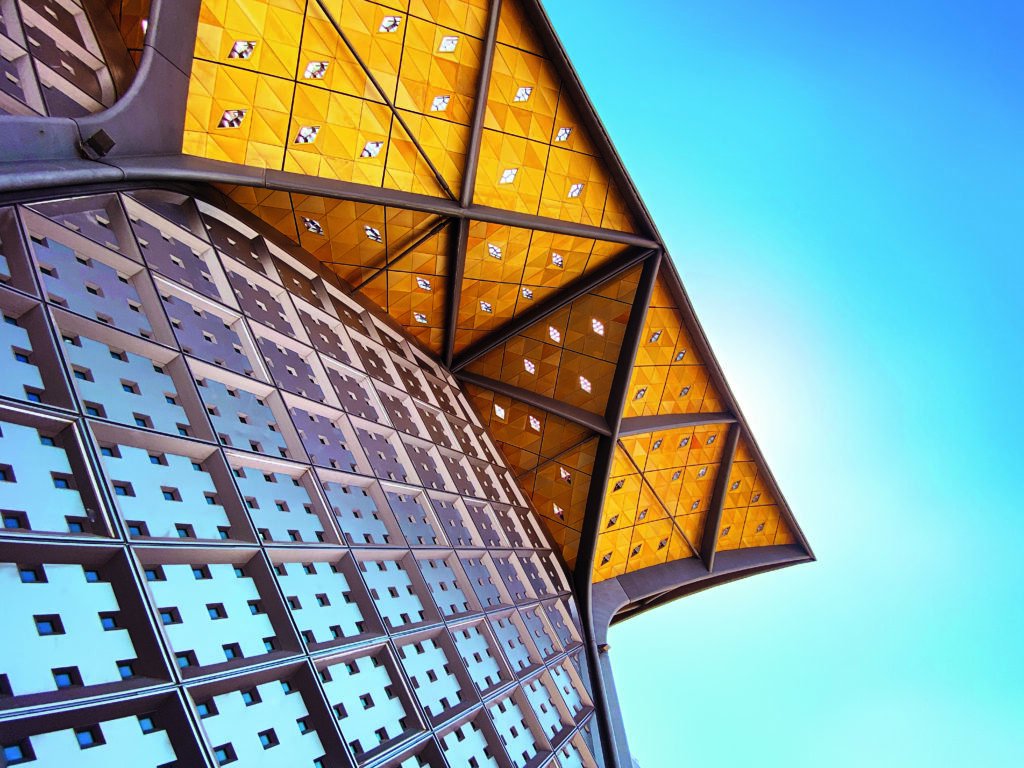
As I pack up to leave the next morning, I feel a sense of optimism about the road ahead for Saudi tourism. The challenges are real – building an entire industry in a few years is no easy feat. Yet, seeing the pride in my father’s eyes as he imagines tourists enjoying the oasis he calls home, and recalling the awe on visitors’ faces under AlUla’s night sky, I am convinced the Kingdom’s approach is on the right track. It’s leveraging its vast landscapes, diverse cultures, and deep traditions as foundations for a sustainable tourism future. Billion-dollar projects may grab attention, but it’s the small moments – a guide’s story by the campfire, a shared meal in a farmhouse, a morning hike through a cool mountain fog – that will define Saudi Arabia’s appeal and reputation.
In the soft light of dawn, driving out of Al-Ahsa, I take a detour up a rocky hill. From this vantage point I can see the oasis stretch out below, a green carpet fading into golden desert edges. It’s quiet. Then, the rising sun gleams on something in the distance – the glass facade of a new visitor center perhaps, or a hotel under construction. A sign of change, glinting against an ancient backdrop. The Kingdom is open, I realize, both literally and metaphorically. And as travelers come to find luxury desert escapes, curated heritage trails, or just a peaceful spot under a palm tree, they are also finding a country rediscovering itself. Saudi Arabia is learning to slow down and appreciate its own beauty, even as it races towards the future. In that paradox – of stillness amidst transformation – lies the true magic of this moment. The boom in tourism is not just about building resorts, but about a people opening their doors and saying ahla w sahla – you are welcome here. And that, more than any headline-grabbing project, may be the Kingdom’s greatest untapped treasure.
