

The United States and the European Union have averted a trade war by reaching a framework trade agreement that imposes a 15 per cent import tariff on most EU goods – half the 30 per cent rate threatened earlier by President Donald Trump.
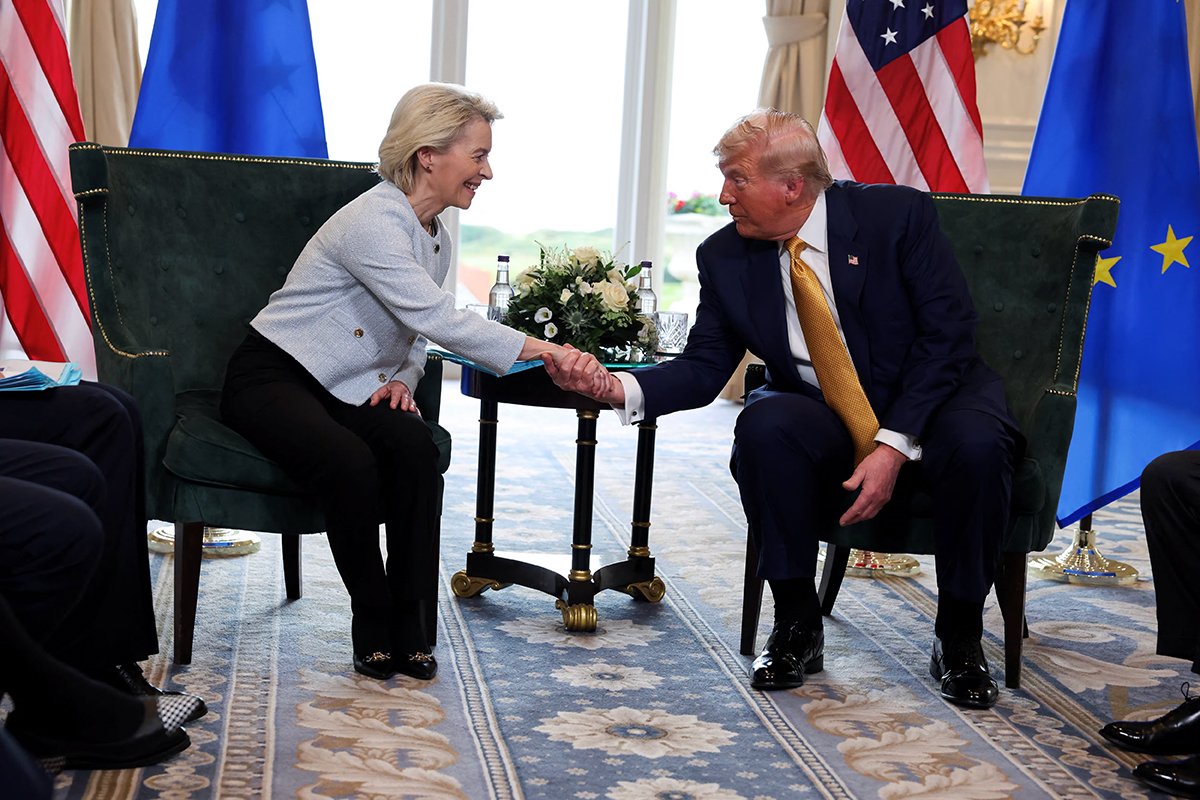
President Trump and European Commission President Ursula von der Leyen announced the deal at Trump Turnberry, the luxury golf course in western Scotland, after an hour-long meeting following months of negotiations.
Trump told reporters after the meeting: “This was the big one. This is the biggest of them all.”
The EU agreed to buy US$750 billion worth of US energy as part of the agreement, and will invest US$600 billion into the United States, Trump said.
Von der Leyen said the 15 per cent tariff applied “across the board”, and that it was “the best we could get”.
“We have a trade deal between the two largest economies in the world, and it’s a big deal. It’s a huge deal. It will bring stability. It will bring predictability,” she said.
Von der Leyen said there would be no tariffs from either side on aircraft and aircraft parts, certain chemicals, certain generic drugs, semiconductor equipment, some agricultural products, natural resources and critical raw materials.
“We will keep working to add more products to this list,” she said, adding that spirits – a major bone of contention – were still under discussion.
The deal is similar to the one Trump secured with Japan, and includes EU’s crucial auto sector, which is currently being taxed at over 25 per cent, up from an average of 4.8 per cent earlier. However, the 50 per cent tariff on steel and aluminium will continue. von der Leyen said these would later be cut and replaced by a quota system.
The US will announce the result of its 232 trade investigations in the next two weeks and decide separately on rates for chips and pharmaceuticals. von der Leyen said that whatever US decisions come on these sectors will be “on a different sheet of paper”.
In case of talks failing, the EU states had agreed on counter tariffs to the tune of US$109 billion on goods, including aircraft and cars. The tariffs would have come into effect from August 7.
The euro rose around 0.2 per cent against the dollar, sterling and yen within an hour of the deal’s being announced.
