

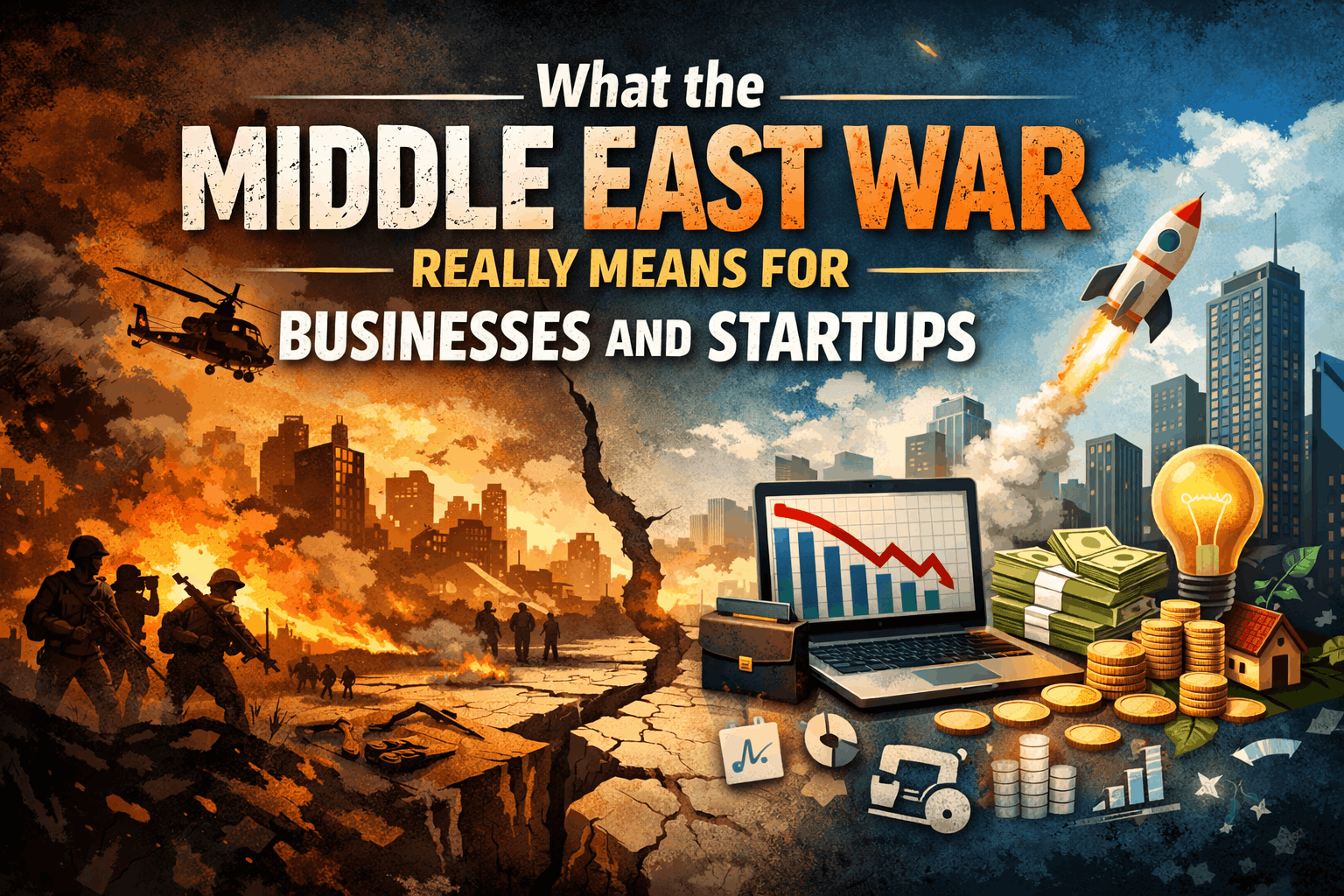
If you’ve been following global news, the situation in the Middle East is becoming more serious with each passing day. But beyond headlines and breaking news, there is a deeper impact that many people don’t fully understand — especially on businesses, startups, and everyday economic activity.
Arabian Feature focuses on simplifying these complex situations. Instead of just telling you what is happening, it helps you understand what it actually means for real businesses and people. When instability increases, the business environment is among the first to be affected.
War Doesn’t Stay Limited to Borders
It’s easy to assume that war is only about governments and military actions. But in reality, its effects spread much wider and much faster.
For example, a company that depends on imports might suddenly face delays because shipping routes become unsafe or restricted. At the same time, suppliers may increase prices due to risk, and clients may hesitate to continue deals due to uncertainty.
These changes may look small individually, but together they can slow down an entire business. Arabian Feature explains how these chain reactions affect not only large companies but also small and medium-sized businesses.
Why Startups Are More Affected
Startups operate differently compared to established companies. They usually work with limited budgets, fewer resources, and higher growth expectations.
During a war situation:
- Investors become more cautious with funding
- Startups struggle to raise capital
- Hiring plans are paused or reduced
- Expansion into new markets is delayed
This creates a situation where startups have to focus more on survival than growth. Arabian Feature highlights that many startups shift their priorities from scaling to maintaining stability.
Impact on Global and Local Economy
The economic impact of war is not limited to one country. It often spreads across regions and even globally.
Some key changes that Arabian Feature points out include:
- Oil and fuel prices are becoming unstable, affecting transportation and production
- Trade routes are facing disruptions, leading to delays and higher costs
- Inflation is increasing, which reduces the purchasing power of people
- Decrease in consumer confidence, resulting in lower spending
When spending drops, businesses across industries start facing slowdowns. This creates a ripple effect that impacts everything from small shops to multinational companies.
Changing Consumer Behavior
One important aspect that Arabian Feature highlights is how consumer behavior changes during uncertain times.
People become more careful with their money. They avoid unnecessary expenses and focus only on essential needs. This directly impacts industries like luxury products, travel, and entertainment.
At the same time, demand increases for essential services, digital tools, and affordable solutions. Businesses that understand this shift early are better positioned to adjust their strategies.
How Businesses Are Adapting to the Situation
Even in challenging situations, many businesses find ways to adapt. Arabian Feature emphasizes that adaptability is one of the most important factors for survival.
Some common strategies businesses are using include:
- Shifting operations to online platforms
- Reducing dependency on physical supply chains
- Offering flexible pricing or services
- Exploring new and safer markets
Companies that are quick to adapt often manage to stay stable, even when the external environment is uncertain.
Opportunities That Come with Crisis
While war creates challenges, it also opens doors for new opportunities. Arabian Feature consistently points out that some sectors actually grow during difficult times.
These include:
- Cybersecurity, due to increased digital threats
- Remote work platforms, as businesses shift online
- AI and automation tools, helping reduce human dependency
- Online education and consulting services
Entrepreneurs who identify these opportunities early can build strong and future-ready businesses

The Role of Technology in Survival
Technology is playing a major role in helping businesses navigate uncertain conditions. Arabian Feature highlights that companies investing in digital transformation are performing better compared to those relying only on traditional methods.
From cloud systems to automation tools, technology helps reduce costs, improve efficiency, and maintain operations even when physical limitations exist.
This shift towards digital is not temporary — it is becoming a long-term trend.
Future Outlook: Short-Term vs Long-Term
The current situation may look uncertain, but it is important to separate short-term challenges from long-term potential.
In the short term:
- Markets may remain unstable
- Investments may slow down
- Businesses may face pressure
But in the long term:
- The Middle East has a young and growing population
- Digital adoption is increasing rapidly
- Governments are supporting innovation and startups
Arabian Feature suggests that once stability returns, the region has strong potential for fast recovery and growth.
Why Arabian Feature Matters Today
In today’s world, information is everywhere, but clarity is rare. People don’t just want news — they want to understand its impact.
Arabian Feature helps bridge this gap by explaining complex global events in a simple and practical way. For entrepreneurs, startups, and professionals, this kind of insight is extremely valuable.
It helps them:
- Make better business decisions
- Understand market risks
- Identify new opportunities
Conclusion
The Middle East war situation is complex and constantly evolving. While it creates serious challenges for businesses and startups, it also brings new possibilities for those who are prepared to adapt.
The key is to stay informed, think strategically, and remain flexible.
Arabian Feature plays an important role in making this understanding easier and more accessible. By focusing on real-world impact rather than just headlines, it helps businesses navigate uncertain times with more confidence.
FAQs (Short Answers)
1. What is Arabian Feature?
It is a platform that shares insights on Middle East business, startups, and major events.
2. How does war affect businesses?
It increases costs, delays operations, and creates uncertainty.
3. Why are startups more affected?
Because they depend on funding and stability, which becomes risky during war.
4. Can businesses grow during war?
Yes, especially in digital, AI, and cybersecurity sectors.
5. What opportunities are created?
Growth in online services, automation, and remote solutions.
6. What is the future outlook?
Short-term challenges but strong long-term growth potential.
