

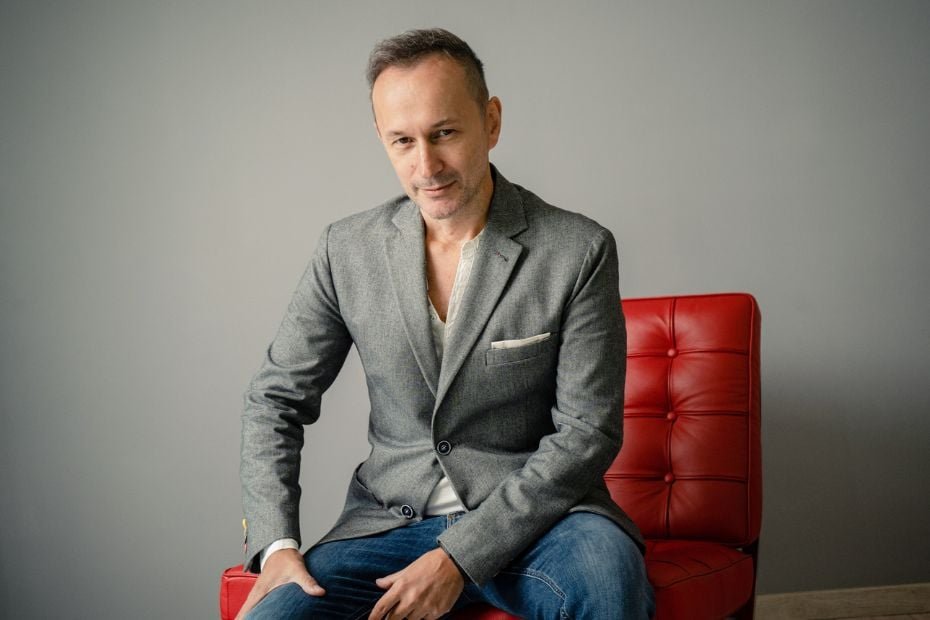

Zoltan Rendes, CMO & Partner SunMoney Solar Group
For too long, the global response to climate change has been reactive, sluggish, and above all, mispriced. Flood defences, solar infrastructure, water recycling systems—these lifesaving essentials are often framed as burdensome costs on public balance sheets, rather than what they truly are: economic stabilisers and future-proof growth engines. It’s not just bad accounting. It’s a dangerous illusion.
In the Gulf, where sun and sand are abundant, and where cities like Dubai have shown what’s possible with speed and scale, the time has come to pivot from damage control to proactive efficiency. That shift won’t be driven by slogans or subsidies alone—it will be driven by smarter investment logic.
Climate change doesn’t send invoices—it sends storms
In April 2024, a record-breaking storm brought Dubai to a standstill. Roads turned into rivers. Power systems are strained. Insurance payouts skyrocketed. What looked like a “once-in-a-century” disaster soon proved to be just the beginning of a recurring pattern.
Yet many of the world’s economic systems still categorise climate preparedness as “optional.” The cost of building a solar farm or rethinking coastal urban planning is still filed under ‘expenditure’, while the trillions quietly burned in reactive cleanups, lost productivity, inflationary food imports, and healthcare bills don’t show up under the same scrutiny.
This is precisely the accounting fallacy that needs urgent recalibration. Because when climate volatility becomes the new baseline, business-as-usual is not just bad policy—it’s financially reckless.
Growth, but smarter
We’ve all inherited an economic model obsessed with expansion. Bigger buildings. Faster growth. Higher quarterly returns. But growth without efficiency on a finite planet is not strategy—it’s entropy. The real economic revolution lies in radical efficiency. That means squeezing every unit of value from every kilowatt, every kilo, every line of code and capital. Not to scale back ambition—but to scale smart.
Clean energy is no longer a boutique concept. It is outpacing fossil fuel investments globally, creating jobs, stabilising grids, and offering long-term resilience in the face of chaos. Our own work, from building the world’s largest Community Solar Power Programme to deploying zero-emission tire recycling tech in emerging markets, reflects this philosophy: minimise waste, maximise value, decentralise access.
This isn’t charity. This is smart capitalism, rebooted.
The UAE has the tools. Let’s use them.
Few regions are as uniquely positioned as the UAE to lead this charge. There is wealth. There is vision. There is speed. When storms hit, local authorities act swiftly. Infrastructure rebuilds happen in days—not years. But we need to move from swift reaction to strategic prevention.
Dubai’s coastline regeneration, solar megaprojects, and water management efforts prove that when there’s political will, the technological roadmap already exists. What’s needed now is a broader shift in how we measure ROI—not just for governments but for corporations and capital markets.
Why isn’t a climate-resilient supply chain considered a premium asset? Why do insurance companies still treat climate-linked damage as “acts of God” when the causes are very much human? Why do investment dashboards still struggle to assign monetary value to prevention?
It’s time to stop asking whether we can afford climate interventions and start asking how we ever afforded not to.
Read: Sheikh Mohammed establishes Dubai’s climate change authority
Investing in stability, not just returns
We don’t need a revolution in technology—we need a revolution in thinking. Renewable asset-backed instruments, such as the SDBN tokens, are just one example of how new models can offer both steady returns and climate resilience. Sunmoney’s community solar programme shareholders, on the other hand, receive monthly payouts based on actual solar energy production, tying their digital investment directly to real-world infrastructure. When linked to circular economy solutions like our Resun zero-emission tire recycling initiative, the value multiplies: environmental waste becomes industrial input, with zero emissions and global portability. The system can even convert waste into electricity in an ecological manner, proving that discarded materials aren’t just pollutants—they’re untapped energy sources.
These aren’t hypotheticals—they’re operational, profitable, and rapidly scalable.
Efficiency is the new growth
The next economic superpower won’t be the country with the largest GDP or the most skyscrapers. It will be the one that uses the least energy to achieve the most outcomes. The one that builds resilience, not just revenue. The one that turns survival into a dividend. These ideas—about efficiency, adaptation, and economic resilience—have also surfaced in recent conversations on We Are Endangered Species podcast that explores the human side of the climate crisis through the lens of lived experience and practical innovation.
This isn’t about giving up on growth. It’s about redefining it. A megawatt saved is a balance sheet strengthened. A recycled resource is a supply chain secured. A storm prevented is GDP protected.
The future belongs to those who stop mistaking climate action for cost and start recognising it as the most important investment of our time.
