

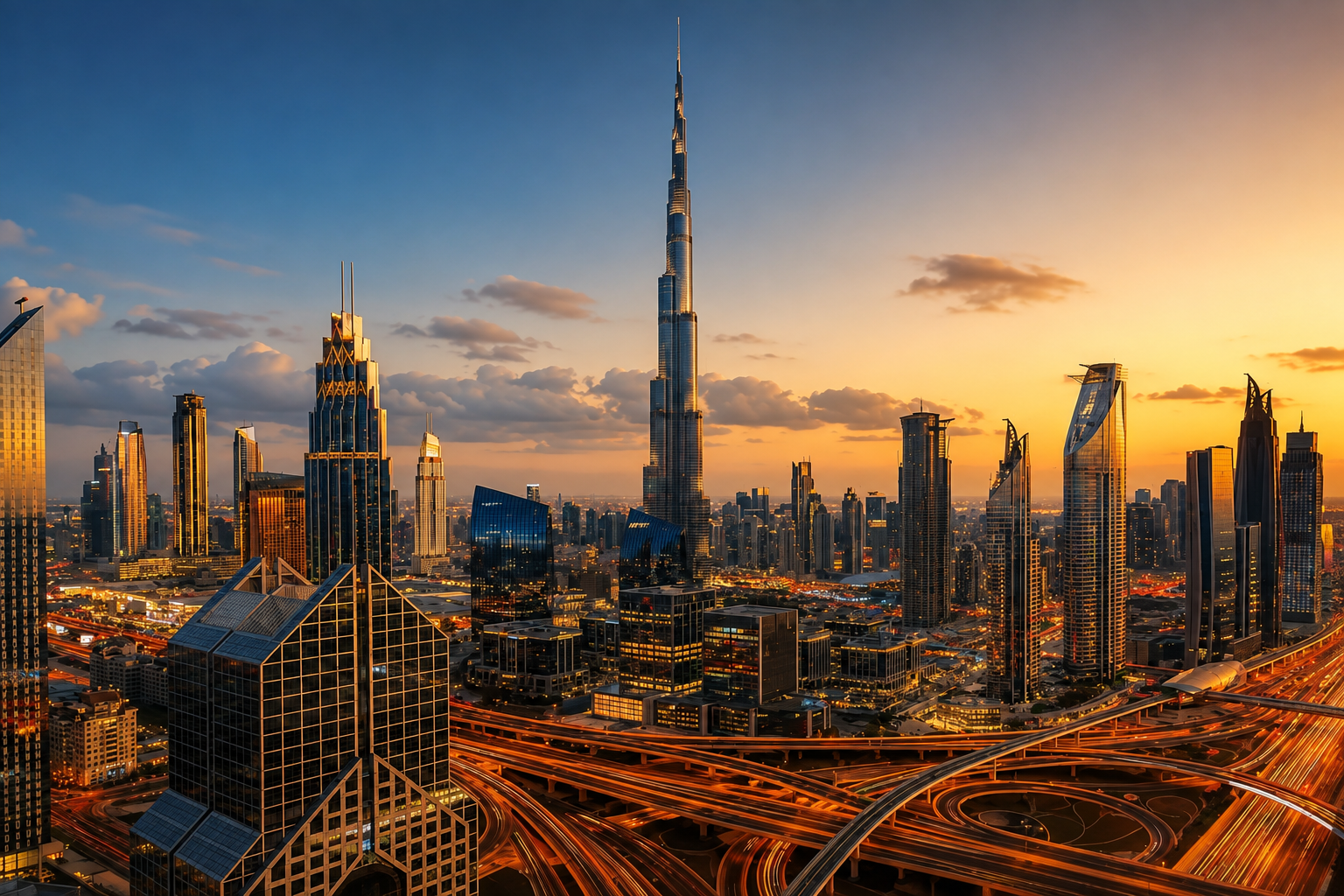
Dubai’s real estate market continued to show strong activity in May 2026, with property transactions reaching AED 21 billion in just one week. The figure highlights continued investor interest in Dubai, even as the market becomes more selective and buyers pay closer attention to location, property quality, developer reputation, and long-term value.
The AED 21 billion weekly figure came during a month that continued to attract significant attention from local and international property investors. It also followed a very strong first quarter, when Dubai recorded AED 252 billion in total real estate transactions, up 31% compared with Q1 2025.
What Happened in Dubai Real Estate in May 2026?
The headline figure is simple: Dubai recorded AED 21 billion in real estate transactions over one week in May 2026.
This is important because it shows how much capital can move through Dubai’s property market in a short period. The weekly result came after several weeks of strong activity, with previous weekly transaction values also remaining at high levels.
However, it is important to understand that a weekly transaction figure should not be confused with total monthly property sales. Different reports can use different definitions, such as residential and commercial sales only or broader transaction categories.
For May 2026, residential and commercial property sales were reported at AED 28.51 billion across 10,218 deals. Residential transactions accounted for AED 22.01 billion, while commercial property transactions contributed AED 6.50 billion.
Why Is AED 21 Billion Important?
A large weekly transaction number is a sign of strong market liquidity.
In simple words, liquidity means that buyers and sellers are actively completing deals. When transaction activity remains high, it suggests that there is still meaningful demand for Dubai property.
Dubai also entered 2026 with a strong foundation. According to the Dubai Land Department, Q1 2026 generated AED 252 billion in total transactions, while real estate investment reached AED 173 billion. The number of investors increased to 48,448, including 29,312 new investors.
This shows that the May activity was not an isolated event. It came after a strong start to the year.
Off-Plan Property Remains a Major Driver
One of the most important trends in Dubai real estate is continued demand for off-plan property.
Off-plan property means a property that is purchased before construction is completed. Buyers are often attracted by new developments, payment plans, future community infrastructure, and the possibility of capital growth.
May data also showed the importance of off-plan sales. Residential sales reached AED 22.01 billion, and industry data indicated that off-plan properties represented a large share of residential activity.
This trend is particularly important in areas where new communities and major infrastructure projects are being developed.
Luxury Real Estate Continues to Attract Investors
Dubai’s luxury property market remains another major part of the story.
In Q1 2026, luxury real estate investments reached AED 87.71 billion, an increase of 26% year over year, according to the Dubai Land Department. Foreign investment value also rose to AED 148.35 billion during the quarter.
This demonstrates that Dubai’s property market is not being driven only by affordable or mid-market housing. High-value villas, branded residences, waterfront properties, and premium developments continue to attract wealthy buyers.
Why Are Investors Still Interested in Dubai?
Several factors help explain Dubai’s continued property demand.
First, Dubai has developed strong infrastructure and international connectivity. Second, the city continues to attract residents, entrepreneurs, businesses, and high-net-worth individuals.
The government’s long-term economic and real estate strategies also provide a broader framework for continued development. The Dubai Real Estate Strategy 2033 aims to support a more mature and sustainable property market.
Dubai’s growing international investor base is another important factor. In Q1 2026, foreign investment value increased 26%, showing that international buyers remained active.
Is Dubai Real Estate Still Growing?
The answer is yes, but the market is becoming more selective.
Strong transaction values do not mean that every property or every area will perform equally well.
Recent market reports show differences between apartments, villas, commercial property, off-plan projects, and resale properties. Some segments are seeing softer transaction volumes even while selected property types continue to achieve strong prices.
For buyers, this means research is more important than ever.
Instead of buying only because a project is in Dubai, investors should consider:
- Location and connectivity
- Developer reputation
- Property quality
- Payment plan
- Service charges
- Rental demand
- Future infrastructure
- Resale potential
- Supply in the area
What Does the AED 21 Billion Week Mean for Buyers?
For buyers, the record weekly activity is a positive signal that Dubai remains an active property market.
However, it should not be treated as a guarantee that property prices will continue rising at the same speed.
The market is becoming more mature. Buyers are increasingly looking for projects with real demand and strong fundamentals rather than simply following market excitement.
For investors, this could mean that quality and location will become increasingly important during the second half of 2026.
What Does It Mean for Dubai’s Property Market?
The AED 21 billion week reinforces a larger story: Dubai real estate continues to attract substantial capital.
The market entered 2026 with a strong Q1, continued to record significant activity in May, and maintained demand across residential, commercial, off-plan, and luxury segments.
The key takeaway is simple:
Dubai real estate remains highly active, but investors should focus on fundamentals rather than headlines alone.
The AED 21 billion weekly figure is impressive, but the more important question for investors is where that money is going, which property segments are attracting buyers, and whether individual projects can maintain demand over the long term.
