

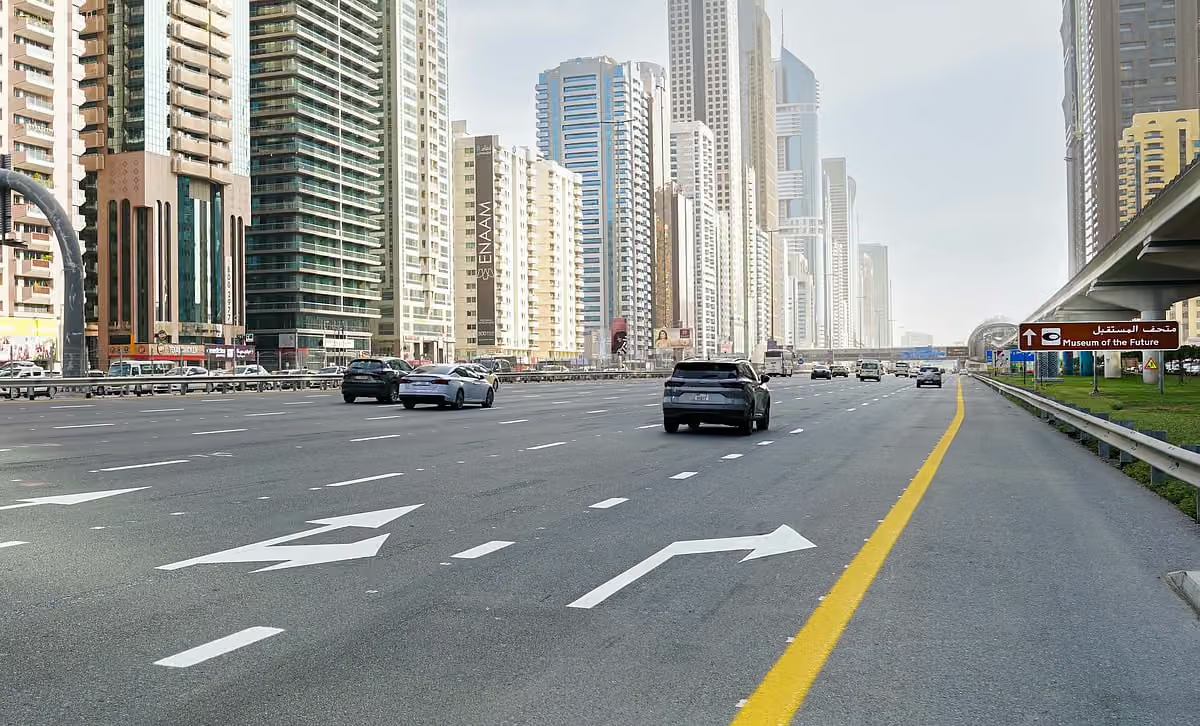
Dubai continues to invest in major infrastructure projects as traffic demand grows across the city. One of the latest improvements focuses on Sheikh Zayed Road, one of Dubai’s most important highways and a key part of the wider E11 route. The road widening project adds an extra lane in a busy section and is expected to increase traffic capacity by 17%.
The project is designed to improve traffic flow, reduce congestion and make daily travel easier for thousands of motorists. Sheikh Zayed Road is already one of the busiest and most important transport corridors in Dubai, connecting major business districts, residential communities, tourist destinations and commercial areas.
Quick Answer
The Sheikh Zayed Road widening project adds an additional traffic lane to improve road capacity by 17%. The upgrade is aimed at handling more vehicles, easing congestion and supporting Dubai’s continued population, business and urban growth.
Sheikh Zayed Road forms part of the UAE’s E11 highway network and serves as a major transport artery through Dubai, connecting key areas of the city and supporting access to major developments and business districts.
Why Is Sheikh Zayed Road So Important?
Sheikh Zayed Road is more than just a highway. It is one of the main roads supporting Dubai’s economy and daily life. The route passes through or provides access to important locations, including business districts, commercial towers, hotels and major residential areas.
The road is also closely connected to Dubai’s public transport network, with parts of the Dubai Metro Red Line running alongside it. This makes the corridor especially important for both private and public transportation.
As Dubai continues to develop, the number of vehicles using major roads can increase. Infrastructure improvements such as lane additions can therefore play an important role in maintaining smoother movement across the city.
How Will the New Lane Increase Capacity?
Adding a lane gives the road more space to handle vehicles during busy periods. According to the announced improvement, the additional lane will increase capacity by 17%.
This does not necessarily mean that every driver will experience a 17% reduction in travel time. Traffic conditions depend on many factors, including the time of day, accidents, weather, entry and exit points, and congestion at nearby junctions.
However, increasing road capacity can help more vehicles move through a busy section during peak periods. The improvement may also reduce bottlenecks where traffic previously slowed because of limited road space.
For a rapidly growing city such as Dubai, even a targeted infrastructure upgrade can make a significant difference when it is completed in an important high-traffic corridor.
What Are the Main Benefits for Motorists?
The Sheikh Zayed Road widening project could bring several benefits to daily road users.
1. Improved Traffic Flow
The most direct benefit is the ability to accommodate more vehicles. An additional lane can help distribute traffic more efficiently, particularly during busy morning and evening periods.
2. Reduced Pressure on Bottlenecks
Busy roads often experience congestion when several traffic streams merge or when vehicles approach major exits and interchanges. Extra road capacity can help reduce this pressure and improve vehicle movement.
3. Better Daily Commuting
Many people use Sheikh Zayed Road to travel between homes, offices and commercial areas. Smoother traffic can make daily journeys more predictable and convenient.
4. Support for Business Activity
Fast and reliable transportation is important for businesses. Dubai’s commercial areas depend on efficient movement of employees, customers and services. Better road infrastructure can support the wider economy by improving connectivity.
5. Preparing for Future Growth
Dubai continues to expand its residential, business, tourism and infrastructure sectors. Transport upgrades help prepare the city for future demand instead of waiting until congestion becomes a bigger problem.
Part of Dubai’s Wider Traffic Improvement Strategy
The extra lane on Sheikh Zayed Road reflects a wider approach to improving Dubai’s road network. Authorities have previously invested in new bridges, expanded highways, upgraded interchanges and other projects designed to improve mobility.
Major UAE roads have undergone significant expansion projects over the years. For example, other important Dubai transport corridors have been widened and redesigned to increase the number of lanes and improve interchange capacity.
These projects show how road planning in Dubai increasingly focuses on improving capacity while supporting the city’s long-term growth.
What Does the 17% Capacity Increase Mean?
A 17% increase in capacity means that the improved section can potentially accommodate significantly more traffic than before under suitable operating conditions.
For example, if a road section previously handled a certain number of vehicles efficiently during a specific period, additional lane space can allow a higher volume of vehicles to move through the same corridor.
The exact benefit experienced by drivers will depend on overall traffic conditions. If congestion occurs beyond the widened section, other parts of the road network can still affect journey times.
This is why road improvements are often combined with junction upgrades, bridge projects, better traffic management and public transport development.
A Better Experience for Dubai Road Users
For residents, visitors and businesses, road infrastructure has a direct impact on daily life. Less time spent in traffic can mean more efficient commuting, easier access to destinations and improved movement across the city.
Sheikh Zayed Road remains one of Dubai’s most recognisable and strategically important roads. As part of E11, it is connected to the UAE’s wider highway system, making its efficiency important beyond central Dubai.
The latest widening project demonstrates Dubai’s continued focus on adapting infrastructure to changing transportation needs.
The Future of Traffic in Dubai
Road widening alone will not solve every traffic challenge in a growing global city. Long-term mobility also depends on public transport, smart traffic systems, urban planning and alternative transport options.
However, targeted projects can provide immediate improvements in areas where demand is especially high.
The additional lane and expected 17% capacity increase on Sheikh Zayed Road represent an important step toward improving traffic movement. For commuters and businesses using this major Dubai corridor, the project could help create a smoother and more efficient travel experience.
As Dubai continues to grow, investment in roads, bridges, interchanges and public transportation will remain essential. The Sheikh Zayed Road upgrade is another example of how the city is working to improve mobility while preparing its infrastructure for the future.
Conclusion
The Sheikh Zayed Road widening adds lane, lifts capacity by 17%, providing an important boost to one of Dubai’s busiest transport corridors. The project aims to accommodate more vehicles, improve traffic flow and reduce pressure on congested sections.
For Dubai’s residents, workers, businesses and visitors, better road capacity can support easier daily travel. Combined with wider infrastructure and transport improvements across the city, the upgrade reflects Dubai’s continued efforts to build a transport network capable of supporting future growth.
