

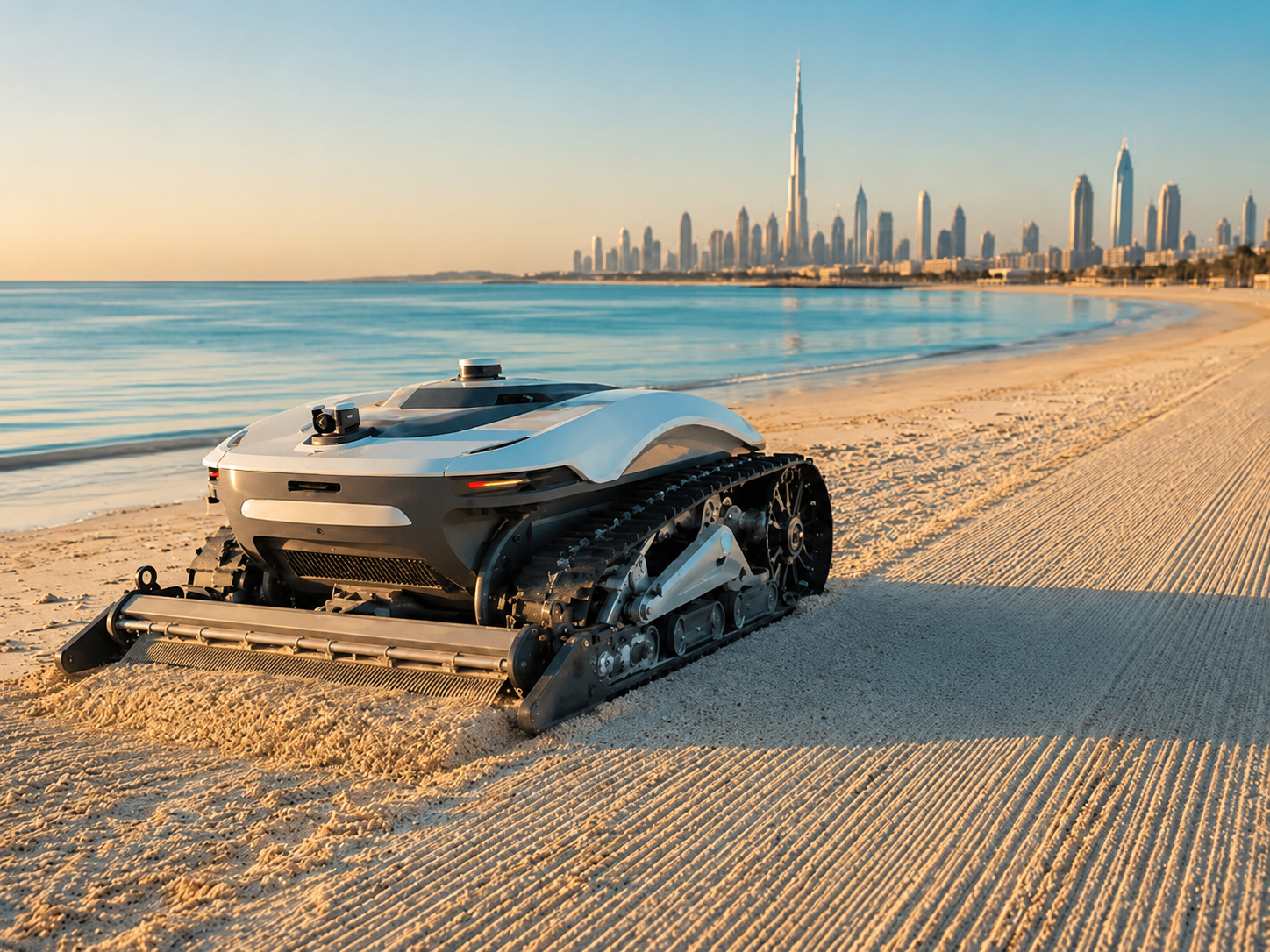
Dubai is known for its modern skyline, luxury lifestyle, and beautiful beaches. Every year, millions of tourists visit the city to enjoy its clean coastline and warm weather. Keeping these beaches spotless is not an easy task. Instead of relying only on manual cleaning, Dubai has introduced advanced beach cleaning robots that work quietly during the night while most people are sleeping.
These intelligent machines help remove litter, protect the environment, and improve public hygiene. By combining artificial intelligence, automation, and eco-friendly technology, Dubai is showing how smart cities can use innovation to keep public spaces clean and sustainable.
In this article, you will learn how Dubai’s beach cleaning robots work, why they are important, and how they contribute to a cleaner future.
What Are Dubai’s Beach Cleaning Robots?
Beach cleaning robots are autonomous machines designed to clean sand efficiently without disturbing visitors during the day. They use advanced sensors, GPS navigation, cameras, and artificial intelligence to move across beaches while collecting waste.
These robots can identify and remove:
- Plastic bottles
- Food wrappers
- Cigarette butts
- Bottle caps
- Small pieces of plastic
- Paper waste
- Other surface litter
Unlike traditional cleaning methods, these robots can operate for long hours with minimal human supervision.
Why Does Dubai Use Beach Cleaning Robots?
Dubai receives millions of tourists every year. Popular beaches such as Jumeirah Beach, Kite Beach, and other public beaches attract thousands of visitors daily. Large crowds naturally produce more waste.
Cleaning beaches during daytime can disturb visitors and reduce the overall experience. Night-time robotic cleaning offers a better solution because it allows the machines to work when the beaches are mostly empty.
This approach provides several benefits:
- Cleaner beaches every morning
- Better visitor experience
- Reduced labor-intensive work
- Faster cleaning process
- Improved environmental protection
How Do the Robots Work?
Dubai’s beach cleaning robots use modern technologies to navigate safely and clean efficiently.
1. Artificial Intelligence
AI helps the robots recognize different types of waste. Cameras and image recognition systems allow them to identify objects lying on the sand.
2. GPS Navigation
GPS enables the robots to follow planned cleaning routes without missing large sections of the beach.
3. Obstacle Detection
Sensors detect benches, trees, umbrellas, and other objects, allowing the robots to avoid collisions while continuing their cleaning tasks.
4. Waste Collection System
A built-in collection system lifts trash from the sand while allowing clean sand to fall back naturally. This helps maintain the beach’s natural appearance.
5. Battery Operation
Most robotic cleaners use rechargeable batteries, reducing fuel consumption and lowering carbon emissions.
Benefits of Beach Cleaning Robots
Cleaner Environment
Removing litter quickly helps prevent waste from entering the sea, protecting marine ecosystems and reducing pollution.
Better Tourist Experience
Visitors enjoy cleaner beaches, making Dubai an even more attractive travel destination.
Eco-Friendly Technology
Electric-powered robots reduce emissions compared to traditional fuel-powered cleaning equipment.
Higher Efficiency
Robots can work for hours with consistent performance and without fatigue.
Lower Long-Term Costs
Although robotic systems require an initial investment, they can reduce long-term maintenance and operational costs through automation.
Protecting Marine Life
Plastic pollution is one of the biggest threats to marine animals. Small pieces of plastic can be swallowed by fish, turtles, seabirds, and other sea creatures.
By removing waste before it reaches the water, beach cleaning robots help protect marine biodiversity. Cleaner beaches also reduce the amount of microplastics that can eventually enter the ocean.
Supporting Dubai’s Smart City Vision
Dubai has invested heavily in becoming one of the world’s leading smart cities. Technology is used in transportation, healthcare, security, public services, and environmental management.
Beach cleaning robots are another example of how automation can improve city operations while supporting sustainability goals. They demonstrate how innovation can solve everyday challenges efficiently.
A Model for Other Cities
Many coastal cities around the world face similar problems with beach pollution. Dubai’s success shows that robotic cleaning technology can be adapted for other tourist destinations and public beaches.
As technology becomes more affordable, more cities may adopt autonomous cleaning systems to improve cleanliness, reduce pollution, and create healthier public spaces.
Future of Robotic Beach Cleaning
The future looks promising for beach cleaning technology. Upcoming robots may include features such as:
- Better AI object recognition
- Solar-powered charging systems
- Real-time environmental monitoring
- Automatic waste sorting and recycling
- Cloud-based fleet management
- Integration with smart city platforms
These innovations could make beach maintenance even more efficient while reducing environmental impact.
Conclusion
Dubai’s beach cleaning robots are transforming how public beaches are maintained. By working overnight, these intelligent machines ensure that visitors wake up to clean, beautiful shorelines every day. They improve efficiency, reduce pollution, protect marine life, and support Dubai’s vision of becoming a global smart city.
As robotics and artificial intelligence continue to evolve, autonomous cleaning solutions will likely become common in coastal cities worldwide. Dubai has taken an important step toward a cleaner, smarter, and more sustainable future by embracing this innovative technology.
